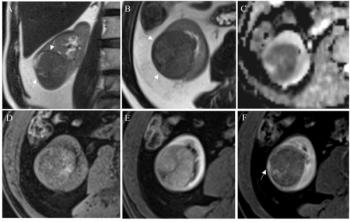
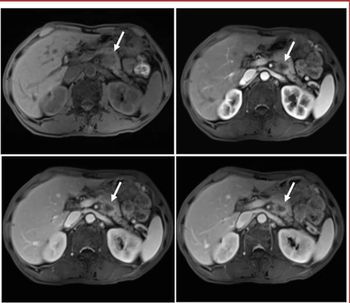
“Tumors with lower ADC values typically exhibit increased cellular packing, reduced extracellular space, and greater architectural complexity, all of which are associated with aggressive tumor behavior,” noted lead study author Cem Onal, MD, who is affiliated with the Department of Radiation Oncology at the Adana Dr. Turgut Noyan Research and Treatment Center and the Baskent University Faculty of Medicine in Adana, Turkey.
Comparing a clinical model without ADC values to a model that incorporated ADC values, the researchers noted consistently higher AUC for FFDM with the ADC-included model at five years (86.6 percent vs. 74.5 percent), eight years (81.4 percent vs. 75.2 percent) and 10 years. (79.4 percent vs. 70.4 percent).
Three Key Takeaways
• Low pre-treatment ADC is an independent risk marker. In intermediate-risk PCa patients treated with definitive radiotherapy, ADC values below 0.668 × 10⁻³ mm²/s were independently associated with distant metastasis risk (HR 3.94), with roughly 4x higher metastasis rates and 2.5x higher biochemical failure rates over a median 10.3-year follow-up.
• The prognostic gap persists long-term. At 10 years, low-ADC patients had meaningfully worse freedom from distant metastases (86.5 percent vs. 96.4 percent) and freedom from biochemical failure (78.2 percent vs. 93.2 percent) compared to high-ADC patients, suggesting ADC captures durable biological risk rather than a transient signal.
• Adding ADC may improve risk stratification models. Incorporating ADC into clinical prediction models increased AUC for freedom from distant metastases (FFDM) at 5, 8, and 10 years compared to a model based on clinical variables alone. While this data supports ADC's potential as a complementary, non-invasive biomarker, the authors caution that validation in larger studies is necessary prior to clinical adoption.
While cautioning that larger studies are necessary to validate the findings, the authors suggested that ADC values may offer prognostic utility for men with intermediate-risk PCa.
“Our findings support further investigation of ADC as an accessible prognostic imaging biomarker that may complement established clinical risk classification,” added Onal and colleagues.
(Editor’s note: For related content, see “5T Prostate MRI Study Reveals Enhanced Image Quality and Detection,” “Does bpMRI Offer Similar Value to mpMRI in Detection of Extraprostatic Extension in Patients with PCa?” and “FDA Clears Emerging AI Software Application for Prostate MRI.”)
Beyond the inherent limitations of a single-center retrospective study, the authors noted the low number of cases involving distant metastases (12), the use of 1.5 T and 3T MRI systems, and possible variability with manual delineation of the region of interest.