

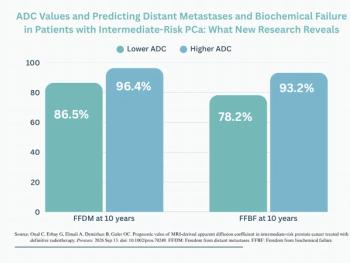
For patients with intermediate-risk prostate cancer, those with lower apparent diffusion coefficient (ADC) values on pre-treatment DWI MRI had a fourfold higher prevalence of distant metastasis in a study with a 10.3-year median follow-up.
For patients with intermediate-risk prostate cancer, those with lower apparent diffusion coefficient (ADC) values on pre-treatment DWI MRI had a fourfold higher prevalence of distant metastasis in a study with a 10.3-year median follow-up.
In the second of a two-part podcast episode, Lauren Nicola, MD, Christoph Wald, MD, PhD, MBA, and Peter Shen discuss challenges with evaluating value and ROI for AI software, the physician time required to do so, and possible solutions to facilitate improved clarity and consistency with AI reimbursement.

In the latest episode of her “Breast Imaging in Focus” series, Manisha Bahl, MD, MPH, FSBI, offer pertinent takeaways for breast radiologists from recently issued guidelines for addressing proliferative breast lesions with atypia and lobular carcinoma in situ (LCIS).
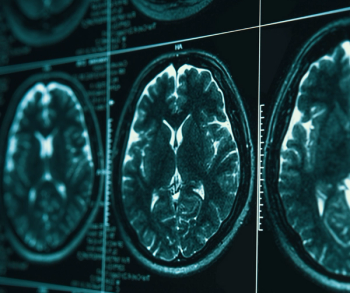
In a study involving over 2,800 people who had brain MRI scans, researchers found that people in the most disadvantaged neighborhoods had 37 percent higher white matter hyperintensity volume (WMHV) on average in comparison to people in the least disadvantaged areas.

In the second of a two-part interview, Kalpana Kanal, PhD, and Mahadevappa Mahesh, MS, PhD, FAPPM, FACR, discussed future directions for research on CT radiation dosing, including the potential of indication-specific diagnostic reference levels (DRLs).

Amid the explosion of imaging volume, an emerging silver lining is increasing recognition from referring clinicians of the time and value radiologists provide to facilitate patient care.

In a recent episode of our Molecular Imaging in Focus series, Thomas Hope, MD, discussed challenges with conventional imaging for gliomas and the potential of the newly FDA-approved PET agent floretyrosine F18 (18F-FET) for differentiating between glioma progression and treatment-related effects.

Catch up on the top radiology content of the past week.

The presence of vascular hyperintensity on T2 FLAIR MRI was associated with nearly double the odds of cerebral edema, according to newly published research involving 855 patients with acute ischemic stroke.
In a recent interview, Stamatia Destounis, MD, FACR, shared her perspective on recent changes to the BI-RADS system, offering insights on contrast-enhanced mammography, reporting changes for breast MRI and ultrasound, and the importance of auditing for BI-RADS category 3 assessments.
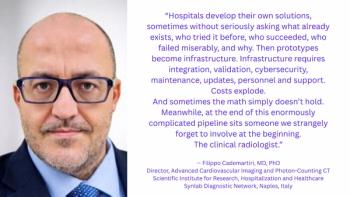
While AI tools abound in radiology, how many AI-enabled software products have incorporated insights from clinical radiologists?

New research demonstrates significantly higher specificity and inter-reader agreement with MRI-guided reconstruction in comparison to standard ordered-subset expectation-maximization (OSEM) reconstruction of PET imaging for amyloid assessment.

For patients with metastatic castration-resistant prostate cancer (mCRPC), researchers found that (177Lu)Lu-PSMA-I&T led to a PSA50 response in over 44 percent of patients with no reports of grade 3 or worse renal toxicity, according to a newly published multicenter study.
In the first of a two-part podcast episode, Lauren Nicola, MD, Christoph Wald, MD, PhD, MBA, and Peter Shen discuss current challenges with reimbursement for AI in radiology.

Where does radiology fit in the ever-shifting revenue puzzle at hospitals and other health-care facilities?
Catch up on the top radiology content of the past week.

Catch up on the latest imaging research from the recent European Society of Cardiology (ESC) Congress.
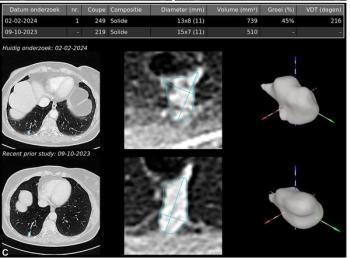
The use of adjunctive AI for pulmonary nodule assessment on chest CT exams led to over a three-minute reduction in median reporting time, according to newly reported research.
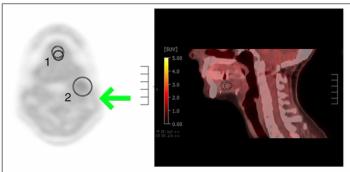
The PET radiotracer JBS-003 (18F-fluoromisonidazole) is currently being evaluated in a phase 3 randomized trial for facilitating de-escalation of radiation therapy in patients with HPV-positive oropharyngeal carcinoma.

In the first of a two-part interview, Kalpana Kanal, PhD, and Mahadevappa Mahesh, MS, PhD, FAPPM, FACR, discussed recently published research showing significant declines in computed tomography (CT) radiation dosing over the past decade.
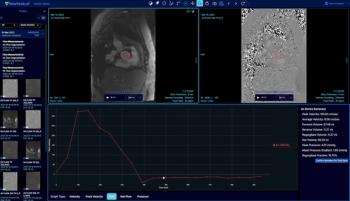
Offering ease of integration into existing radiology workflows, the AI-enabled Heartvue.Proton software emphasizes time savings with automation of common measurements for cardiac MRI.
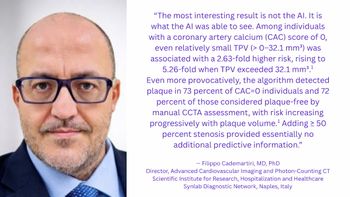
A new study shows that even small plaque volume may be associated with significantly higher risk for cardiovascular events, making the enhanced spatial resolution available with advanced imaging even more critical in risk stratification.
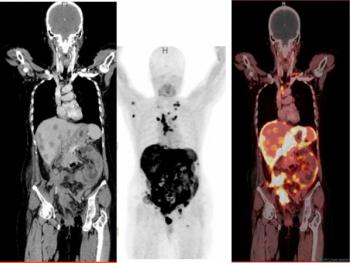
In comparison to contrast-enhanced CT, FAPI PET was associated with over 27 percent higher sensitivity for peritoneal carcinomatosis in the small bowel and 53 percent higher sensitivity in the upper abdomen, according to a new study involving 200 women with primary ovarian carcinoma.
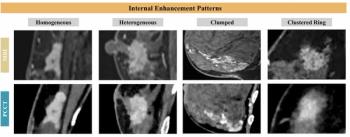
New research suggests that photon-counting CT provides comparable sensitivity to breast MRI for lesion characterization, higher accuracy than MRI for nodal metastasis and lower detection of microcalcifications in comparison to full-field digital mammography.
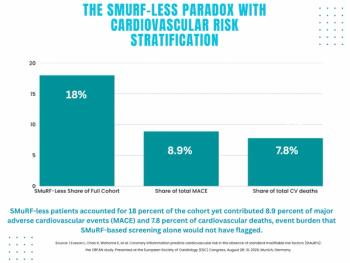
Elevated coronary inflammation, measured with the CCTA-derived and AI-enabled perivascular fat attenuation index (FAI) score, was associated with over a 12-fold higher risk for cardiovascular mortality in patients with no diabetes, hypertension, smoking history or obesity, according to new research presented at the European Society of Cardiology (ESC) Congress.
In a recent episode of our Molecular Imaging in Focus series, Sharmila Dorbala, MD, MPH, discusses phase 3 study findings on the use of the PET/CT radiotracer 124I- evuzamatide for overall detection of cardiac amyloidosis as well as the subtypes light-chain amyloidosis (AL) and transthyretin amyloidosis (ATTR) cardiac amyloidosis.

To what degree does your work setting and employer preferences affect your accuracy and approach to defensive medicine?
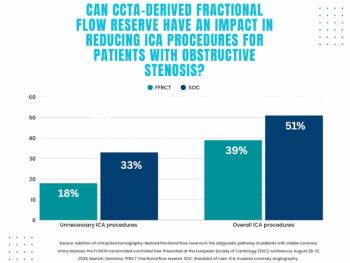
New research presented at the European Society of Cardiology (ESC) conference demonstrates that fractional flow reserve (FFR) based off CCTA exams significantly decreases unnecessary invasive coronary angiography (ICA) procedures for patients with stable chest pain and obstructive stenosis.

In a recent interview, Arun Talkad, MD, discussed the use of AI-powered enterprise imaging to facilitate recently expanded acute stroke care guidelines from the American Heart Association and the American Stroke Association.
Catch up on the most-well viewed radiology content in August 2026.