

CHICAGO - Richard Morin, co-chair of the ACR Dose Index Registry Committee, interviewed at RSNA 2011, explains how radiologists can compare their dose practices with others, to give the metrics more meaning.
CHICAGO - Richard Morin, co-chair of the ACR Dose Index Registry Committee, interviewed at RSNA 2011, explains how radiologists can compare their dose practices with others, to give the metrics more meaning.
CHICAGO - In this interview, the CMIO at Southwest Diagnostic Imaging discusses the process his practice followed to qualify for meaningful use, where they stand now, and whether the work has been worth it.
CHICAGO - As the number of CT scans done in the US has climbed, so has the number of incidental findings - and the related malpractice risks for radiologists. Leonard Berlin, MD, in an interview on malpractice risk at RSNA 2011, says the right path isn't clear.
CHICAGO - Arl Van Moore, Jr., MD, in an interview at RSNA 2011, discusses what it takes to be successful in radiology.
CHICAGO - There’s too much misinformation circling about meaningful use, said Khan Siddiqui, speaking at RSNA 2011.
CHICAGO - Low-dose remained a top concern at RSNA 2011. James Brink, MD, co-chair of the Image Wisely Joint Task Force, announced that over 10,000 have taken the Image Wisely pledge. The effort to raise awareness asks radiologists to optimize the use of radiation when imaging patients.
CHICAGO - Emanuel Kanal, MD, FACR, boldly invited a plaintiff’s attorney to RSNA 2011. The intent? To let radiologists know how to protect themselves from malpractice suits.
If you don’t want radiology to become a commodity, just connect. That’s the advice Larry Muroff, MD, CEO and President of Imaging Consultants, Tampa, delivered at RSNA 2011.
CHICAGO - Traditionally, many radiologists have worked behind the scenes, not directly with patients. But the field can’t stay hidden if it wants to survive in its current form, she and others are convinced. Radiology can either become more personal or become a commodity.
CHICAGO - Correct that. Tips. A few simple tricks can make one’s time with computer-based speech-to-text engines much more pleasant - and productive, said David Weiss, MD, speaking during an RSNA 2011 session on practical informatics for radiologists.
CHICAGO - Radiology is still a great career, but students need to learn more about the opportunities and realities.
CHICAGO - You can't improve what you don't measure, says Paul Chang in this video clip from RSNA 2011. He thinks radiology practices should follow other businesses and adopt business analytics and key perfromance indicators. How else can you tell if you are adding quality and improving processes?
CHICAGO - Cynthia Sherry, MD, chair of the Department of Radiology at Texas Health Dallas Presbyterian Hospital discusses the relationship between radiology practices and hospitals.
CHICAGO - Imagine, while you’re reading a study, being able to access records and images on similar findings and diagnoses - in seconds. Today, it’s a hunt that could take months, but with advanced data mining tools, experts at RSNA 2011 said, this kind of information could be as easy as a Google search.
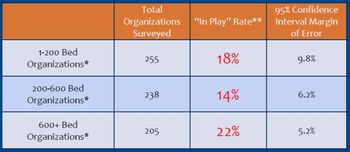
Nearly one in six hospitals and health systems over 1,000 beds reported that they have plans to replace their picture archiving and communication system (PACS), according to a new KLAS report that indicates that a new wave of replacements is ahead.
CHICAGO - Statements by the American Medical Association, the American College of Radiology and, probably, Hippocrates himself notwithstanding, radiologists should think twice about admitting mistakes.
CHICAGO - The radiology industry is buzzing with talk of analytics and data mining tools to help radiologists in decision making and utilization management. But even simple, organized reviews of your communications systems can help improve patient safety and quality as well.
Patient familiarity with a medical imaging test makes them more likely move forward with the test, according to a survey of U.S. adult attitudes toward imaging released at RSNA this week.
CHICAGO - To be successful amid declining reimbursement and healthcare reform, radiology residents - and perhaps all practicing radiologists - must do more than perfect their study interpretation skills. Pressures from the industry will require them to do what Bibb Allen, MD, FACR, vice chair of the ACR Commission on Economics, calls “no-pay work.”
CHICAGO - Say your radiology practice wants to boost positron emission tomography referrals. Your marketing consultant comes up with an idea: for the first 50 referrals each month, referring physicians’ offices get a Beanie Baby and educational materials, delivered in a plastic baggie emblazoned with your logo. “The P.E.T. of the Month Club,” it’ll be called.
CHICAGO - Worried your private radiology practice will get swallowed up by a hospital? Perhaps there’s little need to fret. The hospital employment trend sweeping your primary care colleagues hasn’t - and likely won’t - hit radiology. That’s according to Shay Pratt, managing director with the Advisory Board Company, who spoke at an RSNA session Tuesday.
CHICAGO - Women in their 40s without a family history of the disease face the same risk for breast cancer and should be screened, according to a study released at RNSA Tuesday.
CHICAGO - Communicating urgent findings are critical to patient safety, but it’s those not-so-urgent findings that don’t always make it to the right physician at the right time for effective follow up. Paul Chang, MD, of the University of Chicago Medical Center, found radiologists were doing a pretty good job getting the urgent results to the referring physician but needed a solution for effectively communicating surveillance results.
CHICAGO-First the good news: 90 percent of radiology practices indeed can qualify for some of the $20 billion in federal stimulus funding set aside to stoke the “meaningful use” of health information technology. What’s more, meaningful use seems to change little the day-to-day work of radiologists, according to those whose practices have been through the meaningful-use wringer.The bad news: getting to “meaningful” takes a whole lot of hard thinking, investment, and work, according to those with experience in the process speaking at RSNA 2011 on Tuesday.
CHICAGO - Imagine reading a CT scan of a liver tumor and being able to easily view similar scans, diagnoses, or tumors. It’s a vision of Sandy Napel, PhD, professor of radiology at Stanford School of Medicine, who has been working with his colleagues to develop an image analysis and decision support tool.
CHICAGO - Nonradiologists with a financial interest in imaging equipment tend to self-refer imaging to patients who are more likely to turn up negative results, according to a study presented Wednesday at RSNA.
CHICAGO - The review of coronary angiography results have showed significant differences between men and women in risk factors for coronary artery disease as well as major adverse cardiac events, according to a study presented Wednesday at RSNA.
CHICAGO - Ninety-seven percent of U.S. teens play games either on the computer, Web or console. Of adolescent boys, 50 percent admit to playing video games rated Mature. These statistics are perhaps far more startling after a study presented Wednesday at RSNA that showed violent video games alter brain function in young men.
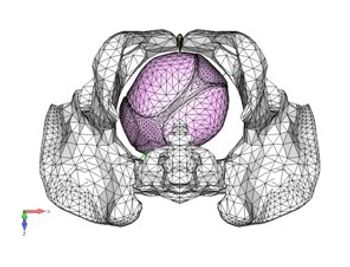
CHICAGO - Great strides have been made in the past century in ensuring women's safety during childbirth. Now, new imaging software presented Tuesday at RSNA furthers this by simulating childbirth to predict difficult deliveries.
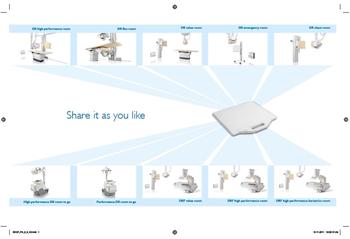
Philips emphasizes newly flexible, wireless detector at RSNA 2011