
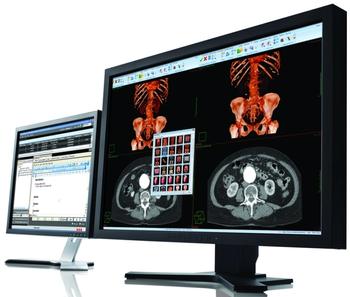
Carestream to highlight Stage 1 and Stage 2 Meaningful Use certification of the Vue RIS, and updates to the Vue PACS platform at RSNA 2014.
Carestream to highlight Stage 1 and Stage 2 Meaningful Use certification of the Vue RIS, and updates to the Vue PACS platform at RSNA 2014.
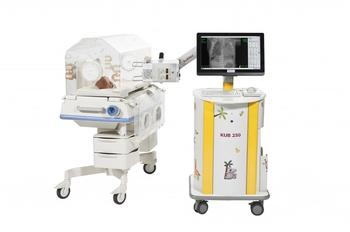
Kubtec announced FDA approval of their low-dose DR system, KUB 250, which will be showcased at RSNA 2014.
TeraMedica will demonstrate at RSNA 2014 its new vendor neutral archive, Evercore 6.0.

MammoCoach will debut at RSNA 2014 an online teaching product for screening mammography.
SurMD will debut at RSNA 2014 its secure, cloud-based image archival and distribution service.
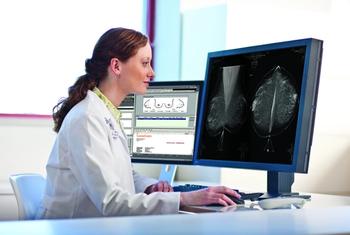
Carestream to demo new capabilities to its digital breast tomosynthesis module at RSNA 2014.
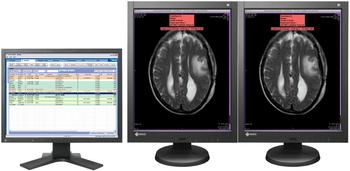
aycan at RSNA 2014 will demonstrate a new integrated RIS/PACS solution.
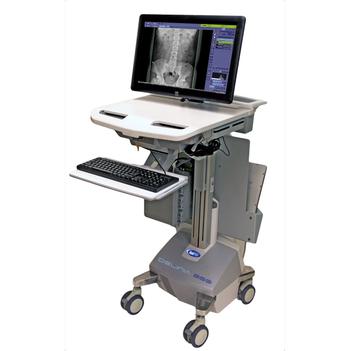
Canon will be demonstrating at RSNA 2014 a ‘cost-effective’ transition option from CR to DR.
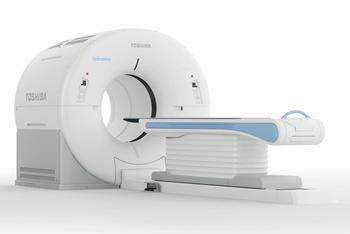
Toshiba will demonstrate safer CT solutions and patient-friendly updates to PET/CT at RSNA 2014.
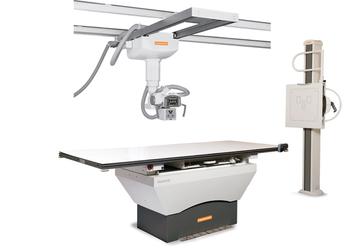
Carestream to showcase enhancements to its DR/CR imaging systems at RSNA 2014.

VIDEO - New radiologists out of training and just joining a practice should understand the business side of the industry. Jonathan R. Medverd, MD, explains.
VIDEO: Residents must understand it is radiologists’ responsibility to ensure the right tests are being performed at the right time. It’s a culture shift they should embrace, said Vijay Rao, MD.
These four technology themes from RSNA 2013 will have far-reaching implications for radiologists in the next few years.
The American College of Radiology’s latest institute is an independent think tank dedicated to trend analysis of the industry’s biggest concerns.
Several federal and state initiatives could impact how providers order studies and report results and whether new technologies are rigorously vetted.
By incorporating more diagnostic imaging into radiation therapy, providers can track cancers, more accurately judge treatment efficacy, and improve patient outcomes.
Industry-wide efforts look to control CT dosing levels, but not everyone is convinced the radiation is under control.
Norman Beauchamp, MD, MHS, offers his tips for how residents and fellows can really become a valued member of the radiology group.
CHICAGO - Referring physicians offer some insight into what they want from their radiology colleagues, from better collaboration to clearer reports.
CHICAGO - ACR representatives detailed major areas of concern in 2014: quality and safety, advocacy, education, economics and regulation, and radiation oncology.
CHICAGO - To survive in a value-based pay environment, radiology must invest in new ways to show positive impact.
CHICAGO - Widespread adoption of low-dose CT for lung screening may be more effective at catching early-stage lung cancer.
CHICAGO - Some signs point to dismal job prospects while others look more promising. Most agree the radiology workforce will stay flat for the next few years.
CHICAGO - National registries are allowing facilities to monitor and improve radiation dose.

CHICAGO - Radiology practices should establish a presence on sites like Facebook, LinkedIn and Twitter. Here’s why.
CHICAGO - Is your practice competitive in its use of informatics and business intelligence? Here’s how to assess your place on the technology spectrum.
CHICAGO - Three advancements in MR technology - PET/MR, MR elastography and so-called silent MR - are improving the modality’s effectiveness and ease-of-use.
CHICAGO - While some radiology groups are embracing meaningful use, others are taking a wait-and-see approach or opting for the exemption.
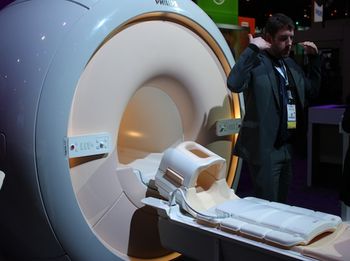
From digital broadband MR to internet-based image sharing platform, several exciting new products were on display at RSNA 2013. Here’s a sampling.
CHICAGO - Here’s why achieving meaningful use of electronic health records worked for some hospital departments, but not for others.