

Carestream prepares to unveil RIS/PACS pricingOther headlines:IDC revenues plummetMindray revenues skyrocketAmicas slips in 1Q
Ziehm Imaging and BrainLAB have extended their development and marketing agreement for the integration of Ziehm’s mobile 3D C-arms and BrainLAB’s computer-assisted surgical systems (CAS).
Other headlines:RadNet 1Q revs up, losses narrow
Multiple studies have shown CT colonography to be just as efficacious and cost-effective as colonoscopy for colon cancer screening. Now Italian and U.S. researchers have found that CTC also does something colonoscopy cannot: simultaneously detect colorectal cancer and abdominal aortic aneurysms.
GE launched today Healthymagination, a six-year initiative that will redirect half of its $1 billion healthcare R&D budget toward driving down the cost of healthcare while boosting access to improved care through technology and service innovations in the U.S. and around the world.
Hologic shares tumble on poor 2QVolcano revenues rise, loss widens
Siemens reaches CT milestoneGE launches new ultrasound unitsRadiology group raises $10M
FDA clears proton therapy positionerRIS Concepts extends speech optionsSoftware promises to boost cardiac scans
Radiology requires practitioners to appreciate hownormal anatomy appears on imaging and to understandthe basis of diseases that may be observed.
Other headlines:Nordion seeks second source of molyPhilips launches wireless XR detectorToshiba sells new interventional package
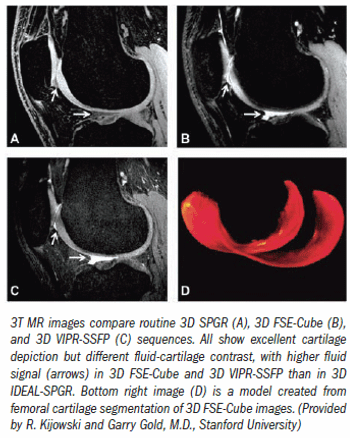
A new 3D fast spin-echo MR sequenceat 3T could one day help musculoskeletalradiologists perform comprehensiveevaluations of articular cartilageof the knee in only five minutes.
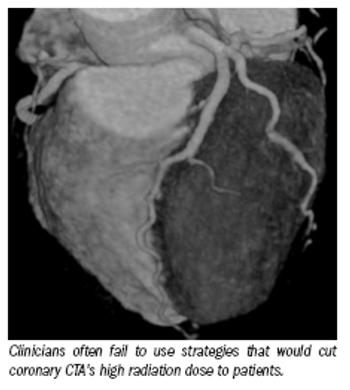
An international clinical trial involving 50 healthcare facilities and nearly 2000 patients has found that physicians often do not apply available dose reduction strategies in procedures, resulting in a wide variation in radiation exposure.
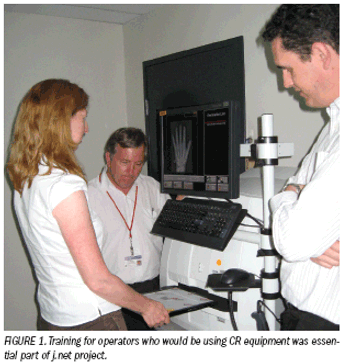
Queensland Health provides public health servicesacross a highly decentralized population base in thestate of Queensland.
Philips and Toshiba hope to open up a new end of the market for hand-carried ultrasound-the high end.
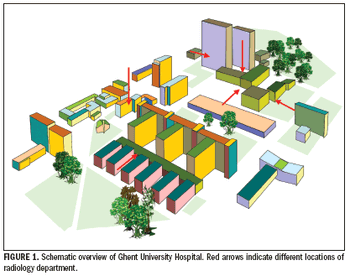
The introduction of PACS in a hospital opens up a new world for its users. The impact of PACS on the organization is huge. The new system brings about a dramatic change in workflow, and users must invest time and effort in learning to work with it.
Other headlines:Varian Medical reports upbeat quarteriCAD revenues rise, but loss widensDigirad revenues slipMerge profits rise
Other headlines:Siemens installs first U.S. FlashTomoTherapy plans financial restatementHenry Ford expands Zonare base
Seriously injured patients have a better chance of surviving multiple trauma when they are evaluated in the emergency room with whole-body CT, according to a study of more than 4500 cases from Germany.
Other headlines:iCAD installs MR image analysis softwareZiosoft shows new capabilities in Japan
Philips offers big screen imaging Hansen closes stock offering
Investigators from the U.S. Department of Defense executed a search warrant April 22 at the Malvern, PA, office of Siemens Medical Solutions USA, seeking evidence of wrongdoing associated with a government contract between the DoD and Siemens.
Philips’ latest 3T installations start up
Coronary artery stenosis patients age 65 and older have better survival chances when they are treated with drug-coated stents than with bare metal stents, according to findings of a study involving more than a quarter million Medicare recipients.
Other headlines:Varian woos China
Other headlines:TomoTherapy changes Siemens supply agreementGE strikes PET deal with Brigham and Women’s Johnson joins InSite One
Xoft prepares brachytherapy product for Canada
In the boom leading up to sequencing of the human genome, genetics and legal experts debated the ownership of the data contained within the double helix. Now, as the U.S. readies for a surge into healthcare IT, a similar debate has broken out over EMRs. The outcome could be critical to making the best use of the huge amount of electronic medical information that the Obama Administration’s stimulus funding will create in the next few years.
Newly christened AccelaRAD unveiled at HIMSS 2009 a service that allows patients unprecedented control over their medical images. The service, called SeeMyRadiology.com, is designed to provide patients the opportunity to create personalized libraries of images in a centralized location. Using this service, patients own their digital medical images, choosing which ones to easily and securely share with whom, particularly physicians.
Hospital-associated infections are a growing concern for hospitals. Some 1.7 million people pick up infections each year while in hospitals. More than 99,000 die. While these infections may come from several sources, studies have shown that computer keyboards are a leading contributor. With the introduction of their first product, a self-sanitizing keyboard, Seattle-based Vioguard hopes to eliminate the keyboard as a vector of infection in hospitals.
Agfa updates TalkStationViztek tightens link between PACS, EMR