

Ziehm launches C-arm at ECRFischer prepares DR offering
Stereotaxis buys time and lowers cost GE allies with surgical company
Other headlines:Siemens passes mammography milestoneMerge enhances mammography productSwissray nabs VA contract
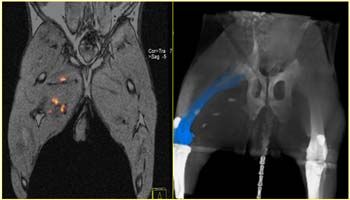
Using biotechnology developed from fireflies and seaweed, Johns Hopkins researchers are developing radiopaque stem cells for targeted delivery of therapy in patients with peripheral arterial disease. The technique may allow guidance and tracking of stem cell injections meant to grow new blood vessels and offer a way to confirm therapy response.
Other headlines:Agfa comes through on Spanish rolloutGE reaches MR milestoneMindray taps new CFOAlliance reports a profitable 2008
Other headlines:Philips offers CT and MR customers productivity boostMedicsight upgrades ColonCAD
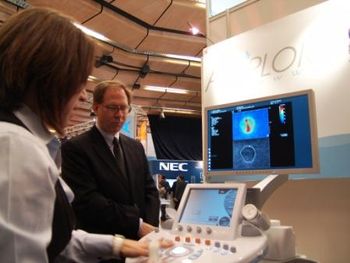
It wasn’t too long ago that ultrasound was a roiling sea of innovation and new product releases, spurred by a rivalry among Diasonics, ATL, Hewlett-Packard (Agilent Technologies), and Acuson. Since these companies’ acquisition by GE, Philips, and Siemens, the waters have calmed. Supersonic Imagine plans to begin making some waves -- and soon.
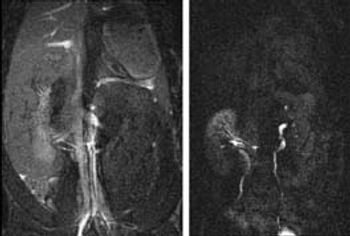
If radiologists could design the perfect modality for guiding interventional procedures, the resulting technology would undoubtedly produce high-quality images without exposing patients to any ionizing radiation. So given the widespread availability of MRI, why are so many interventions still performed in the angiography suite?
TeraRecon’s advanced visualization product came to the ECR exhibit floor equipped with new tools and enhancements to some of its old ones.
The latest version of CT colonography software from Medicsight debuted this week at ECR 2009.
As part of the European School of Radiology (ESOR) Visiting Scholarships Programme, I had the opportunity to obtain further training in musculoskeletal radiology in Dublin from September until December 2008.
Philips and Toshiba hope to open up a new end of the market for hand-carried ultrasound – the high end.
Other headlines: TeraRecon upgrades Aquarius iNtuition at ECR 2009iCAD shows expanded CAD portfolio GE tunes into European concerns
CT and MRI have a vital part to play in cases of head and neck trauma, but it is important to know which modality to use under the clinical circumstances, according to speakers at Friday’s opening session of the minicourse on major trauma.
Philips Healthcare says it has come up with a way to make imaging departments more productive, at least ones that use its MR and CT scanners.
Computer aided detection remains the core focus of iCAD, but the company, once known only for its mammography products, has a much broader portfolio these days.
Focusing on company technologies aimed at early stage diagnosis, GE Healthcare is advocating disease prevention and presymptomatic detection at the ECR this week. In the context of this “Early Health” model of care, GE addressed an issue Europeans were the first to be concerned about: patient radiation dose.
Siemens cast its work-in-progress 16-slice PET/CT at the nexus of vision and value.
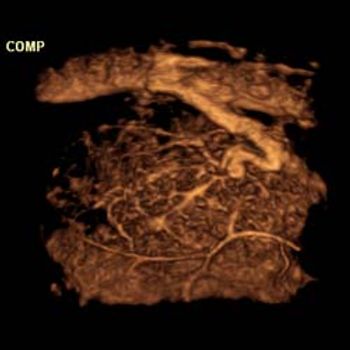
Elastography is one of the emerging technologies on display at ECR 2009, reflecting the growing importance of imaging techniques that compare the inherent stiffness of healthy and abnormal tissues in advancing the diagnostic value of ultrasound. Elastography’s clinical applications were discussed at two separate satellite symposia on Saturday and Sunday.
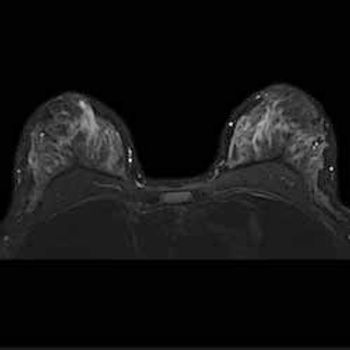
In the gleaming technical exhibition at ECR 2009, vendors of MRI systems are showing just how their latest innovations will help turn the imaging examination into a faster, less claustrophobic, and altogether more pleasant experience for the patient.
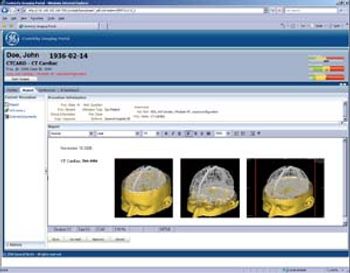
Are there any limits to what can be achieved with new PACS technologies? Yes, of course. But sometimes it seems that the only restrictions are those imposed by the scope of the human imagination.
The bits and pieces that make digital radiography are center stage at the Varian Medical Systems booth.
A less powerful version of Toshiba's flagship Aquilion One CT scanner appeared at its first tradeshow this week in Vienna.
Research proves UltraSPECT claims for quick scansTraxtal prepares to launch navigational upgrade at SIR 2009Ziehm releases C-arm in Europe
Having completed the sale of its 3D visualization unit to Toshiba Medical earlier this year, Barco projected a new , more concentrated look at ECR 2009.
A joint project of the Cardiovascular and Interventional Radiological Society of Europe and the European Society of Radiology addresses some key points of diagnosis and referral to interventional radiology within the radiology department.
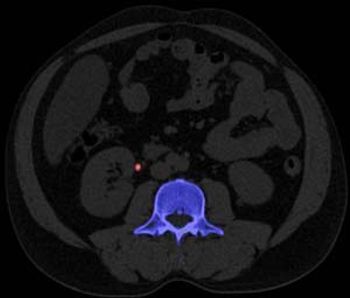
Slice wars have long dominated advances in CT technology. That situation is changing, and the market appears ripe for innovation. Energy-dependent imaging, a topic first aired over two decades ago, is back on the agenda
Digital breast tomosynthesis was found to be superior to 2D digital mammography for determining tumor boundaries, a value at a time when more women with breast cancer are choosing breast conservation therapy, according to a study presented Friday.
Digital breast tomosynthesis was found to be superior to 2D digital mammography for determining tumor boundaries, a value at a time when more women with breast cancer are choosing breast conservation therapy, according to a study presented Friday.
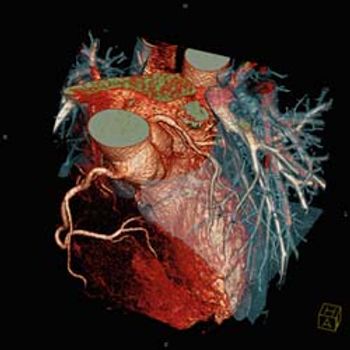
Speed and efficiency are two of the buzzwords used most commonly in the highly competitive field of CT imaging. When the wraps were lifted from the ECR 2009 technical exhibition, the dazzling improvements in data acquisition speed achieved by the new generation of CT scanners emerged. Vendors claim that huge improvements can be expected, in both radiology department workflow and patient safety.