
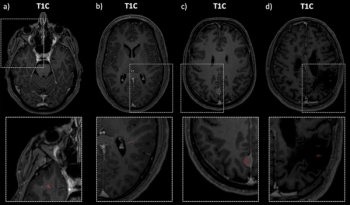
An artificial intelligence model, trained on MRI and FLAIR imaging from over 900 patients with multiple sclerosis, demonstrated a 96 percent accuracy rate and 99 percent specificity rate for contrast-enhancing lesions in this patient population.
An artificial intelligence model, trained on MRI and FLAIR imaging from over 900 patients with multiple sclerosis, demonstrated a 96 percent accuracy rate and 99 percent specificity rate for contrast-enhancing lesions in this patient population.

Recognizing the advent of beta amyloid-targeted therapies for the treatment of Alzheimer’s disease, the Centers for Medicare and Medicaid (CMS) has proposed eliminating coverage restrictions that limit amyloid positron emission tomography (PET) scans to clinical trial participants and one amyloid PET scan per lifetime.

Review the case study and test your knowledge to make the correct diagnosis.
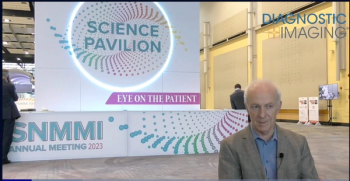
In a recent interview at the SNMMI conference, Roger Lecomte, Ph.D., and Vincent Doyon discussed the advent of ultra-high resolution (UHR) brain positron emission tomography (PET), which reportedly offers double the spatial resolution of conventional PET and may facilitate earlier detection of Alzheimer’s disease and other conditions.

The notion of non-physician practitioners (NPPs) attempting to do radiologist-level work is a very slippery slope and what this author refers to as the “bargaining” stage of grief.
Catch up on the top radiology content of the past week.

Optimized for musculoskeletal assessment, needle guidance and vascular access, the PocketPro H2 wireless ultrasound unit reportedly provides 90 minutes of high-quality continuous scanning for point-of-care applications.

Noting recent double-digit increases in health-care associated infections (HAIs) and potential vulnerabilities in radiology departments, this author emphasizes proactive preventive measures to protect patients and staff.
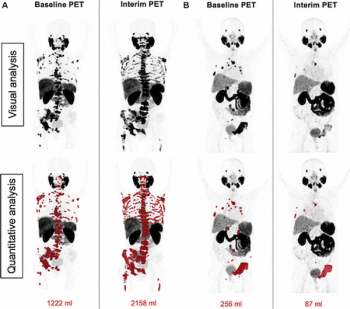
Examining the use of the Response Evaluation Criteria in Prostate-specific Membrane Antigen (PSMA) PET/CT (RECIP 1.0) model for assessing the treatment of metastatic castration-resistant prostate cancer, researchers found robust agreement between quantitative application of RECIP via tumor segmentation software and qualitative application of the model through reads by nuclear medicine physicians.

Catch up on recent interviews with Jeremie Calais, M.D. MSc, Krishna Patel, M.D., Phillip Kuo, M.D. Ph.D, and more faculty from the Society for Nuclear Medicine and Molecular Imaging (SNMMI) 2023 conference.
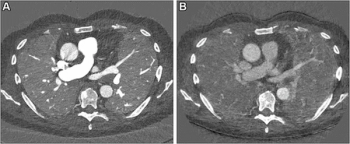
For conditions ranging from interstitial lung disease and post-COVID-19 complications to idiopathic pulmonary fibrosis, photon-counting computed tomography (PCCT) facilitates simultaneous functional and morphologic lung assessment at lower radiation dosing than conventional chest CT, according to newly published research.
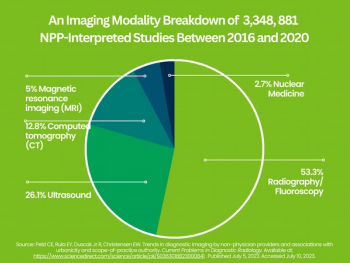
In a retrospective review of over 110 million imaging claims for patients with commercial insurance or Medicare Advantage, researchers noted key trends signaling significant increases in imaging billed by non-physician practitioners (NPPs).
Review the case study and test your knowledge to make the correct diagnosis.
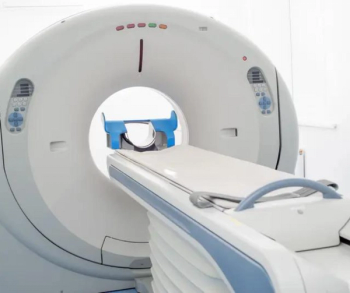
Superfluous pan scans have become standard for a vast majority of minor injury presentations in emergency room settings.
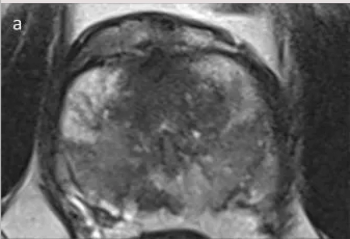
Patients with extraprostatic extension (EPE) on pre-prostatectomy MRI had a 3.6-fold higher risk for biochemical recurrence (BCR) of prostate cancer and a 25 percent lower three-year BCR-free survival rate in comparison to patients without EPE on pre-op MRI, according to newly published research.
Catch up on the top radiology content of the past week.
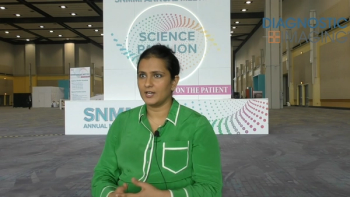
In a recent interview at the SNMMI conference, Krishna Patel, M.D., discussed the benefits of the PET perfusion radiotracer agent 18F-flurpiridaz and new research findings showing the agent’s increased sensitivity and specificity in diagnosing coronary artery disease in obese patients.

An artificial intelligence (AI)-enabled platform that can reportedly diagnose heart failure with preserved ejection fraction (HFpEF) through analysis of a single echocardiogram view, the EchoGo Heart Failure now has a HCPCS code for use of the technology in outpatient settings for Medicare beneficiaries.

The use of single-photon emission computed tomography (SPECT)/computed tomography (CT) to monitor the effectiveness of Lu-177-PSMA (Pluvicto) in treating prostate cancer led to a greater than 50 percent decrease in prostate-specific antigen (PSA) level for 60 percent of patients in a new study, noted Andrew Nguyen, MBBS, FRACP, AANMS, in a recent interview at the Society of Nuclear Medicine and Molecular Imaging (SNMMI) conference in Chicago.

The prospective multicenter trial, which is slated to begin patient recruitment in late 2023, will reportedly assess the ability of 64Cu SAR-bisPSMA to diagnose prostate cancer within pelvic lymph nodes.
Review the case study and test your knowledge to make the correct diagnosis.

Reportedly receiving the first Current Procedural Terminology (CPT) III code from the American Medical Association (AMA) for artificial intelligence (AI)-enabled brain magnetic resonance imaging (MRI) software, Icometrix says its adjunctive quantification software can be utilized for diagnosis and assessment of conditions ranging from Alzheimer’s disease and epilepsy to stroke and dementia.

While it stands to reason that referring physicians would prefer a condensed summary of relevant imaging findings, vagaries with insurers, patients and other possible readers of the radiology report may warrant an inefficient minutiae-cluttered approach.
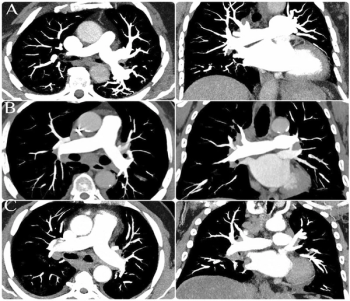
New research suggests the use of high-pitch photon-counting computed tomography (PCCT) facilitates similar image quality and attenuation in the pulmonary trunk at lower iodinated contrast media (ICM) dosing levels ranging from 35 to 60 ml.
Carch up on the top radiology content of the past week.
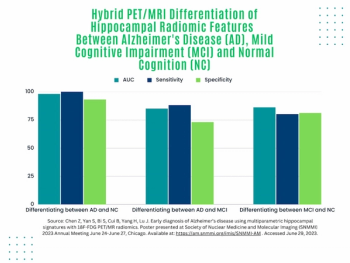
Employing a hybrid positron emission tomography (PET)/magnetic resonance imaging (MRI) model to assess predictive features of Alzheimer’s disease (AD), researchers noted a 100 percent sensitivity rate and a 93 percent sensitivity rate for distinguishing between AD and normal cognition, according to a study presented at the recent Society of Nuclear Medicine and Molecular Imaging (SNMMI) conference in Chicago.

The approval of Blue Earth Diagnostics' Posluma (flotufolastat F 18) is a significant step forward for PSMA PET imaging, but will it actually help improve patient outcomes?
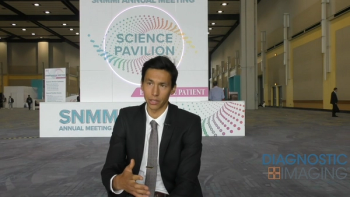
In an interview at the recent Society of Nuclear Medicine and Molecular Imaging (SNMMI) conference in Chicago, Jeremie Calais, M.D., MSc discussed promising research findings for the use of the positron emission tomography (PET) imaging agent 89ZR-DFO-girentuximab for diagnosing clear cell renal cell carcinoma.
Review the case study and test your knowledge to make the correct diagnosis.

Catch up on the top AI-related news and research from the past month.