










Catch up on the top radiology content of the past week.
Catch up on the top radiology content of the past week.
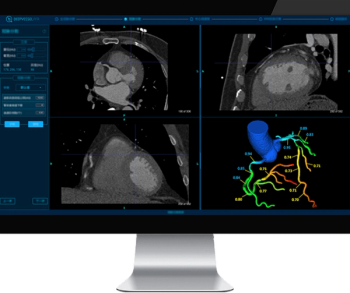
Employing deep learning capabilities, the DeepVessel FFR reportedly provides enhanced non-invasive evaluation of coronary arteries through semi-automated analysis of coronary computed tomography angiography (CCTA) imaging.
Catch up on the top AI-related news and research of the past month.
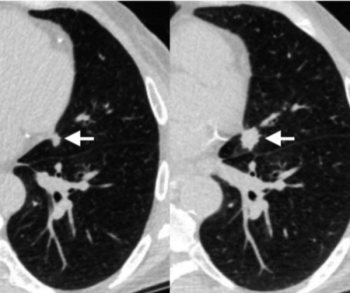
Trained and developed on over 35,000 low-dose computed tomography (LDCT) scans and validated in three independent data sets, a deep learning algorithm demonstrated an average area under the curve (AUC) of 90.6 percent for predicting lung cancer within one year.
Catch up on the top radiology content of the past week.
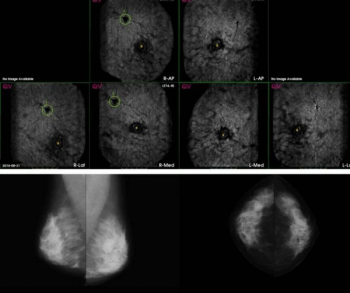
Emerging research suggests combined artificial intelligence (AI) assessment of digital mammography and automated 3D breast ultrasound provides enhanced detection of breast cancer in women with dense breasts and may be a viable alternative in areas where radiologists are scarce.
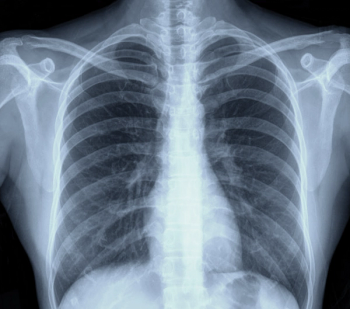
In a study involving patients who presented to emergency departments with acute chest pain, a deep learning model demonstrated significantly improved prediction of aortic dissection and all-cause mortality and indicated that additional pulmonary and cardiovascular testing could be deferred in seven times as many patients as suggested by conventional risk factors and testing measures.
In a provocative new article, radiology researchers discuss the impact of social determinants of health (SDoH) upon access to care and patient outcomes, and present strategies within the realms of radiology education, research, clinical care, and innovation that may help mitigate health-care disparities.
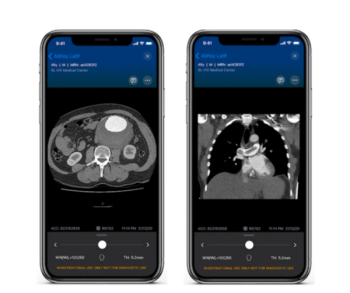
The artificial intelligence (AI)-enabled Viz™ Vascular Suite reportedly allows automated detection of vascular conditions, shown on computed tomography (CT) and other imaging modalities, and facilitates timely triage among interdisciplinary teams.
Catch up on the top radiology content of the past week.
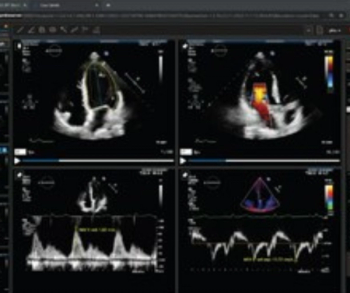
CAAS Qardia 2.0, an updated version of the CAAS Qardia echocardiography software platform, reportedly incorporates artificial intelligence (AI)-enabled workflows, and provides enhanced imaging and analysis of key cardiac measures.
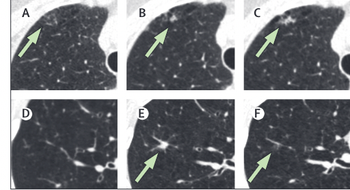
From incidental findings and screening for chronic obstructive pulmonary disease (COPD) to surveillance imaging protocols and the advent of artificial intelligence (AI), the authors of a new meta-analysis examine insights and emerging trends from the last two decades of research on the use of low-dose computed tomography (CT) in lung cancer screening.
Check out the top radiology content of the past week.
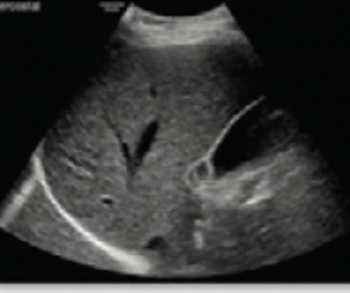
In a new prospective study, an emerging deep learning model, which incorporates parametric mapping with quantitative ultrasound to estimate liver fat fraction, demonstrated a 90 percent sensitivity rate and a 91 percent specificity rate for diagnosing hepatic steatosis in patients with non-alcoholic fatty liver disease (NAFLD).
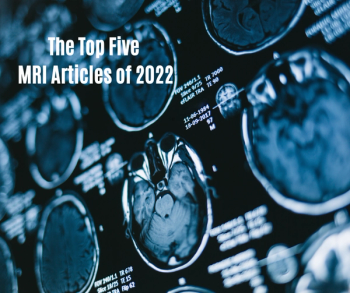
Catch up on the most well-read magnetic resonance imaging (MRI) articles from 2022.
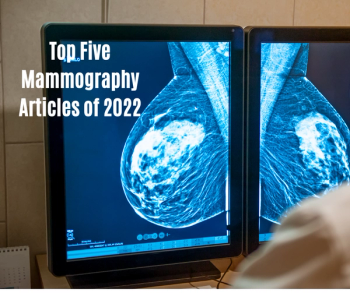
Catch up on the most well-read mammography articles from 2022.
Catch up on the most well-read artificial intelligence (AI) articles from 2022.
Check out the top radiology content of the past week.
Catch up on the top AI-related news and research of the past month.
In a video interview discussing one of her recent lectures at the Radiological Society for North America (RSNA) conference, Nina Kottler, M.D., M.S., noted how the combination of artificial intelligence (AI) and radiologist experience can help mitigate bias limitations with the development of AI algorithms as well as educational biases inherent to a radiologist’s training and experience.
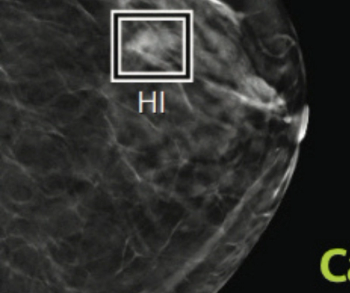
The artificial intelligence (AI) software Saige-Density™ reportedly provides automated assessment of breast density during mammography exams.
Check out the top radiology content of the past week.
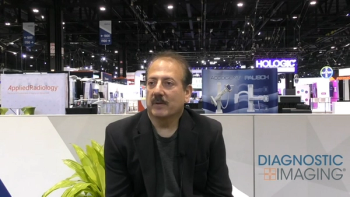
In a recent interview at the Radiological Society of North America (RSNA) conference, Eliot Siegel, M.D., discussed a variety of potential benefits with cloud-based image management in radiology, ranging from enhanced data security and economies of scale to improved access to a variety of artificial intelligence (AI) solutions to increase efficiency.
Catch up on the top radiology content of the past week.

In a recent video interview from the Radiological Society of North America (RSNA) conference, Tessa Cook, MD, PhD discussed new research on automated de-identification in radiology reports and the potential of artificial intelligence (AI) and natural language processing (NLP) to help address time-consuming challenges in the radiology workflow.