












Will radiologists eventually be replaced by artificial intelligence?
Will radiologists eventually be replaced by artificial intelligence?
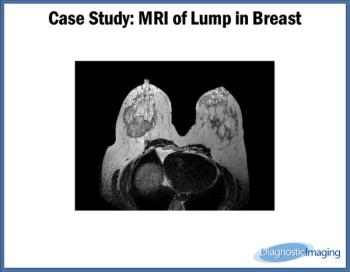
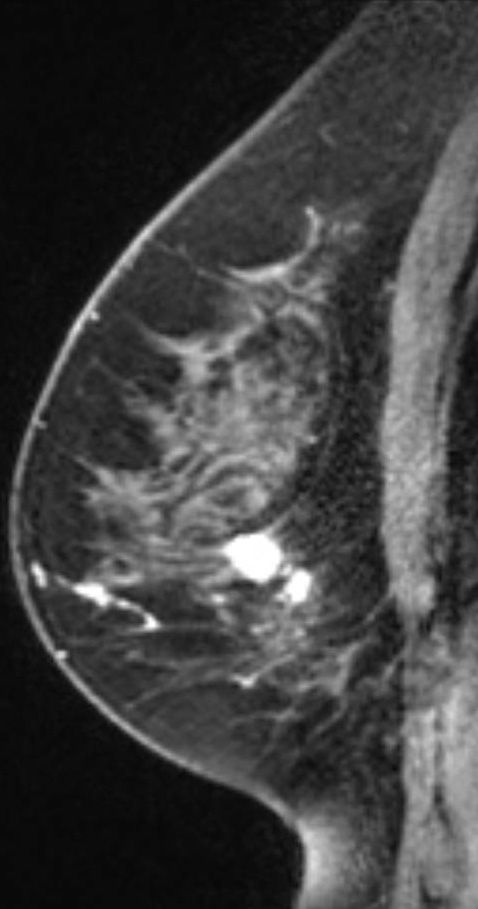
Case History: 44-year-old patient presented with complaint of lump in right breast for four months.

Advancements in music and mammography follow similar paths.
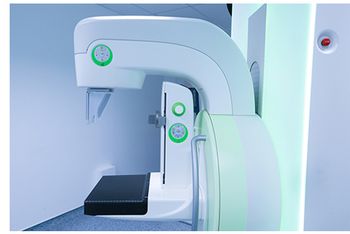
Repeated digital mammography to screen for breast cancer may increase the risk for breast cancer.

Computer-aided diagnosis was evaluated to determine efficacy in radiologic assessment of lung cancer.

Diagnostic Imaging talks with the USPSTF about its newly released final recommendations for breast cancer screening.

Is there as much controversy about screaming mammograms?
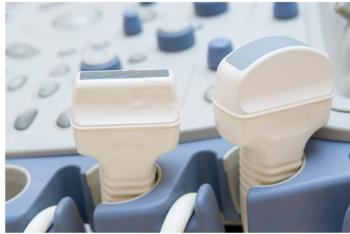
Ultrasound detects more invasive cancers, but number of total cancers detected is comparable between US and mammography.
MRI after mammography may detect clinically relevant disease.

CHICAGO-Breast imaging experts look at the same data, but see different results, as explained at RSNA 2015.
CHICAGO-A key trend from the RSNA 2015 show floor was equipment upgradeability.
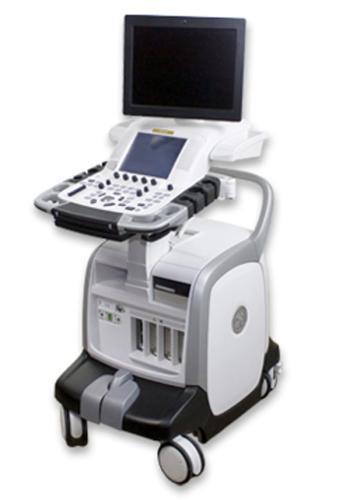
Radiologists viewing supplemental breast ultrasounds should assess lesions separately to reduce the risk of missing a cancer.

Digital breast tomosynthesis screening found more cancers than mammography, and reduced recall rates.
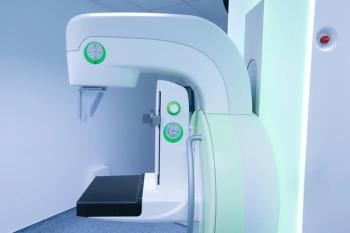
False-positive screening mammograms with recommendations for further evaluation could be a predictor for future breast cancers.
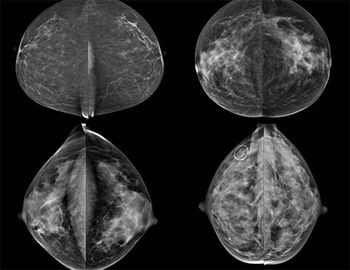
CHICAGO-Challenging breast density as a strong risk factor for cancer.
CHICAGO-The effect of expanded Medicaid to allow screening access on rates of breast cancer screening.
Screening mammography finds more high-grade DCIS among older women.

Radiologists reading CT colonography may see difficult-to-detect polyps but not consciously register them.
Mammography alone is just as good as mammography with CAD, and less expensive, for detecting breast cancer.

Unenhanced diagnostic MR imaging–DWIBS mammography may detect false-positive X-ray screening mammograms.

Barco’s Coronis Uniti display system received expanded clearance for multi-modality viewing.
Biennial screening mammography may detect more advanced cancers among premenopausal women than annual screening would.
Annual screening mammography can wait until age 45 for women at average risk of breast cancer.
Ultrasound and digital breast tomosynthesis find more cancers than just 2D mammography.
Adding molecular breast imaging to mammography does add to screening cost, but it also increases cancer detection.