Researchers found that Korean women with a combination of benign breast disease and BI-RADS category C or BI-RADS category D breast density had a nearly threefold or greater 10-year risk for breast cancer.


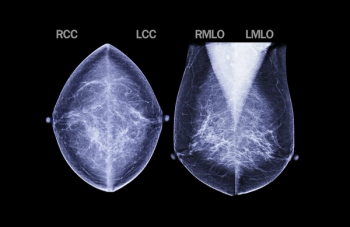
Researchers found that Korean women with a combination of benign breast disease and BI-RADS category C or BI-RADS category D breast density had a nearly threefold or greater 10-year risk for breast cancer.

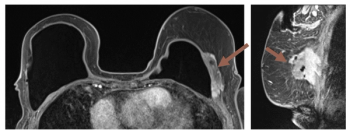
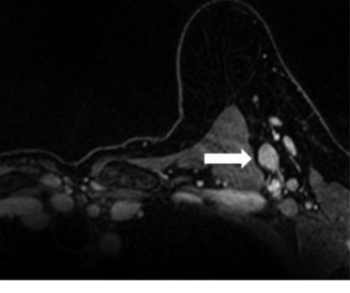
In a recent lecture at the Society of Breast Imaging (SBI)/American College of Radiology (ACR) conference, Linda Moy, MD, reviewed key tips for optimizing magnetic resonance imaging (MRI) of the breast.

Could the emerging artificial intelligence platforms Saige-Dx and Quantib Prostate 2.0 improve cancer detection with mammography and prostate MRI?

Catch up on the top radiology content of the past week.

Given the challenges with the shortage of the iodinated contrast agent Omnipaque, national and state organizations have issued suggested risk mitigation and conservation strategies to reprioritize imaging needs during this temporary shortage.


What is the diagnosis?

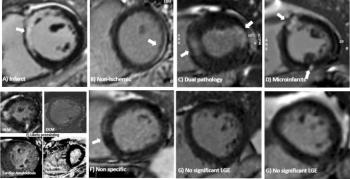
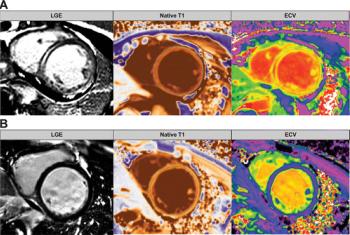
Sharing insights from their recent presentation at the American Roentgen Ray Society (ARRS) conference in a new video interview, researchers discussed how sex-based differences have an impact in the imaging and diagnosis of ischemic heart disease (IHD) in women.

Offering integrated artificial intelligence (AI) and seamless multi-nuclei imaging capabilities, the new magnetic resonance imaging (MRI) system reportedly enhances image quality and workflow efficiency.

Check out top radiology content from the past week.

In a recent presentation at the American Roentgen Ray Society (ARRS) conference, researchers discussed pertinent considerations with imaging of gunshot wounds.

Lung opacities/consolidation and cervical/axillary adenopathy are reportedly common findings in emergency room imaging of patients suspected of having complications related to COVID-19 vaccines, according to new research presented at the American Roentgen Ray Society (ARRS) conference.

Review the top radiology content from the past week.

While there can be an array of challenges in outsourcing night coverage to teleradiology service providers, due diligence with contract terms can help mitigate costs and increase flexibility if radiology practices decide to switch teleradiology providers down the line.

Could an emerging modality provide a viable alternative to gadolinium-based contrast agents (GBCAs) in this high-risk patient population?

In a recently published study, researchers found that multiparametric quantitative magnetic resonance imaging (qMRI) may detect subtle biomarkers of conditions such as autism and cerebral palsy in adolescents with extremely preterm births.

What is your diagnosis?

Review top radiology content from the week.

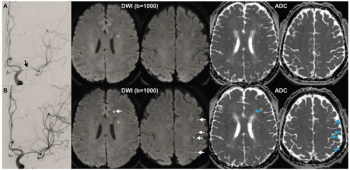
Emphasizing the proper diagnostic characterization of sidewall aneurysms, the authors of a new study found no significant differences in occlusion status or complications when they compared the approved use of intrasaccular flow disruption for bifurcation aneurysms to off-label treatment of sidewall aneurysms.

Validating a prognostic scoring system for locoregional recurrence risk in post-mastectomy patients with varying levels of axillary lymph node involvement, emerging research suggests patients with intermediate risk for breast cancer recurrence could benefit from post-mastectomy radiotherapy.

Review top radiology content from the week.

Boston Scientific’s STIMVIEW XT reportedly enables 3D brain imaging that facilitates more accurate lead placement and targeted stimulation modeling for patients with Parkinson’s disease or essential tremor.

In a recent video interview, Arun Krishnaraj, MD, MPH and David Larson, MD, MBA, discussed the continued use of physical media to transport medical images between different health-care facilities, resulting inefficiencies and delays with patient care, and the initiative to create a linked multi-hub model to end this dated practice once and for all.

In addition to segmentation of the prostate, the artificial intelligence (AI)-enabled advance reportedly facilitates PI-RADS scoring by assessing the size and intensity of possible lesions.

In addition to recharging one’s batteries, a temporary hiatus from employment may provide time for self-reflection and recognition of what you truly enjoy about your work.