










In a recent video interview, Vivek Bansal, M.D., discussed a recent Radiology Partners publication that offers practical tips and best practice guidance on CT and MRI neuroimaging for stroke patients.
In a recent video interview, Vivek Bansal, M.D., discussed a recent Radiology Partners publication that offers practical tips and best practice guidance on CT and MRI neuroimaging for stroke patients.
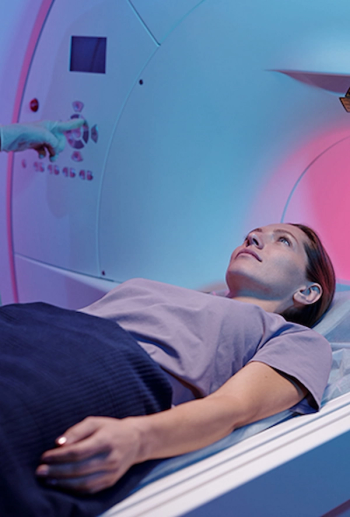
A robotic guidance and placement system, the IGAR system can be utilized inside of a magnetic resonance imaging (MRI) bore.
Catch up on the top radiology content of the past week.
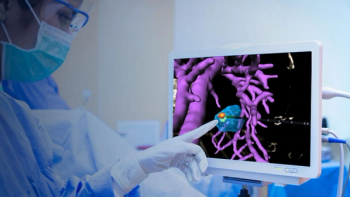
Through the use of artificial intelligence (AI) and imaging modalities such as ultrasound, CT, and MRI, the newly FDA-cleared VisAble.IO software reportedly enhances planning and real-time assessment for liver tumor ablation procedures.
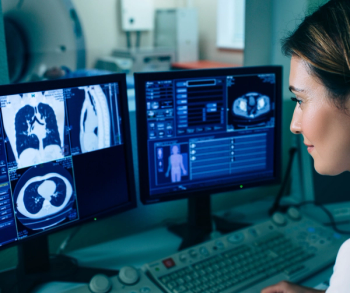
How strong is your own quality assurance (QA) barometer for interpreting CT, MRI, and ultrasound images?
Catch up on the top radiology content of the past week.
Joseph Cavallo, MD, MBA, and Dushyant Sahani, MD, discuss unmet needs in imaging modality technology and the contrasting agents used.
Experts discuss discuss the American College of Radiology recommendations regarding the use of contrast media and their guidance related to the use of generics during supply shortages.
Joseph Cavallo, MD, MBA, and Dushyant Sahani, MD, discuss generic agents iodixanol injection and gadoterate meglumine injection for the use in imaging modalities.
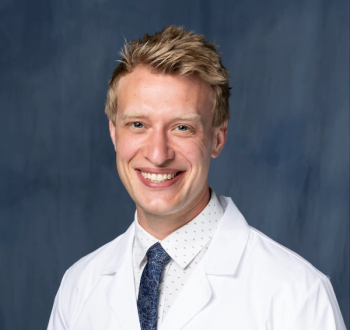
Wayne G. Brisbane, MD, of the University of California, Los Angeles, discussed the challenges of focal therapy for prostate cancer and how Unfold AI can help improve the accuracy of this treatment, as well as help counsel patients during the treatment decision process.
Catch up on the top five most viewed content at Diagnostic Imaging in August 2023.
Catch up on the top AI-related news and research from the past month.
Catch up on the top radiology content of the past week.
Experts discuss the concept of generics and how they have traditionally been utilized in the healthcare space.

Joseph Cavallo, MD, MBA, and Dushyant Sahani, MD, provide an overview of the different imaging technique protocols needed for contrast agents.
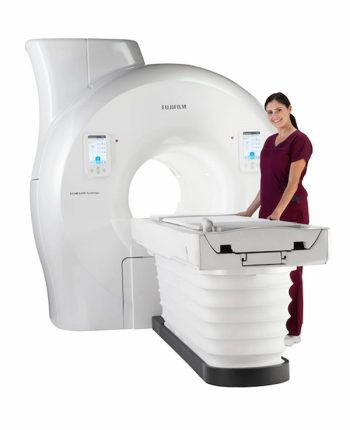
The Echelon Synergy MRI system reportedly uses deep learning technology to accelerate image acquisition and enhance image quality.
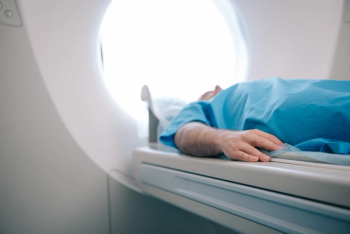
When facilities routinely forward X-rays for “pain,” vascular ultrasound studies without Doppler or chest computed tomography (CT) scans devoid of breath holding, patient care suffers.
Catch up on the top radiology content of the past week.
Radiology experts discuss the role of contrast agents in imaging and the impact these agents have on image quality.
Joseph Cavallo, MD, MBA, and Dushyant Sahani, MD, provide a brief overview of imaging modalities and their importance in medical diagnosis and treatment.
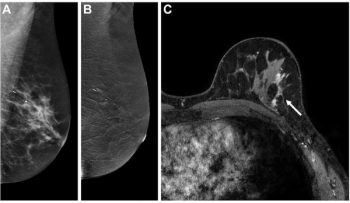
In a new study comparing standard breast MRI, abbreviated breast MRI and contrast-enhanced mammography in supplemental breast cancer screening, researchers found that MRI offered a greater than 14 percent higher cancer detection rate and a nearly 39 percent higher sensitivity rate than CEM.
Catch up on the top radiology content of the past week.
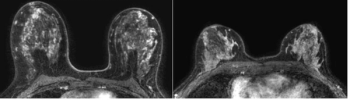
Emerging research suggests that a high volume of enhancing parenchyma on dynamic contrast-enhanced MRI more than doubles the breast cancer risk for women with extremely dense breasts.
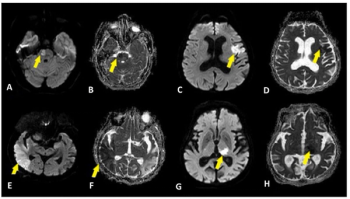
The most common brain MRI findings associated with COVID-19 included acute/subacute infarction in 22 percent of patients and cerebral microbleeds in 17 percent of patients.
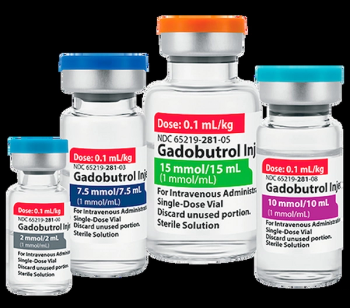
The indications for Gadobutrol injection, a generic substitute for Gadavist, include neurovascular and cardiovascular assessments as well as breast malignancy detection with magnetic resonance imaging (MRI).