















Chest MRI picks up the same characteristics of COVID-19 pneumonia that are seen on chest CT, making it a good alternative without the radiation.

Chest MRI picks up the same characteristics of COVID-19 pneumonia that are seen on chest CT, making it a good alternative without the radiation.
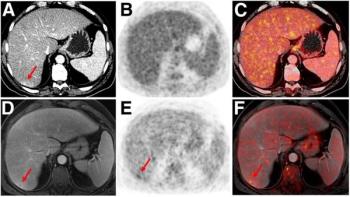
PET/MRI detects more lesions with less radiation, making it a great option for pediatric patients.

Rethinking CMR during COVID-19; Abdominal Imaging and COVID-19; Mental Health Impacts of COVID-19; African American and Lung Cancer Screening; Plus, African American Women and Disadvantages in Breast Cancer Screening

Women treated with both surgery and radiotherapy for ductal carcinoma in situ fared best.

A group of cardiologists, imaging specialists, and general medicine providers offer a warning about using CMR with asymptomatic patients and entreat professional societies from radiology and other specialties to craft guidance on proper usage.
The Compressed SENSE MRI technique can reduce scan time by more than half without impacting image quality or diagnostic certainty.

Improving patient communication not only augments patient understanding of their radiation exposure with imaging studies, but it bolsters trust in their healthcare providers, as well.
Scans identify evidence of the condition in 15 percent of athletes who have rebounded from viral infection.

Portable, Low-field MRI; COVID-19 and Cardiac MRI; High-Intensity Focused Ultrasound; Coronary CTA Guidance; and Pediatric Advanced Imaging Utilization

A decision tree-based machine learning algorithm can help departments identify and contact patients at highest risk for skipping appointments.

Point-of-care, 64mT MRI performs as well as conventional CT and MRI while improving patient safety.
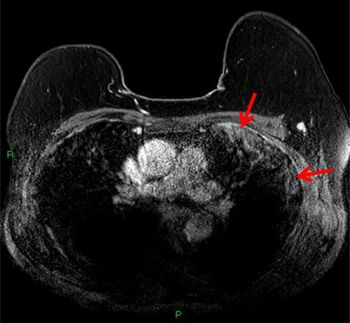
A follow-up breast screening MRI ended with a woman from England being treated for viral infection.

Chest CT for COVID-19 Diagnosis; COVID-19 Neuroimaging Patterns; Radiologist COVID-19 Stress; Accelerated MRI NYU Langone Health and Facebook AI Partnership

By capturing changes to the hippocampus, MRE can pinpoint brain damage early before epilepsy becomes medication resistant.

Treatment offers pain relief without the added exposure of radiation therapy.
CT use has declined precipitously with pediatric appendicitis patients without a significant change in negative appendectomy rates.

Dr. Laurence Klotz discusses micro-ultrasound as a faster, less invasive, more cost-effective screening strategy compared to mpMRI in this podcast.

Grassroots group points to substantial clinical evidence of safety in call for agency to remove the warning.

Cerebral infarction and hemorrhage are more common in severe cases while cranial nerve abnormalities affect patients with milder disease.
SpaceStation MRI protects infusion pumps from magnetic fields, allowing for uninterrupted delivery of medication during imaging.

Artificial intelligence equivalency in breast cancer screening; diffusion-weighted imaging and breast MRI; CT patterns for EVALI; Emergency Department and CT Scan Declines with COVID-19; and Thoracic Imaging Findings of MIS-C.

The dual-layer platform can identify malicious instructions from a host computer.

Three-way comparison shows alternative protocols to standard echo-planar imaging can produce higher quality images with breast cancer screening.

Past RBMA President Christie James, American College of Radiology Commission on Economics Chair Greg Nicola, M.D., and Revenue Cycle Coding Strategies President Melody Mulaik discuss the radiology revenue cycle management challenges and solutions of the pandemic.

CT and heart attack prediction; lagging outpatient imaging volume recovery; equivalent thoracic MRI performance with COVID-19 pneumonia; and CT colonography during COVID-19