




Molecular Imaging
Latest News
Advertisement
Latest Videos


Shorts

0:38
The Origins and Evolution of PSMA
13 days ago
by
Martin Pomper, MD, PhD

0:39
The Increased Efficiency and Quality with an Emerging Total Body PET/CT Scanner
a month ago
by
Michael Hofman, MBBS, FRACP

0:54
The Theranostics Revolution in Nuclear Medicine
2 months ago
by
Phillip Kuo, MD, PhD

0:19
Will Next Decade of Nuclear Medicine Research Emphasize Treatment Over Detection?
2 months ago
by
Surekha Yadav, MBBS, MD

0:43
The Continued Rise of Theranostics and PET/CT in Oncology
2 months ago
by
Michael Hofman, MBBS, FRACP

0:43
Current Research Directions with PSMA PET
2 months ago
by
Jeremie Calais, MD, PhD

0:48
Study Suggests Initial PSMA PET is 'Clinically Justified' in High-Risk Patients
2 months ago
by
Surekha Yadav, MBBS, MD

1:02
A 'Revolutionary' Advance with the Dynamic Imaging of Total Body PET/CT
2 months ago
by
Michael Hofman, MBBS, FRACP

0:37
Could a Tau PET Radiotracer Facilitate CTE Detection in Living Patients?
2 months ago
by
Isabelle Boileau, PhD

0:50
Welcoming the Diverse Perspectives Among Nuclear Medicine Technologists
3 months ago
by
Shannon Youngblood, EdD, MSRS, CNMT, RT(CT) (ARRT)
Podcasts











Advertisement
More News
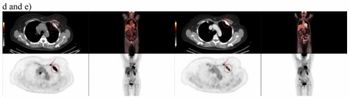
In a comparative study involving 51 women who had systemic treatment for metastatic breast cancer, researchers found that all FDG-PET scans identified measurable target lesions according to PERCIST criteria in comparison to 35 percent of CT scans as per RECIST 1.1 criteria.

Researchers found that former NFL players had a 3.8-fold higher mortality rate for all-cause dementia and a nearly 3.9-fold higher mortality rate for Parkinson’s disease, according to a study involving over 19,800 former NFL players.
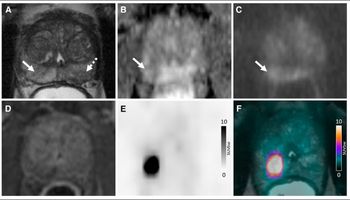
Researchers said the combination of 18F-flotufolastat PET/MRI may lead to a 57 percent reduction of prostate biopsies in comparison to a 25 percent reduction with prostate MRI alone.
Catch up on the most-well viewed radiology content in June 2026.

Catch up on the most well-viewed video interviews from Diagnostic Imaging in June 2026.

Catch up on the top radiology content of the past week.

In a recent episode of our “Molecular Imaging in Focus” series, Surekha Yadav, MBBS, MD, discussed research presented at the SNMMI conference that showed significant advantages of PSMA PET over conventional imaging for detection of osseous oligometastatic prostate cancer (PCa).
Catch up on the top radiology content of the past week.
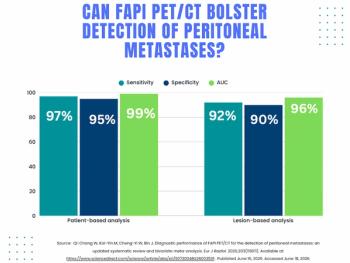
The use of FAPI PET/CT offered a 97 percent pooled sensitivity for detecting peritoneal metastases in a patient-based analysis in a new meta-analysis involving over 800 patients.
In the latest episode of the Molecular Imaging in Focus series, Michael Hofman, MBBS, FRACP, discussed the potential of an emerging PET radiotracer for DVT detection spotlighted in SNMMI’s “Image of the Year,” a new advance in total body PET/CT and other highlights from the SNMMI conference.
In a recent interview, new SNMMI president Heather Jacene, MD, discussed key goals for bolstering workforce development in nuclear medicine, improving infrastructure equity and optimizing emerging advances to facilitate precision treatments in oncology.
Catch up on the top radiology content of the past week.
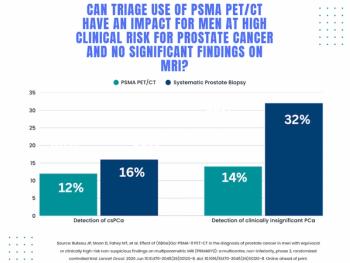
For men with high clinical risk for prostate cancer (PCa) and a lack of significant findings on mpMRI, triage use of PSMA PET/CT resulted in a 49 percent reduction of biopsies and an 18 percent reduction in detection of clinically insignificant PCa, according to newly published research.

The Reporting Pro software reportedly offers an array of AI-enabled features that may help streamline radiology reports.
Catch up on the top radiology content of the past week.
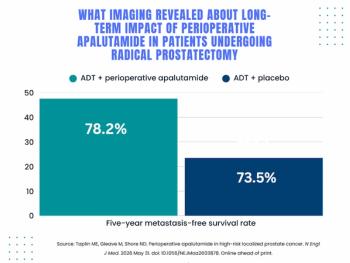
While researchers saw no significant difference in metastasis-free survival with the use of perioperative apalutamide in patients undergoing radical prostatectomy based on conventional imaging alone, the addition of PSMA PET imaging revealed a 20 percent higher likelihood of metastasis-free survival with adjunctive apalutamide.
In comparison to short-axial field of view PET/CT scanners, a total body PET/CT imaging platform with a long axis field of view detected more lesions in 68 percent of patients while reducing scan times by 83 percent, according to new research presented at the SNMMI conference.
Catch up on the top radiology content of the past week.
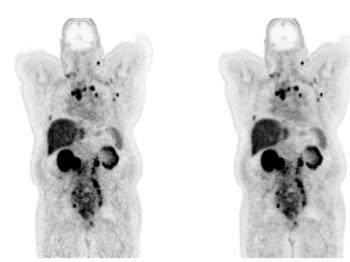
The SubtleHD(PET) software reportedly facilitates enhanced image quality, provides improved SUVmax quantitative accuracy and compatibility with all FDA-approved radiotracers.
Catch up on the top radiology content of the past week.
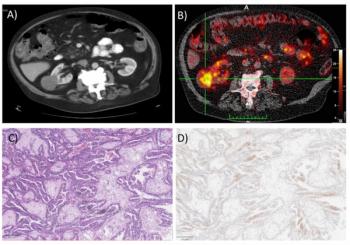
While previous research has demonstrated the capability of the PET/CT agent (89Zr)girentuximab for detecting clear cell renal cell carcinoma (ccRCC), a new analysis reveals a 98 percent positive predictive value (PPV) for detecting non-ccRCC renal cancers.
Catch up on the top radiology content of the past week.

In a recent interview, Matthew Hulse, a certified nuclear medicine technologist, discussed the evolution of amyloid PET imaging in managing patients with Alzheimer’s disease, the impact on PET imaging volume and the emergence of quantification platforms for monitoring treatment efficacy.

Catch up on the most well-viewed video interviews from Diagnostic Imaging in April 2026.
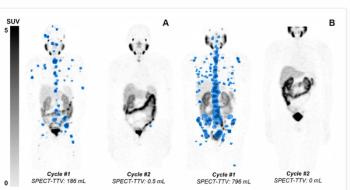
Patients who had a total tumor volume (TTV) complete response (CR) on six-week SPECT/CT imaging had a 16 percent higher survival rate at two years in comparison to those who didn’t have TTV CR, according to new prospective research.
Advertisement
Advertisement
Trending on Diagnostic Imaging
1
Emerging Research in Mammography, Breast MRI, Ultrasound and AI: A Summer Roundup of Key Breast Imaging Studies
2
Top Five Radiology Content in August 2026
3
Misfortune, Mistake, or Malfeasance? A Tool to Hone Outside of Radiology
4
Advances in AI — August 2026
5