Articles by Greg Freiherr

Every so often you come across an idea that has so much merit you can’t imagine why somebody hadn’t come up with it before. Such is the case with hospital gowns matched to a patient’s skin color. Although sky blue and forest green might be stunning on the right patient, it is hard to imagine either one helping docs spot signs of diseases that can be found in skin color changes.
For the first time in a year and a half, orders for Philips medical imaging equipment edged up in North America. It is the first tangible glimmer of hope that the great imaging recession may finally be over.
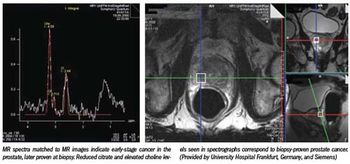
The idea of MR spectroscopy has been kicking around almost as long as MR itself. The allure is seductive: a noninvasive biopsy that quantifies in hard numbers the presence-or absence-of cancer.
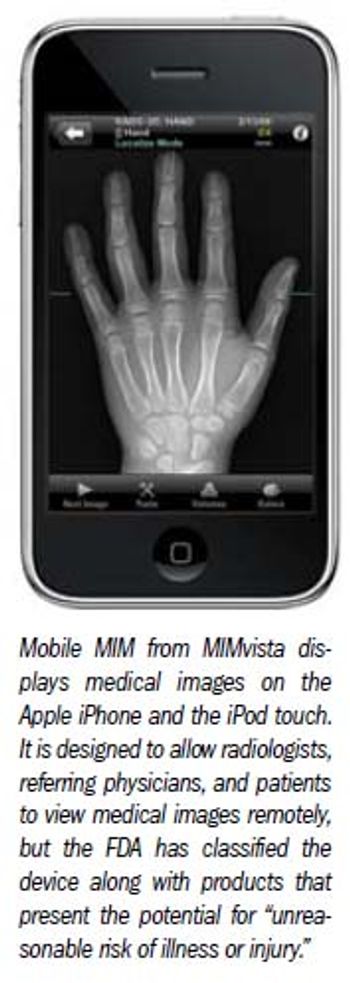
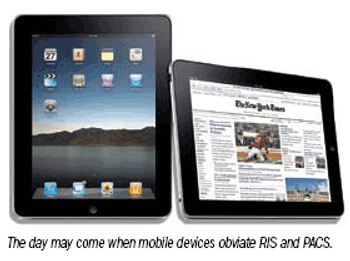
Mobile devices such as the iPhone and newly released iPad are attracting a lot of attention for how they might display medical images.
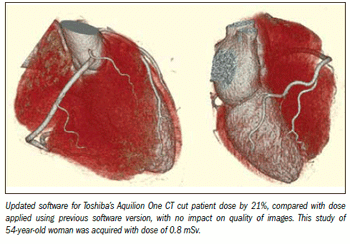
The means to reduce radiation dose are often at the fingertips of CT operators.
The use -- and cost -- of modern imaging was rising among Medicare patients with cancer as they entered the 21st century, according to research released April 27 by the Journal of the American Medical Association. From 1999 through 2006, imaging costs rose at a faster rate among Medicare beneficiaries than any other cost associated with their fight against cancer.
For the first time in a year and a half, orders for Philips medical imaging equipment edged up in North America. It is the first tangible glimmer of hope that the great imaging recession may finally be over.
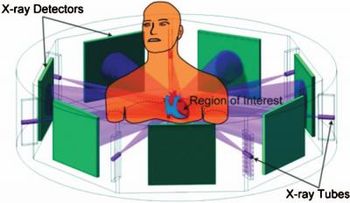
A new CT generation takes shape as vendors introduce designs that cut dose and increase resolution.
Radiologists express their diagnostic findings in words, their exam reports typically containing not a single image. They would be better served politically, and their referring physicians and patients clinically, if they shared their images as well as their conclusions.
Integration today comes in tastes that whet the appetite but don’t satisfy. And even these come grudgingly.
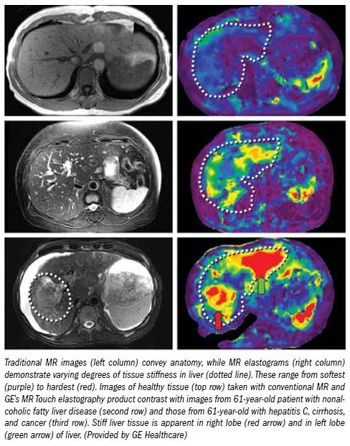
The liver is very soft when it's healthy; fibrosis firms the tissue.
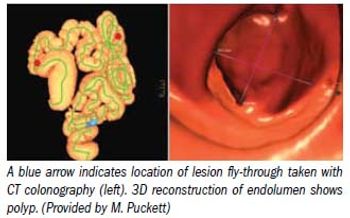
In the seven years since he came to Madison, Dr. Perry Pickhardt has done 7000 CT colonographies at the University of Wisconsin. Dr. Michael Puckett has been similarly successful in private practice with the San Diego Medical Imaging Group.
Smart phones are the tip of a new spear in information technology. They can help you get directions when lost in an unfamiliar city, even turn on the lights at home when you’re blocks away. Radiologists see other uses. They might use mobile devices to receive and send images to each other and to referring physicians.
Imaging will play a pivotal role in a clinical trial that promises to change the way medical research is done, not only in oncology, but throughout medicine.
The amount of data obtained in a single MR or CT scan is mind-boggling. At least some of the data radiologists throw away could save patients money while reducing their exposure to radiation and risk of complications from invasive procedures.
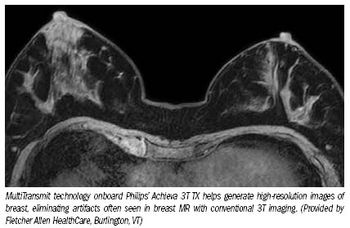
Neurological and musculoskeletal imaging are spectacular at 3T, thanks to its higher signal to noise ratio compared with lower field strengths.
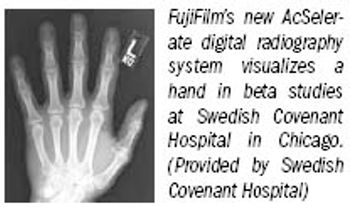
Fujifilm invented computed radiography. The Japanese company introduced CR to the U.S. nearly 30 years ago.
Trends in radiology used to be simple and predictable.
News that President Obama received a clean bill of health from a virtual colonoscopy several days ago rubbed influential gastroenterologists the wrong way.
On Feb. 28 President Obama was screened for colorectal cancer using CT colonography. The results from this exam, also called virtual colonoscopy, along with those from the rest of the president’s annual physical, which was done at the National Naval Medical Center in Bethesda, described the president as “fit for duty.”
It’s a kind of man bites dog story: unusual, remarkable, yet oddly plausible. The Centers for Medicare and Medicaid Services has told its contractors to hold claims containing services paid under the Medicare Physician Fee Schedule for the first 10 business days of March.
It’s not enough that sidelined nuclear reactors are restricting the supply of technetium for cardiac SPECT. Or that reimbursements for SPECT procedures are falling. Now the besieged modality has to contend with a challenge from CT.
Americans are scared. Some are frightened out of their wits. A radiologist recently told me about a patient with terminal pancreatic cancer who refused a CT ordered by his oncologist. Why? The patient said he was worried about radiation.
Siemens brought two blockbuster MR offerings to the 2009 RSNA meeting: the 3T Skyra and 1.5T Aera
There seems no end to the bashing. But from radiology’s perspective, Apple’s soon-to-be-released iPad could be huge, potentially serving as the first truly mobile device to support medical visualization.
Fuji touts computed radiography, VisEn Medical lights up with fluorescent imaging, and Varian grows in China.
In news from the nuclear medicine front, there’s a new twist in the technetium situation and equipment sales look to boom in Europe over the next decade.
In an elaborate corporate quadrille, partnerships are formed, licenses bought, and subsidiaries acquired. Meanwhile executives move into and out of their positions.
Preparations for the High Flux Reactor in the Netherlands to go down for scheduled repairs threatens supply of medical isotopes, lawyers squabble over Amicas share price, and a new MR contrast agent hits the market.
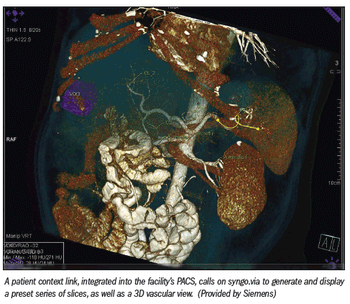
At least some of the tedium that goes with preparing imaging studies may be pushed into the background, and new capabilities brought to the fore, with the rollout this month of Siemens’ syngo.via