
A California neurosurgeon has launched what could turn into an epic legal battle over the rights to use diffusion tensor imaging, an MR technology that lately has begun to catch on as a diagnostic and neurosurgical planning tool.
A California neurosurgeon has launched what could turn into an epic legal battle over the rights to use diffusion tensor imaging, an MR technology that lately has begun to catch on as a diagnostic and neurosurgical planning tool.
For the vast majority of medical imaging devices, passing FDA review is a snap: Show equivalence to a device already on the market, wait a few months, and release the announcement that your new product is ready for U.S. patients. But not for full field digital mammography systems.
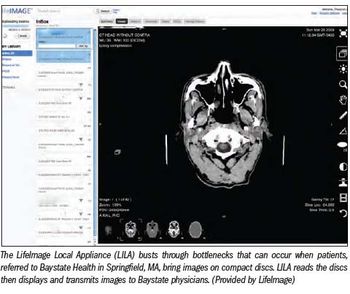
Sharing x-ray jackets is dead. PACS put an end to that. Now patients walk in with CDs. And it's causing a whole new kind of headache.
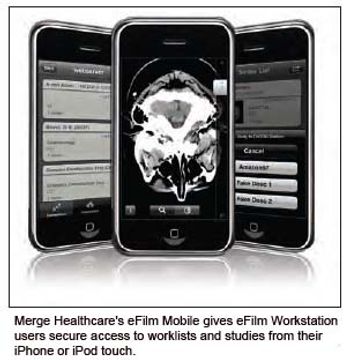
The bread and butter modalities of radiology, radiography and ultrasound, will be among the standouts of RSNA 2010.
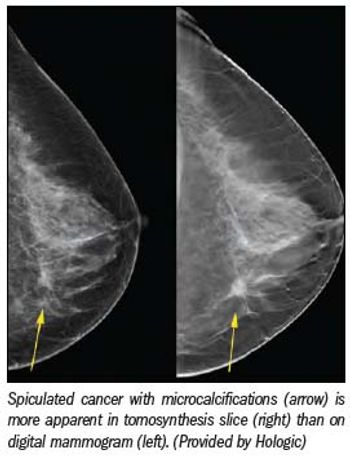
Breast tomosynthesis in the U.S. may finally be at hand. In September the FDA's Radiological Devices Panel unanimously agreed that Hologic's digital mammography tomosynthesis system, Selenia Dimensions, is effective and safe.
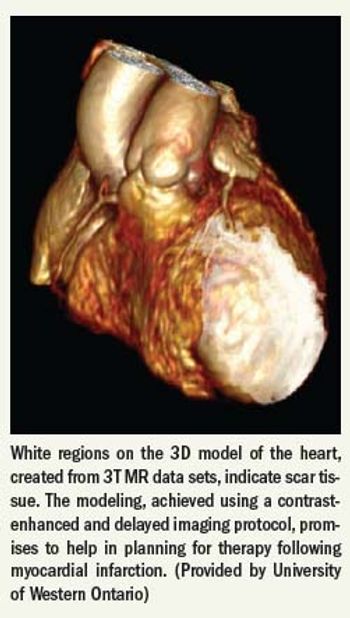
Experts have long suggested that the clinical promise of 3T, with its improved signal-to-noise ratio compared with 1.5T, might eventually be expressed in cardiac imaging, one of the least approachable clinical areas of MR.
It’s all too easy to reduce medicine to facts, practices to technology. Patients need to be consulted when it comes to making decisions involving the use of CT, according to a recent emergency room survey, even when time is in short supply and the answers seem obvious.
Increasing demand for imaging systems sparked a 7% jump in orders for healthcare equipment at Philips in the third quarter. Much of the gain came from customers in North America, where orders grew by 11% compared with 2% growth elsewhere in the world, leading to hopeful speculation that the extended lull in equipment purchases may finally be coming to a close.
When it comes to the transducers that power ultrasound, less is more.
Thirty years ago radiology was on the cusp of an explosion, triggered by the introduction of CT and MR and propelled by the widening adoption of these technologies. Expansion of the imaging universe continued with PET/CT, digital x-ray, and healthcare IT. But now this big bang has begun to cool. New and different opportunities for future growth are swirling into shape. Carestream Health has identified analog x-ray, characterized by clinics, private practices, and small hospitals, as a universe it can explore.
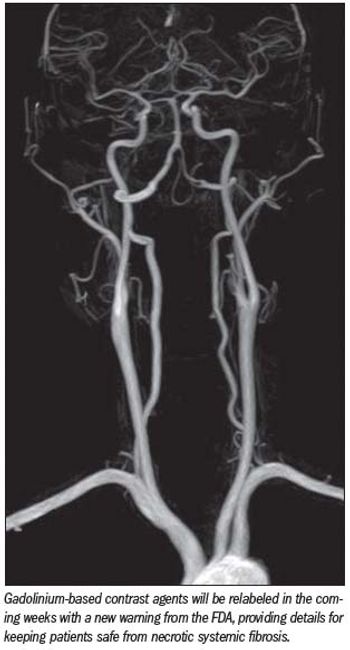
Current labeling already warns about the risks of gadolinium for patients with impaired kidney function.
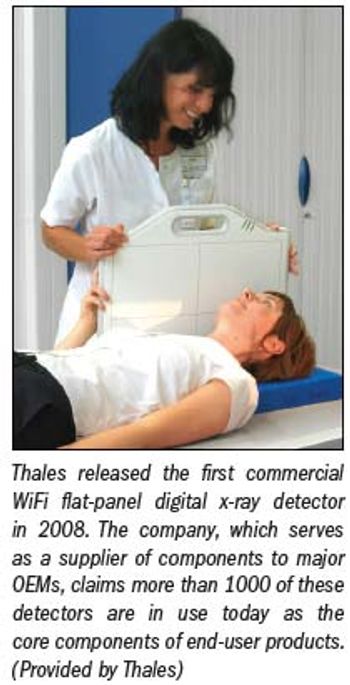
Wireless detectors are taking point position in radiology’s effort to turn analog radiography into digital radiography.
Before Hologic’s 3D digital mammography system can become a commercial product on the U.S. market, the company must develop a program to train physicians on how to interpret this new kind of mammogram.
Pathologies such as infections, or even tumors, crop up from time to time in patients examined for entirely unrelated issues. These “incidental findings” can put doctors-and patients-in a tight spot. How do they proceed with the patient, knowing that many of the asymptomatic signs of disease may never lead to clinical problems, or may simply be false positives?
There’s been plenty of talk over the years about the FDA being broken-its review process is too slow, its decisions flawed, its costs too high. The talk has come from industry, the public, and academia. The catalyst has been frustration.
Three of the most popular MR contrast agents-Magnevist by Bayer Healthcare, Omniscan by GE Healthcare, and Optimark by Covidien-will soon carry labels warning that their use is “inappropriate” for patients with acute kidney injury or chronic severe kidney disease. These and other gadolinium-containing agents will also carry new warnings emphasizing the need to screen patients for kidney dysfunction that puts them at risk for nephrogenic systemic fibrosis, the rare but potentially fatal condition that led the FDA to require warning labels on these agents in 2007.
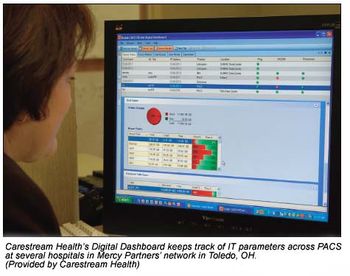
The pressure to get faster, more efficient, and more productive is mounting. Healthcare reform, increasing regulations, and declining reimbursements are bearing down.
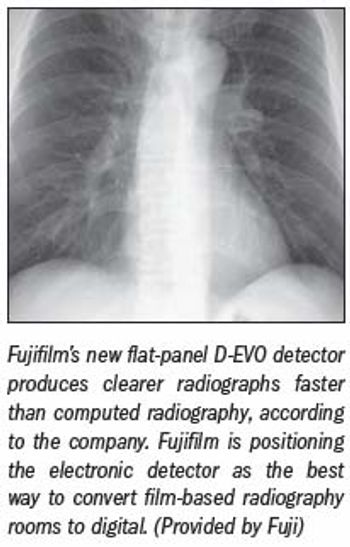
It is the end of an era for Fujifilm. For decades the Japanese firm has touted computed radiography as the way to transition from film to digital radiography.
Before you get on that plane, check the frequent flyers’ round trip special from Rocky Flats Gear: Purchase two pair of men’s radiation-shielding briefs and two pair of women’s briefs and get two pair of bra inserts for free.
With concerns about x-ray exposure mushrooming and anecdotes circulating about patients balking at exams involving ionizing radiation despite a commanding medical need for those exams, it’s not surprising to hear of documentation that the number of procedures for any x-ray related modality has gone down. Such was the case earlier this week, when the IMV Medical Information Division released the results of a survey that studies performed using radiography/fluoroscopy equipment at hospitals with more than 150 beds dropped about 9% from 2004 to 2009.
It may turn out to be one of those “who would ever have thought that would happen?” kind of things. But in the world of U.S. politics, it might be exactly what’s needed.
When it comes to the transducers that power ultrasound, less is more. As they have gotten smaller, more has been packed into the handheld probes that host them, providing more information, allowing easier access to the body’s acoustic windows, and offering easier handling by operators. Now this triad of benefits might be in line for a further boost, a big one.
To paraphrase Harry Truman, what virtual colonoscopy needs is a one-handed analyst. This was made clear earlier this week in the share price activity of iCAD , which leaped about 18% on news that the FDA had cleared the company’s VeraLook software for interpreting virtual colonoscopy exams. The next day the stock gave back about as much ground as it had gained.
Sales of ultrasound equipment fared better last year than those of other, more costly, imaging products such as MR and CT. The reason, according to InMedica, the medical research division of IMS Research, may be as simple as the price tag.
What set MRI on the path to where it is today was this modality’s ability to reveal, in strikingly realistic fashion, the mushy insides of our bodies. Whereas x-rays and CT scans showed our bony interior in stark relief, MRI excelled at showing our softer selves. That may be why it seemed so natural and fitting when fruits were used to see whether MRI scanners were working correctly. But I had never seen such scans as art, not until Andy Ellison got hold of them.
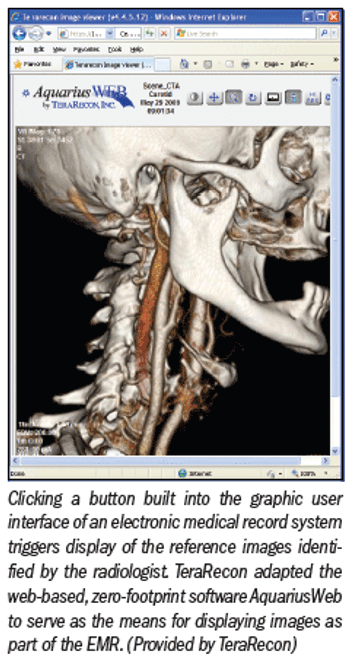
TeraRecon's zero-footprint web viewer has been around for a couple of years, but now it’s getting a new mission: to slip images into the electronic medical record.
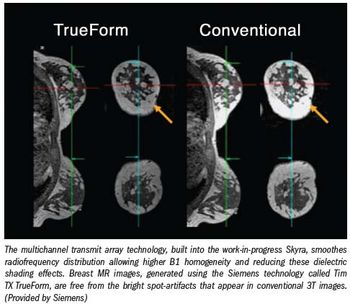
In the last decade, the number of receive channels available on MR scanners has ballooned from one to 128.

A Philips CT scanner at Advocate Hope Children’s Hospital in Chicago has provided a canvas for pop artist Jeff Koons.
The very small may one day inherit the imaging world. Pioneers in nanoparticles are working toward that end, crafting imaging agents to hasten the future of MRI. But lately imaging alone just hasn’t been enough to excite me. Nor has it been enough that these nano agents are about 1/10,000th the diameter of the diminishing hairs on my head.
New buyers of PAC systems represent only a small minority of customers, according to IMV Medical Information Division. The need to upgrade or replace systems is the primary driver in the PACS marketplace, with the lion’s share of purchases going for current-system upgrades.