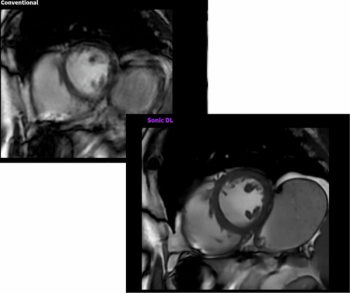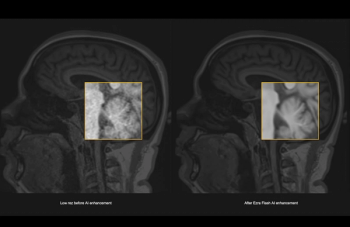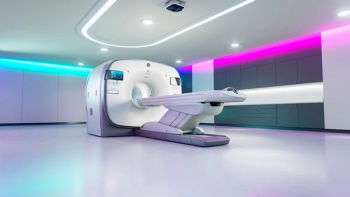
Offering integrated artificial intelligence (AI) and seamless multi-nuclei imaging capabilities, the new magnetic resonance imaging (MRI) system reportedly enhances image quality and workflow efficiency.
Senior Editor, Diagnostic Imaging

Offering integrated artificial intelligence (AI) and seamless multi-nuclei imaging capabilities, the new magnetic resonance imaging (MRI) system reportedly enhances image quality and workflow efficiency.

In a recent presentation at the American Roentgen Ray Society (ARRS) conference, researchers discussed pertinent considerations with imaging of gunshot wounds.

Based on findings from what may be the first longitudinal study of gallbladder polyps in patients with underlying liver disease, researchers suggested that size change thresholds for cholecystectomy may need to be reevaluated.

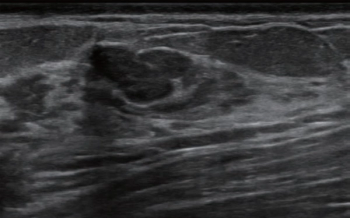
The portable ATUSA™ System reportedly provides 3D ultrasound visualization of the entire breast volume in two minutes.

In a lung screening cohort of over 2,500 people, researchers found that significantly higher rates of chronic kidney disease and chronic heart failure were associated with increased hospitalization and mortality rates in patients with COVID-19.

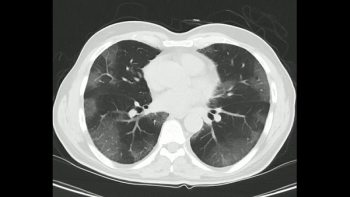
Lung opacities/consolidation and cervical/axillary adenopathy are reportedly common findings in emergency room imaging of patients suspected of having complications related to COVID-19 vaccines, according to new research presented at the American Roentgen Ray Society (ARRS) conference.

In a recent survey of over 13,700 people between the ages of 50 and 75, researchers found that only 1.4 percent of respondents had colorectal cancer screening with computed tomography (CT) colonography.

The new artificial intelligence-powered software from Nanox reportedly identifies findings suggestive of compression fractures and low density on computed tomography (CT) images and facilitates more precise measurement of these fractures.

While there can be an array of challenges in outsourcing night coverage to teleradiology service providers, due diligence with contract terms can help mitigate costs and increase flexibility if radiology practices decide to switch teleradiology providers down the line.

Offering enhanced operational capabilities and efficiency, the mobile digital radiography modality reportedly provides improved image quality and software that may help detect pulmonary nodules.

In a recently published study, researchers found that multiparametric quantitative magnetic resonance imaging (qMRI) may detect subtle biomarkers of conditions such as autism and cerebral palsy in adolescents with extremely preterm births.

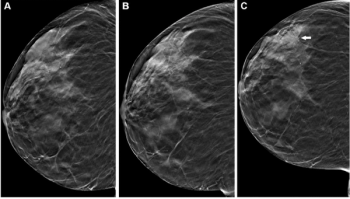
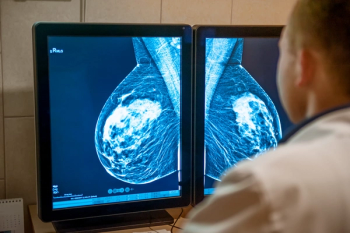
In a retrospective study involving mammography screening in over 114,000 women, researchers found that an artificial intelligence model had comparable specificity and sensitivity to radiologist screenings, reduced false positive results by 25 percent and reduced radiologist workload by more than 62 percent.

Emerging literature suggests a seemingly insurmountable wave of physician burnout in radiology. While the recently enacted Dr. Lorna Breen Health Care Provider Protection Act offers the promise of increased awareness, education, and funding to help prevent burnout, an increased commitment and flexibility from institutional leadership may also be key to erasing stigmas and driving meaningful change.

A new study suggests that deep learning algorithms with multimodal ultrasound have comparable specificity and sensitivity to subjective expert assessment and use of the O-RADS classification to distinguish between benign and malignant ovarian tumors.

Emphasizing the proper diagnostic characterization of sidewall aneurysms, the authors of a new study found no significant differences in occlusion status or complications when they compared the approved use of intrasaccular flow disruption for bifurcation aneurysms to off-label treatment of sidewall aneurysms.

Validating a prognostic scoring system for locoregional recurrence risk in post-mastectomy patients with varying levels of axillary lymph node involvement, emerging research suggests patients with intermediate risk for breast cancer recurrence could benefit from post-mastectomy radiotherapy.

The advisory emphasizes that the computer-aided triage and notification (CADt) devices, many of which incorporate artificial intelligence (AI) or machine learning technology, are intended to aid radiologists in prioritizing the assessment of brain imaging that may reveal signs of large vessel occlusion (LVO).

In a recent video interview, Arun Krishnaraj, MD, MPH and David Larson, MD, MBA, discussed the continued use of physical media to transport medical images between different health-care facilities, resulting inefficiencies and delays with patient care, and the initiative to create a linked multi-hub model to end this dated practice once and for all.

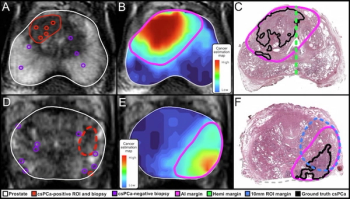
In addition to segmentation of the prostate, the artificial intelligence (AI)-enabled advance reportedly facilitates PI-RADS scoring by assessing the size and intensity of possible lesions.

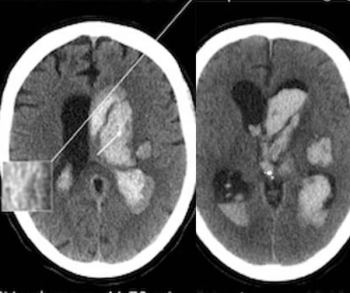
The new artificial intelligence (AI) algorithm reportedly flags suspected cases of brain aneurysm and facilitates multidisciplinary care.

In a formal request to the Centers for Medicare and Medicaid Services (CMS), the American College of Radiology (ACR) emphasized that Medicare and Medicaid coverage of computed tomography colonography (CTC) could significantly improve colorectal cancer screening rates for at-risk populations.

Employing a deep learning system for pancreatic segmentation, researchers found that intrapancreatic fat percentage and pancreatic fractal dimension were among the key predictors for type 2 diabetes mellitus in a multivariable analysis.

Multivariable analysis from a recently published study found that males and people older than 60 years of age were more prone to persistent abnormalities on chest computed tomography (CT) one year after COVID-19 pneumonia.

Preliminary ultrasound findings from a study of over 3,000 women in early pregnancy found no association between fetal anomalies and initial COVID-19 vaccination.

The authors of a new meta-analysis found no significant differences between clinicians and artificial intelligence in diagnosing fractures but conceded that slightly over half of the studies assessed had a high risk of potential bias.

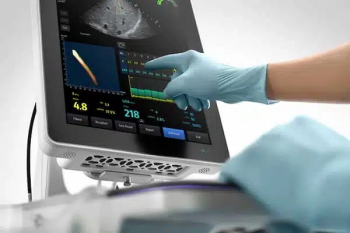
Powered by artificial intelligence, the new Ultrasound Workspace platform reportedly offers advanced echocardiography capabilities and facilitates enhanced diagnostic workflows.

In a recent video interview, Syam Reddy, MD discussed the merits of computed tomography (CT) colonography, a non-invasive alternative to conventional colonoscopy, which may help reduce gaps in screening for colorectal cancer.

A closer look at the Canadian National Breast Screening Studies (CNBSS) has revealed key methodological flaws that may prohibit use of the findings in the development of future guidelines on mammography screening for breast cancer.

The combination of the imaging agent Locametz and the targeted radioligand therapy Pluvicto may allow targeted treatment and mortality risk reduction in patients with prostate cancer.

In a recent video interview, Kevin J. Abrams, MD, discussed highlights from the recent 25th Annual Symposium of the American Society of Spine Radiology (ASSR), including lectures on imaging for spontaneous intracranial hypotension, the emergence of dynamic susceptibility contrast for MR perfusion and insights on the use of dual-energy computed tomography (CT) for diagnosing vertebral fractures.