

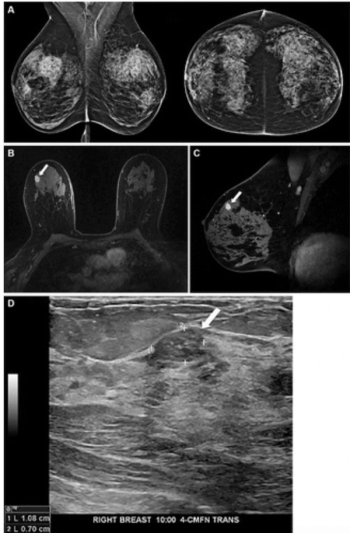
New research suggests the capability of a mammography-based deep learning model to identify women at high risk of breast cancer led to more than triple the cancer detection rate on breast MRI in comparison to traditional risk assessment tools.
Senior Editor, Diagnostic Imaging
New research suggests the capability of a mammography-based deep learning model to identify women at high risk of breast cancer led to more than triple the cancer detection rate on breast MRI in comparison to traditional risk assessment tools.
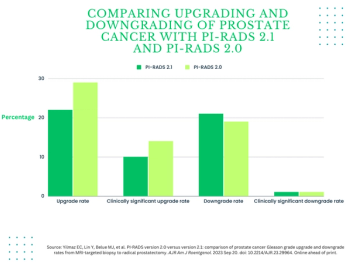
In a study of over 300 patients, researchers saw no significant differences in upgrading or downgrading of prostate cancer assessment on MRI with PI-RADS 2.1 in comparison to PI-RADS 2.0
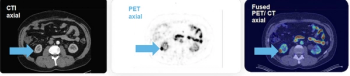
For cT1 renal masses < 4 cm and renal masses < 2 cm, the PET/CT agent 89Zr-DFO-girentuximab had respective sensitivity rates of approximately 85 percent and 96.7 percent for diagnosing clear cell renal cell carcinoma, according to research recently presented at the European Association of Nuclear Medicine (EANM) 2023 Congress.
The artificial intelligence (AI)-enabled AIRAscore can reportedly provide quantitative brain volume data within five minutes of assessing brain MRI scans.
The use of automated detection of large vessel occlusion on computed tomography (CT) through artificial intelligence (AI) software reportedly led to an 11.2-minute reduction in triage time from the completion of imaging to initiation of endovascular therapy, according to newly published research.

Twice-a-day consumption of reconstituted grape powder provides significant long-term benefit in preserving cerebral metabolism for people with mild cognitive decline, according to research presented at the recent Society for Nuclear Medicine and Molecular Imaging (SNMMI) conference.
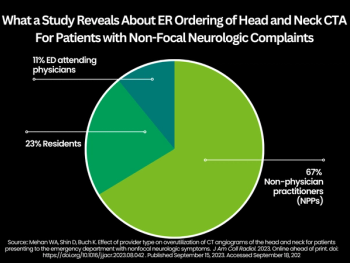
Over 80 percent of head and neck computed tomography angiography (CTA) exams performed in the emergency department had no actionable findings for patients with non-focal neurologic complaints, and 67 percent of the exams were ordered by non-physician practitioners (NPPs), according to a newly published study.

In a recent video interview, Vivek Bansal, M.D., discussed a recent Radiology Partners publication that offers practical tips and best practice guidance on CT and MRI neuroimaging for stroke patients.
A robotic guidance and placement system, the IGAR system can be utilized inside of a magnetic resonance imaging (MRI) bore.
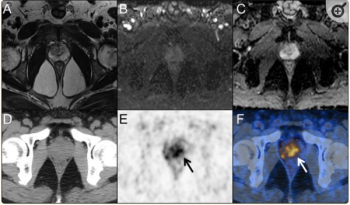
For men with PSA scores between 4 to 10 ng/mL, a multivariate prediction model that incorporates 68Ga-PSMA PET/CT had a 92.7 AUC for predicting clinically significant prostate cancer, according to newly published research.
Indicated for the triage and notification of obstructive hydrocephalus on non-contrast brain computed tomography (CT), the artificial intelligence (AI)-enabled software is reportedly the first radiology triage modality to obtain the Food and Drug Administration’s (FDA) Breakthrough Device Designation.
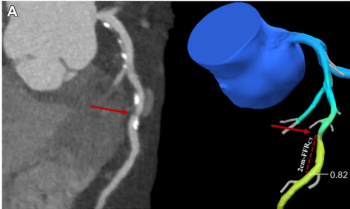
Abnormal findings on coronary computed tomography angiography-derived fractional flow reserve (CCTA-FFR) are associated with 3.2-fold higher risks of all-cause death or spontaneous myocardial infarction (MI) in patients with new-onset stable angina pectoris and coronary stenosis, according to newly published research.
The Precision GI™ Endoscopic Ultrasound Biopsy Device reportedly provides a more efficient and less traumatic method of obtaining biopsy tissue for suspected gastrointestinal cancers.
In a prospective study of over 55,000 women who had screening mammography, researchers found that double-reading by a radiologist and artificial intelligence (AI) was non-inferior to double-reading by two radiologists in detecting breast cancer.
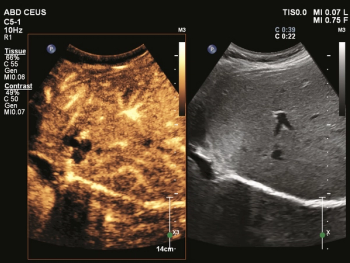
The Microvascular Imaging Super Resolution Contrast-Enhanced Ultrasound application reportedly leverages micro-bubble contrast media to provide enhanced spatial resolution for imaging of malignant lesions.
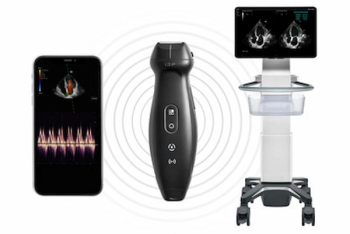
The TE Air is reportedly the first handheld ultrasound device to offer dual connectivity to mobile devices or touch-based ultrasound systems.
In a study of over 23,000 men who had PSA testing, researchers found that the adoption of pre-biopsy MRI resulted in a 21 percent decrease in negative biopsies and a 37 percent increase in the proportion of diagnosed Gleason score 7 to 10 prostate cancers.
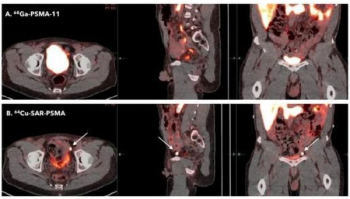
The PSMA PET agent 64Cu SAR-bisPSMA detected a higher number of prostate cancer lesions and had a significantly higher SUVmax and SUVmean than 68Ga PSMA-11 PET/CT, according to initial data from a prospective multisite study presented at the recent Society of Nuclear Medicine and Molecular Imaging (SNMMI) conference.
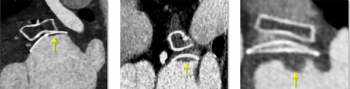
The presence of high-grade hypoattenuation thickening on follow-up computed tomography (CT) after left atrial appendage occlusion (LAAO) procedures for patients with atrial fibrillation was associated with a 4.6-fold risk for stroke, according to newly published research.
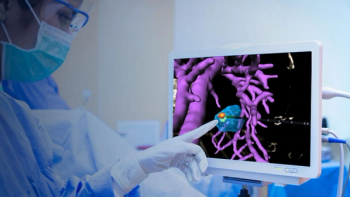
Through the use of artificial intelligence (AI) and imaging modalities such as ultrasound, CT, and MRI, the newly FDA-cleared VisAble.IO software reportedly enhances planning and real-time assessment for liver tumor ablation procedures.
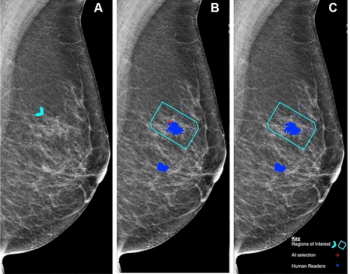
In separate test sets that included challenging mammography cases, researchers found that artificial intelligence (AI) demonstrated similar sensitivity and specificity for detecting breast cancer in comparison to assessments from over 500 clinicians.
In the third episode of a three-part podcast, Anand Narayan, M.D., Ph.D., and Amy Patel, M.D., discuss the challenges of expanded breast cancer screening amid a backdrop of radiologist shortages and ever-increasing volume on radiology worklists.
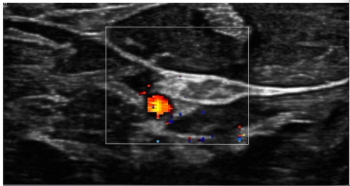
Offering a variety of enhanced features for image optimization and improved workflow efficiencies, the Sierra NMUS1 device reportedly includes the first software specifically designed for neuromuscular ultrasound applications.
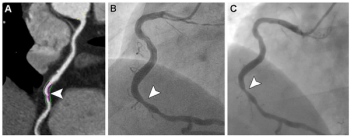
A high lipid core burden in non-revascularized plaque is associated with nearly a 13-fold higher risk of major adverse cardiovascular events (MACEs) such as cardiac death and myocardial infarction (MI), according to new research based on coronary computed tomography angiography (CCTA) findings.

Featuring sector and linear arrays, the FDA-cleared Vscan Air SL ultrasound device reportedly enables cardiac and vascular assessments at the point of care.
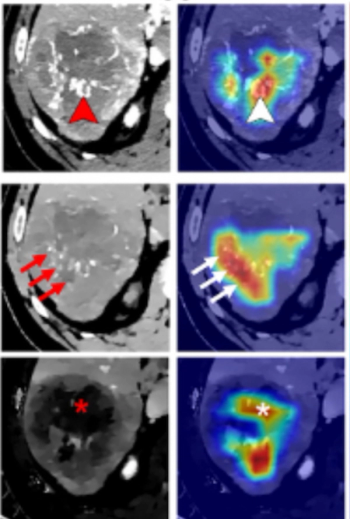
In comparison to clinical-radiologic assessment, a deep learning CT radiomics nomogram had a 10 percent higher AUC and a 27 percent higher specificity for predicting the macrotrabecular massive subtype of hepatocellular carcinoma in external data testing.
In the second episode of a three-part podcast, Anand Narayan, M.D., Ph.D., and Amy Patel, M.D., discuss recent studies published by the Journal of the American Medical Association (JAMA) that suggested moving to more of a risk-adapted model for mammography screening.
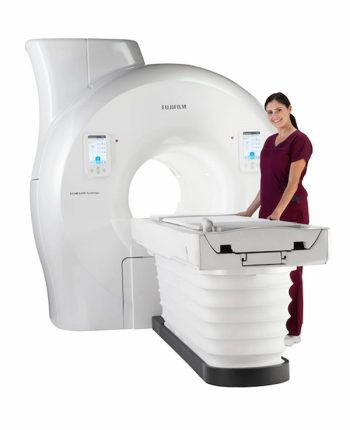
The Echelon Synergy MRI system reportedly uses deep learning technology to accelerate image acquisition and enhance image quality.
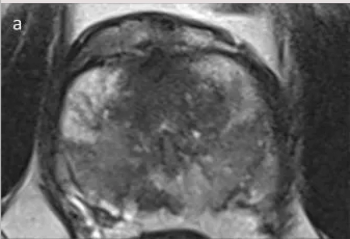
Two-thirds of men with a positive screening MRI for prostate cancer had PSA levels below 3 ng/mL and 91 percent of these men had clinically significant prostate cancer, according to newly published research.
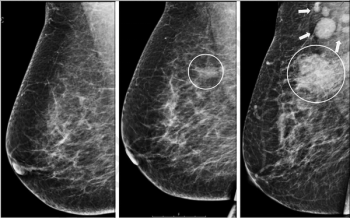
Primary diagnostic delays in mammography screening led to a greater than 10 percent higher incidence of lymph node metastasis with invasive breast cancer in comparison to women without a primary diagnostic delay, according to new research out of the Netherlands.