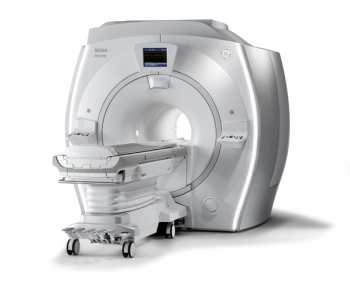
The new whole-body magnetic resonance imaging (MRI) platform reportedly offers enhanced image quality and increased patient comfort.
Senior Editor, Diagnostic Imaging

The new whole-body magnetic resonance imaging (MRI) platform reportedly offers enhanced image quality and increased patient comfort.

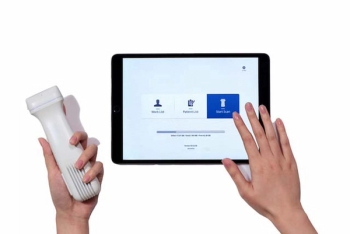
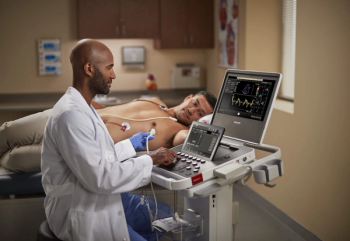
In addition to newly added advances with hemodynamic assessment and obstetric measurements, Lumify also offers a B-line quantification tool and AI-enhanced algorithms that may bolster ultrasound lung imaging in severe COVID-19 cases.

The artificial intelligence (AI)-based technology reportedly facilitates optimal contrast-to-noise ratios with medical imaging.

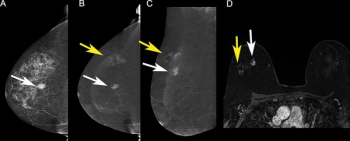
Emerging research suggests that mammograms should not be delayed for women who develop unilateral lymphadenopathy after receiving COVID-19 vaccines, and that follow-up imaging is unnecessary for patients who have no history of cancer or suspicious concurrent symptoms.

Researchers say the complementary use of artificial intelligence may significantly improve the accuracy of radiologists in diagnosing intracranial aneurysms.

In a recently published study involving hospitalized patients with COVID-19, researchers compared chest CT findings of vaccinated, partially vaccinated, and unvaccinated patients.

In an exclusive video interview with Diagnostic Imaging, Josh Cooper, vice president of congressional affairs for the American College of Radiology (ACR), and Thomas Hoffman, vice president of legal for the ACR, discuss the ACR’s lawsuit over the IDR process of the No Surprises Act and the potential impact of the law on reimbursement and patient access to care.

An emerging technology may help improve efficiency and outcomes of laparoscopic and robotic-assisted surgeries.

In a simulated clinical workflow, researchers found the use of an artificial intelligence model significantly decreased the number of exams that required interpretation by a radiologist.

As a potential complement to intraoperative X-rays, the imaging software may be beneficial for short-segment spine procedures performed in outpatient or ambulatory surgery centers.

Emerging technology could provide key advances in pre-op planning and intraoperative management in endovascular surgery.

The iBreastExam, a handheld device cleared by the FDA, reportedly enhances routine clinical breast examinations.

While digital breast tomosynthesis is reportedly more effective at detecting cancer, new research suggests a higher recall rate due to fatigue and less experience in interpreting the images.

New research suggests an emerging machine learning model that combines findings from advanced imaging with clinical data may improve risk stratification in people with coronary artery disease.

Code for quantitative CT tissue characterization goes into effect on July 1.

Researchers found the use of magnetic resonance spectroscopic imaging revealed pathologic evidence of multiple sclerosis that is not evident on T1 or T2-weighted MRI.

Expanded MRI labeling for Abbott’s Proclaim™ XR Spinal Cord Stimulation System may facilitate increased efficiency and quality of MRI scans.

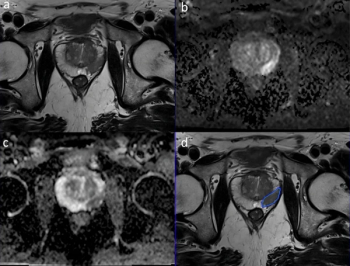
Will this artificial intelligence technology improve diagnostic accuracy and reduce false positive biopsy orders?

A new meta-analysis examines the diagnostic benefit of this emerging complementary modality.

Emerging research suggests that frontotemporal atrophy on magnetic resonance imaging may be a key finding for chronic traumatic encephalopathy (CTE).

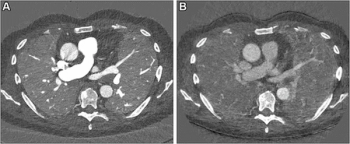
Addition of late contrast enhancement (LCE) CT reportedly bolsters diagnostic rate for patients with acute chest pain who have negative findings on triple-rule-out (TRO) CT.

GE Healthcare unveils on-site detection upgrades and other advances with CT system as well as a new MRI device.