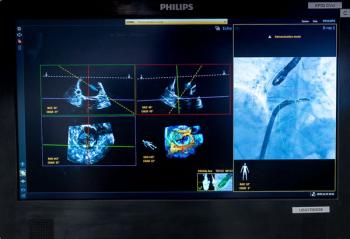
The AI-powered cardiovascular ultrasound device reportedly offers enhanced spatial and contrast resolution as well as bolstered 4D imaging that enables improved evaluation of cardiac function for a wide range of patients.

The AI-powered cardiovascular ultrasound device reportedly offers enhanced spatial and contrast resolution as well as bolstered 4D imaging that enables improved evaluation of cardiac function for a wide range of patients.

Combining advances in imaging quality with access to 26 FDA-cleared applications for automated and accelerated tasks, the Transcend Plus software will be featured at the upcoming European Society of Cardiology (ESC) and American Society of Echocardiography (ASE) conferences.

In the second part of a recent interview, Tammie Benzinger, M.D., Ph.D., discusses recently presented research from the Alzheimer’s Association International Conference (AAIC) that showed the ability of portable low-field MRI to detect mild and moderate amyloid-related imaging abnormalities (ARIAs).

The dose length product (DLP) for the flash mode on a dual-source photon-counting CT system was less than a third of that for the spiral mode, according to a study of CTA findings for 1,000 patients presented at the Society of Cardiovascular Computed Tomography (SCCT) conference.

In a recent interview, Amir Ahmadi, M.D., discussed limitations of conventional diagnostic assessments for people with suspected coronary artery disease, and the emergence of AI-enabled plaque quantification to facilitate more timely detection and intervention.

Catch up on recent interviews with Jean-Luc C. Urbain, M.D., Amir Iravani, M.D., Liza Lindenberg, M.D., and more faculty from the Society of Nuclear Medicine and Molecular Imaging (SNMMI) 2025 conference.

In a recent interview at the SNMMI conference, Ryota Satoh, Ph.D., discussed new positron emission tomography (PET research examining the role of neuroinflammation in differentiating between progressive apraxia of speech (PAOS) and Parkinson-plus syndrome.

In a recent interview, Jean-Luc C. Urbain, M.D., Ph.D., the new president of the Society for Nuclear Medicine and Molecular Imaging, discussed current challenges in nuclear medicine and key goals, including improved access to nuclear medicine for people in underserved communities.

In a recent interview at the SNMMI conference Amir Iravani, M.D., discussed a new sub-analysis from the CONDOR study, which revealed consistently high positive predictive value for 18F-piflufolastat PSMA PET/CT in the detection of local prostate cancer recurrence.

In a recent interview at the SNMMI conference, Liza Lindenberg, M.D., discussed preliminary research findings that suggest the potential of the 18F-fluciclovine PET/CT for detection of multiple myeloma.

For patients being treated with radiopharmaceutical agents for metastatic prostate cancer, the combination of botulinum toxin and an anti-nausea patch led to a 30 percent reduction in PSMA uptake in the salivary glands, according to preliminary research findings presented at the SNMMI conference.

In an ongoing prospective study of patients with biochemical recurrence of PCa and an initial negative PSMA PET/CT, preliminary findings revealed positive 18F-fluciclovine PET/CT scans in over 54 percent of the cohort, according to a recent poster presentation at the SNMMI conference.

In a recent interview at SNMMI conference, Merle Hoenig, Ph.D., discussed new tau PET research examining genetic and modifiable risk factors that contribute to the progression of Alzheimer’s disease.

In addition to over 90 percent sensitivity in detecting hepatocellular carcinoma (HCC), the glypican-3 (GPC3) targeted PET tracer 68Ga-aGPC3-scFv appeared to be advantageous in identifying HCC tumors smaller than one centimeter, according to pilot study findings presented at the SNMMI conference.

The dual-targeted 177Lu-DOTA-FAPI-RGD reportedly reduced or stopped the growth of cancer lesions in 88.9 percent of advanced adenocarcinomas in a small cohort of patients with varied cancers including pulmonary, pancreatic and ovarian cancer, according to new research presented at the SNMMI conference.

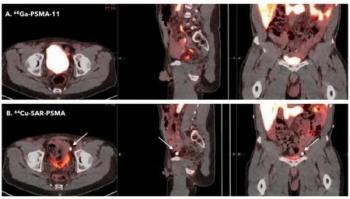
While (68Ga)Ga-PSMA-11 offers a pooled sensitivity rate of 92 percent for prostate cancer, (18F)-based radiotracers may offer enhanced lesion detection as well as improved imaging flexibility, according to a meta-analysis presented at the Society for Nuclear Medicine and Molecular Imaging (SNMMI) conference.

Multimodal treatment monitoring, including SPECT/CT exams 24 hours after treatment with Lu-177 PSMA-617, may have facilitated significantly shorter therapy durations and reduced side effects in patients with mCRPC, according to a two-year study presented at the Society for Nuclear Medicine and Molecular Imaging (SNMMI) conference.

Emphasizing a zero-click experience, the updated LesionID Pro software, to be introduced at the SNMMI conference, reportedly provides AI-powered automated insights into whole-body tumor burden with PET and SPECT imaging.

A partial response rate to neoadjuvant chemotherapy on mid-treatment MRI preceded a higher pathologic complete response (pCR) in 61.5 percent of women with triple-negative breast cancer, according to research presented at the American Society of Clinical Oncology (ASCO) conference.
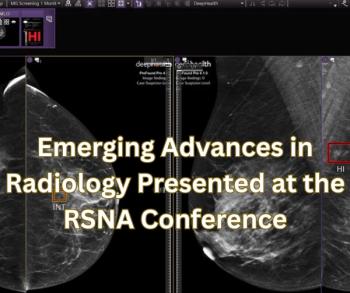
High allostatic load, which has been linked to an increased incidence of breast cancer and all-cause mortality, is more than twice as likely to occur in Black and Hispanic women in comparison to White women, according to mammography research presented at the American Society of Clinical Oncology (ASCO) conference.
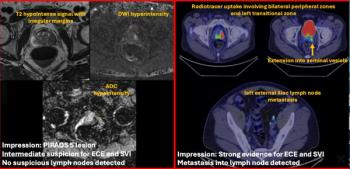
Latinx patients with metastatic prostate cancer were 63 percent less likely than non-Hispanic White patients to have PSMA PET scans, according to a study of 550 patients presented at the American Society of Clinical Oncology (ASCO) conference.

The Rapid CTP AI software offered 23 percent greater detection of medium vessel occlusions in comparison to the Viz CTP AI software, according to research presented at the European Stroke (Organization) Conference (ESOC).

In never-smokers, deep learning assessment of single baseline low-dose computed tomography (CT) scans demonstrated a 79 percent AUC for predicting lung cancer up to six years later, according to new research presented today at the American Thoracic Society (ATS) 2025 International Conference.

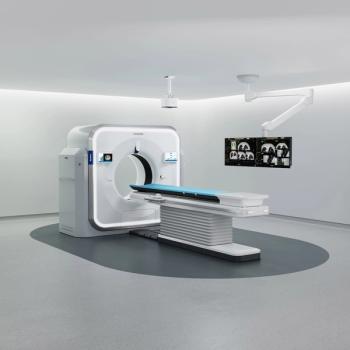
The combination of high-performance gradient technology and AI tools with the Signa Sprint MRI reportedly facilitate enhanced MRI workflow efficiencies in cardiac and oncology imaging.

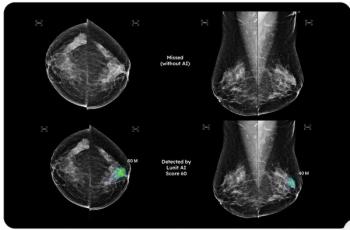
For DBT breast cancer screening, 47 percent of radiologist-only flagged false positives involved mass presentations whereas 40 percent of AI-only flagged false positive cases involved benign calcifications, according to research presented at the recent American Roentgen Ray Society (ARRS) conference.

New research revealed that Hispanic Americans with evidence of hepatic steatosis on MRI but no formal diagnosis of MASLD had over a fourfold higher risk of developing hepatocellular carcinoma in comparison to those who had a formal diagnosis of MASLD.

Capable of segmenting over 37 organs and structures in the head, neck and pelvis, the MR Contour DL software is currently being showcased at the European Society for Radiotherapy and Oncology (ESTRO) conference.

The AI software Viz AAA offered a sensitivity of 87.5 percent in detecting abdominal aortic aneurysms on contrast-enhanced CT, according to new retrospective research presented at the American Roentgen Ray Society (ARRS) conference.

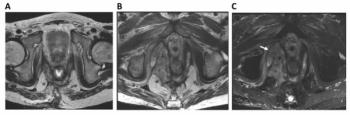
In a recent interview, Wayne Brisbane, M.D., discussed new research, presented at the American Urological Association (AUA) conference, which revealed a 15 percent higher AUC for an emerging AI software in detecting seminal vesicle invasion (SVI) in comparison to prostate MRI alone.

Cardiac CT angiography may provide insights on common post-op complications of left atrial appendage closure, ranging from peri-device leaks to device-related thrombus, according to research presented at the American Roentgen Ray Society (ARRS) conference.