
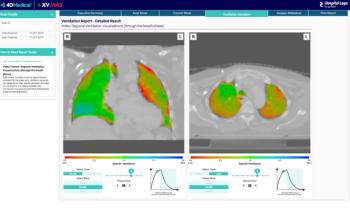
4D lung imaging process quickly analyzes lung impairments from single X-ray.
4D lung imaging process quickly analyzes lung impairments from single X-ray.
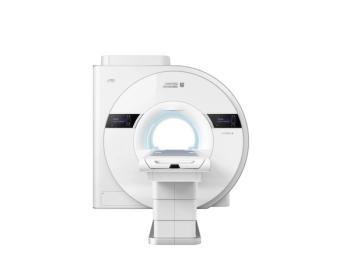
MRI with 75-cm core increases patient access and offers more services.
How one large academic medical center quickly pivoted to keep radiologists safe.
Diagnostic Imaging's Weekly Scan: May 22, 2020
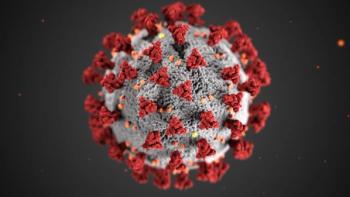
Research reveals lung findings not typically associated with viral pneumonia.
With safety precautions in place, imaging centers can consider bringing in healthy patient for screenings.
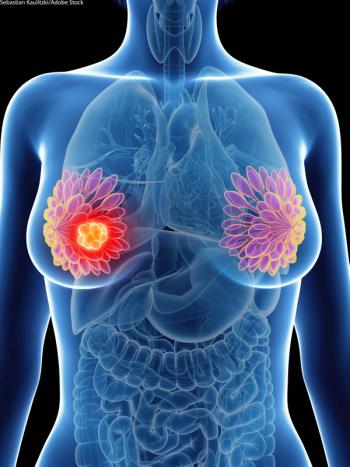
Existing protocol to re-assess women after six months is appropriate; imaging can identify cancers that have spread to lymph nodes.
Diagnostic Imaging's Weekly Scan: May 15, 2020

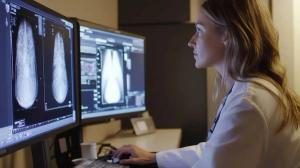
Radiology is in position to lead the integration of AR and VR into medical procedures and medical education.

Clearance allows for applications for lung and cardiac complications.
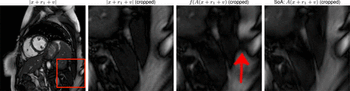
Algorithms can create errors in multiple imaging systems, according to new tests.
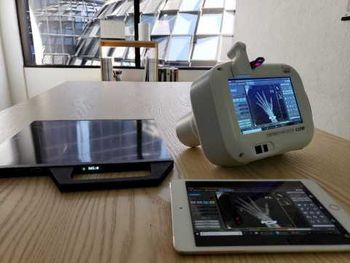
Built-in touch screen acquires images directly onto the device and transmits to PACS without a PC.
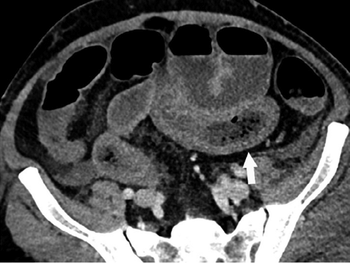
Affected patients were sicker and more likely to be admitted to the ICU.
Study finds risk reduction attributed to screening efforts, not advanced therapies.
Tool pinpoints incidental findings on CT scans that contain the lung or part of the lung.

Diagnostic Imaging's Weekly Scan: May 8, 2020.

Radiologists can use online videos as a way to correct inaccurate breast cancer screening messages.
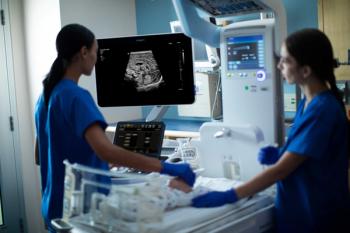
Philips releases new transducer with 30-percent greater penetration for more-detailed images.

From detecting breast density and reducing image file sizes to improving cancer detection and creating new risk models, AI is significantly impacting breast imaging.

NIH-funded study reveals using diffusion-weighted MRI to evaluate therapy effectiveness could reduce dose by 80 percent.
Patients sit in their cars until texted that it’s time to enter the clinic for their scan.
COVID-19 and other viral infections have unique imaging characteristics that can help with diagnosis, experts say.

Superconducting head MRI approved for use in critical care environments.
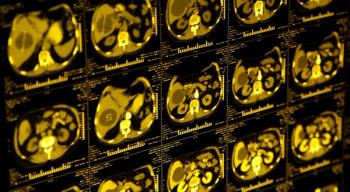
21-expert panel outlined 12 recommendations for when you can delay lung cancer screenings and lung nodule evaluations.
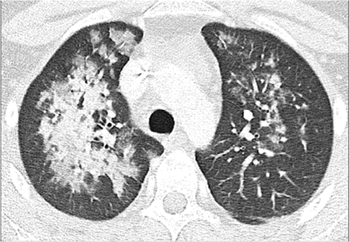
International expert group offers recommendations for proper imaging of younger infected patients.
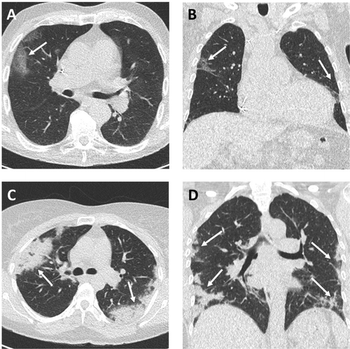
Submillisievert chest CT scans offer quick and accurate assessment, particularly in patients with symptoms more than 48 hours.
Reduced radiation exposure and virus transmission is possible for both patients and providers.
Providers and vendors receive an extended timeline for data sharing and health IT certification.
With more details about benefits and harms of annual screening, fewer women opt for the study.
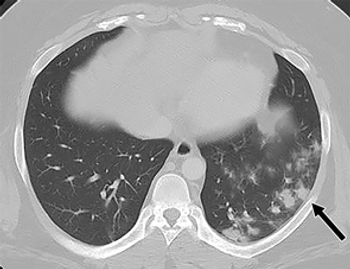
Abdominal CT scans show evidence of COVID-19 infection in lung base.