
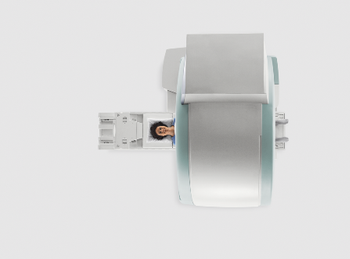
Magnetic resonance imaging of pregnant patients with suspected appendicitis improves resource use, study finds.
Magnetic resonance imaging of pregnant patients with suspected appendicitis improves resource use, study finds.

If radiology groups aren’t using compliant CT scanners, they can expect to pay up.

Ultrasounds can help identify pneumonia and its progression in children without exposure to ionizing radiation.
Analyzing whether rising costs of early breast cancer screening, like mammography, lead to better detection rates.
Bedside ultrasound competency assessment of emergency medicine residents varies considerably throughout the U.S.

Too. Much. Data.

The shift from fee-for-service to value-based reimbursements leaves many radiologists questioning, how will their value be measured?
A drop in the number of CT scans performed on inpatients and reduction of radiation doses lowered the estimated rate of induced cancers.
Study identifies lowest possible radiation dose that still allows for detection of pleural effusions, thickening and calcification.

For the most part, women who undergo image-guided core-needle breast biopsies experience minimal pain.

Study shows patients are positioned too low, negatively impacting radiation dose and image noise in chest CT.

With big data comes big responsibility, but radiologists can benefit from the continuing big data trend.
Use of pediatric dose-reduction protocols and shielding for CTs vary among hospitals.
Tomosynthesis provides better visualization of architectural distortion than mammography.
Study tackles why women with most treatable form of breast cancer pursue most aggressive prophylactic measures; MRI false-positives have no effect.

Many CTs for suspected appendicitis among children may be avoided if radiologists use a diagnostic algorithm.

Q and A: Hologic may be getting competition as Siemens seeks premarket approval from the FDA for their breast tomosynthesis option in the U.S.
Combining MRI and mammography in an organized breast screening program for high-risk women is effective.

There can be many benefits to having all relevant information in one place, but some argue that radiologists shouldn't have a narrow focus.

Technology has come a long way in imaging.

Fujifulm’s Aspire Cristalle digital mammography solution received FDA clearance yesterday and includes features promoting patient comfort and image quality.
[VIDEO] Merging health records and PACS can improve radiologists’ workflow. Cree M. Gaskin, MD, discusses the benefits and challenges of a new system.
Screening with tomosynthesis in conjunction with digital mammography lowers recall rates and increases cancer detection.
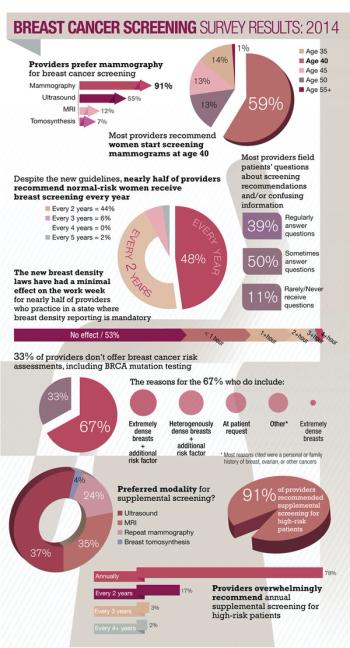
What’s the preferred breast cancer screening modality? When should patients begin screening mammograms? Are guidelines being considered? We compiled the data.
When mammograms are read by radiologists who are familiar with the patients’ risk factors, there are fewer missed diagnosis and false positives.

And for the next trick...
Women aged 50 to 69 who underwent mammography screening had a reduced death rate compared to women who did not have mammography screening.
Lower recall rates, more cancer detection were seen with 3D digital breast tomosynthesis, compared with 2D digital mammography.
The controversy of covering low-dose CT for lung cancer screening continues, as groups argue lives saved versus dollars spent.
Low-dose CT screening for lung cancer does not result in diminished health quality of life or long term anxiety, study says.