

All News
All series
All All News
Advertisement
Capturing data on CT radiation doses from RIS/PACS databases was more accurate and cost effective than self-reported survey data.
Patients who underwent CT with or without contrast had similar rates of acute kidney injury, showing contrast use isn’t associated with nephropathy.
Using bedside ultrasounds in the emergency department is an effective method to diagnose appendicitis in children, reducing the need for CT scans.
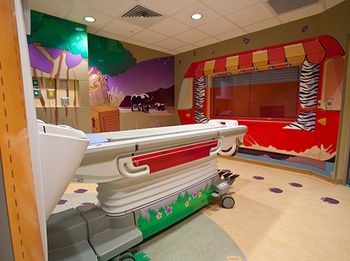
Pediatric imaging centers are becoming more kid friendly with elaborately decorated rooms and scanners. The result? Happy patients and potentially no sedation.
Magnetic resonance imaging scanners are getting older, but the majority of imaging facilities are not yet seeking to replace them.
Screening mammograms for women in their 40s may result in earlier high-risk breast cancer diagnosis, less chemotherapy, and lower future risk of subsequent breast cancer.
Magnetic resonance images that track developmental changes in a child’s brain may allow clinicians to predict future cognitive performance.
New radiologists have more competition for jobs now, particularly during certain times of the year.
VIDEO - New radiologists out of training and just joining a practice should understand the business side of the industry. Jonathan R. Medverd, MD, explains.
Advertisement
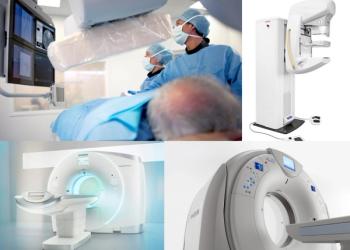
From lower dose to quieter, faster scans, technologies that enhance patient safety and experience will take center stage this year.
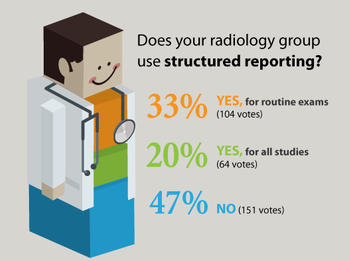
Cardiologists should review cardiac imaging use for their patients in an effort to reduce patient radiation exposure.
VIDEO: Residents must understand it is radiologists’ responsibility to ensure the right tests are being performed at the right time. It’s a culture shift they should embrace, said Vijay Rao, MD.

The American College of Radiology’s latest institute is an independent think tank dedicated to trend analysis of the industry’s biggest concerns.
Several federal and state initiatives could impact how providers order studies and report results and whether new technologies are rigorously vetted.
Industry-wide efforts look to control CT dosing levels, but not everyone is convinced the radiation is under control.
Siemens Healthcare announced FDA approval of their MAGNETOM Prisma, a 3T MRI scanner.
Use of tomosynthesis for orthopedic and chest imaging offers greater study clarity and reduced dose.
VIDEO - Consultant Jef Williams details the four areas driving change in healthcare for radiologists.

Norman Beauchamp, MD, MHS, offers his tips for how residents and fellows can really become a valued member of the radiology group.
Brain magnetic resonance spectroscopy to measure brain chemical ratios in preterm infants may help determine which will have neurodevelopment problems.
Frequent use of gadolinium-based contrast medium may play a role in hypersensitivity in the brain of patients who undergo multiple MRIs.
CHICAGO - ACR representatives detailed major areas of concern in 2014: quality and safety, advocacy, education, economics and regulation, and radiation oncology.
CHICAGO - To survive in a value-based pay environment, radiology must invest in new ways to show positive impact.
CHICAGO - Widespread adoption of low-dose CT for lung screening may be more effective at catching early-stage lung cancer.
CHICAGO - Some signs point to dismal job prospects while others look more promising. Most agree the radiology workforce will stay flat for the next few years.
Advertisement
Advertisement
Trending on Diagnostic Imaging
1
Radiology Reflections on AI, Theranostics and Empowered Patients: An Interview with Phillip Koo, MD
2
FDA Clears CCTA-Based AI Software for Facilitating Management of Coronary Artery Disease
3
FDA Clears Emerging AI Triage Software for Nine Findings on Abdominopelvic CT
4
MRI and PET Imaging Study Suggests Links Between Metabolic Health, Midlife Body Composition and Alzheimer’s Disease
5