

The FDA has approved GE Healthcare’s Q.Clear, a technology that GE says improves accuracy when assessing a patient’s response to treatment.
The FDA has approved GE Healthcare’s Q.Clear, a technology that GE says improves accuracy when assessing a patient’s response to treatment.

Recently-passed legislation would make clinical decision support use mandatory and improve appropriateness guidelines for ordering diagnostic imaging.

Patient portals are an innovative and beneficial way for radiologists to communicate; you just have to use them.

3-D MRI provides a lower error margin and allows radiologists to provide faster treatment advice.
Radiologists are using DBT clinically and more frequently, but it still remains a limited resource.
Calgary Scientific’s ResolutionMD received FDA clearance for diagnosis on mobile devices for most imaging modalities.
Breast emergencies are uncommon but require quick identification and management when patients present with complaints, such as mastitis and breast abscesses.
The ACR and SBI are concerned that the JAMA breast cancer screening article will result in fewer women undergoing potentially life-saving mammography.
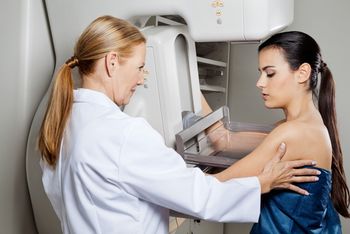
Controversial mammography screening has its benefits and harms. Patients need individualized recommendations to confirm that it’s worth the risk.
The U.S. Senate approved a temporary patch that will prevent Medicare payment cuts, a milestone applauded by the imaging community.
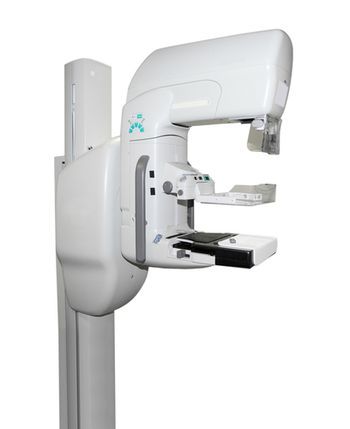
Full-field digital mammography is associated with lower recall and biopsy rates, compared with screen film mammography.
The latest KLAS report shows that providers who chose the more cost-effective options for CT scanners are happy with the products.
Physicians and radiologists should clearly communicate risks and benefits of imaging procedures, especially for pediatric patients.
Innovative radiology monitors, like the LCD screen, provide better quality images.
Magnetic resonance imaging is an effective alternative to ultrasounds and CT scans in diagnosing pediatric appendicitis.
Clinical decision support tools can help standardize best practices for radiologists and patients.
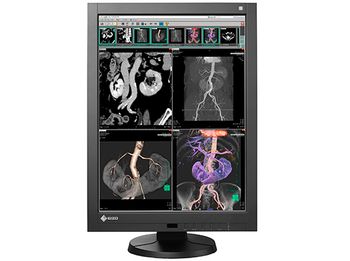
Check out some of the technological advances in radiology monitors.
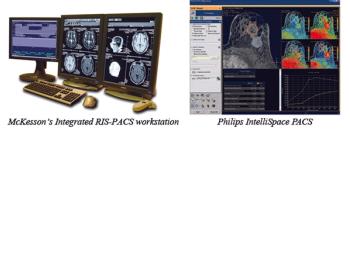
Keeping up with the changing technology of PACS can be difficult, we highlighted what your radiology practice should keep in mind.
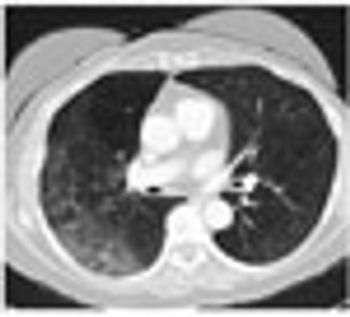
Medicare should fully cover low-dose CT lung cancer screening as per the USPSTF recommendations for high-risk patients.
My training in hypnosis has made me a better radiologist, but you don’t have to be a hypnotist to increase patient satisfaction.
Didactic module helps prepare clinicians for managing adverse reactions to media, more training still needed.
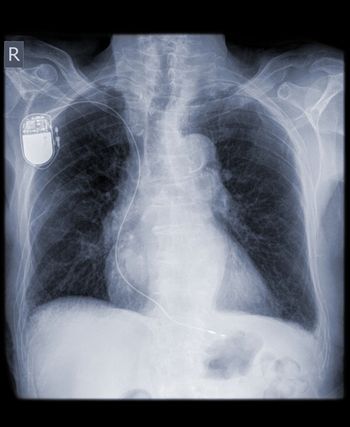
Study provides no additional evidence supporting 2008 FDA advisory that warned CT scans potentially interfere with CRM devices.
Fluoroscopic time and contrast media volume were significantly reduced when fellows received one year of formalized training.
Imaging Forward campaign highlights technological advances in medical imaging and impact on patient care.
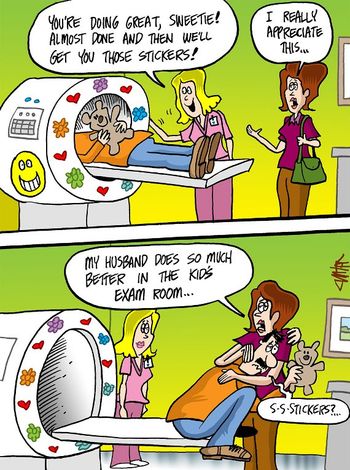
Patient fear of MRI is widespread.
Low-dose CT community-based lung cancer screening program effective and feasible.
Here’s how one radiology department improved their work flow using a free software solution that prioritized cases, easing the stress for referrers and radiologists alike.
More radiology tests found to be of low-value in the emergency room.

iPads are used mostly by younger radiologists and residents for reading and accessing educational material - not for clinical workflow.
New MRI technique allows for accurate assessment of tumors in children without the radiation exposure of PET/CT scans.