
Is there a strategy that works best for teleradiology compensation?
Is there a strategy that works best for teleradiology compensation?

ControlRad, Inc., technology will now be available on Siemens’ interventional imaging systems.

Compared with three other methods, shear wave elastography providers greater sensitivity in pinpointing remaining malignant tissue after brain tumor removal.

Lunit’s INSIGHT CXR software will be available on Philips’ X-ray solutions.
Medical devices are showing up regularly in abdominal X-rays – knowing what to look for and when something might be wrong can help improve diagnosis.
With both your adult and pediatric patients, be sure you are doing the best job at explaining both the benefits and risks of imaging studies.
Dangers of missing one screening mammogram; Rise of cardiac CT and MRI; Strategies to improve financial stability; Plus, Talking to patient about COVID-19 vaccine-related adenopathies.
An automated approach can be useful with patients who have indeterminate transthoracic echocardiograms.
Experts at ECR 2021 offer their top three tips for a variety of breast imaging techniques.
Two new permanent MRI systems are designed to streamline workflow and truncate scan time by roughly one-third.
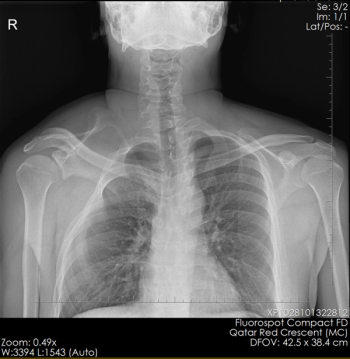
What is your diagnosis in this patient who presents for evaluation of scoliosis?
Combining machine learning and deep learning with clinical data and chest X-rays can point to either mild or severe disease.
For women with dense breasts, automated breast ultrasound offers advantages over supplemental screening with hand-held ultrasound.

Including a measurement in diffusion-weighted imaging on contrast-enhanced MRI can help women side-step unneeded procedures.
Product offerings will showcase new glass-free detector and digital radiography solutions.

The top considerations for radiology practices.

Radiologists can play an active role in improving the healthcare experience for transgender patients, most of whom have had a negative imaging encounter.
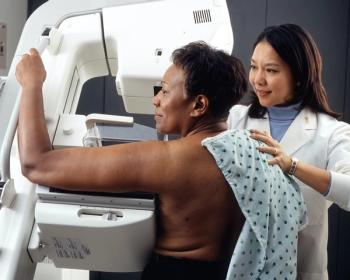
Women who do not miss their screening mammography appointments are far less likely to die from breast cancer than women who either forego one – or all – exams.
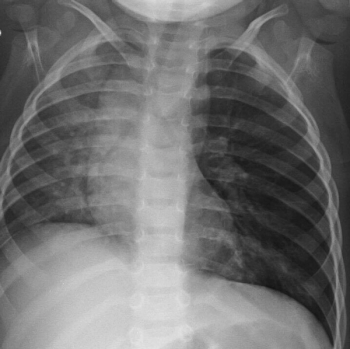
What is your diagnosis of a young child who presents with shortness of breath and distress?

More radiologists are providing CT and MRI services, but these studies still fall behind echocardiography and nuclear medicine.

Here's what to expect this week on Diagnostic Imaging.

Sharing the details of teleradiology companies can level the playing field for all.
Radiologists may not order a DBT exam for African American patients, but they can participate in improving access to the screening.
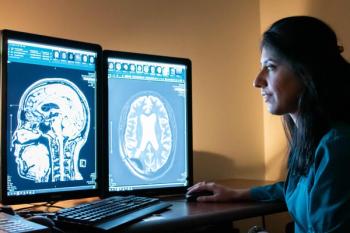
Images reveal ultrasound therapy can effectively open and close the blood-brain barrier, opening the door for potential new Alzheimer’s treatments.
New method can help providers distinguish between benign and malignant breast lesions.
CT Colonography & Tumor Differentiation; COVID-19 & Leukoencephalopathy; MRI, the Angiography Suite, and Acute Ischemic Stroke; Plus, DBT, African American Women, & Decreased Access
For better cardiology services, providers must look beyond the existing cardiology PACS.
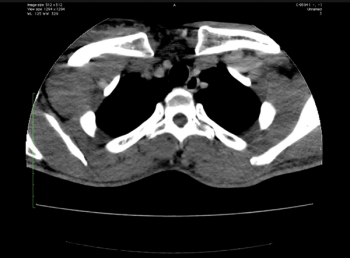
What is your diagnosis for a patient who presents with increasing size of neck and shoulder region?

For women who do not have easy access to mammography, clinical breast examination has been shown to increase breast cancer detection and save lives.
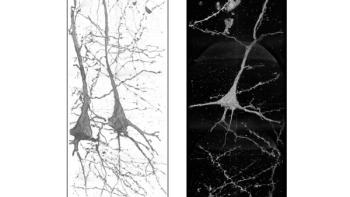
High resolution, 3D images reveal differences in the structure of neurons from healthy brains and those from patients with schizophrenia.