












When added to exercise electrocardiography, CTA can improve five-year risk prediction.
When added to exercise electrocardiography, CTA can improve five-year risk prediction.

Clearance allows for applications for lung and cardiac complications.
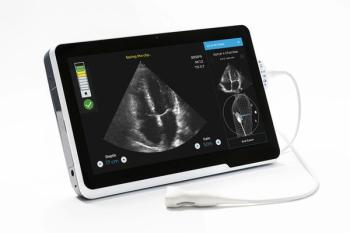
AI-guided imaging supports assessment of cardiac function and reduces personnel COVID-19 exposure.
An international group of radiologists and vascular specialists published recommendations for blood clot prevention, diagnosis, and treatment.
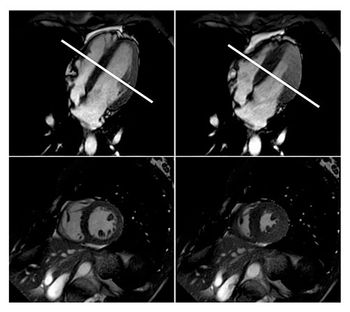
Multi-modal approach maximizes imaging capabilities.
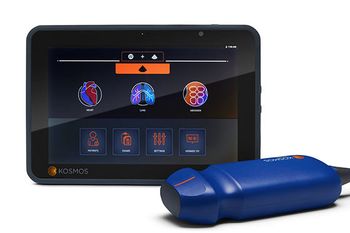
Eight-ounce scanner assesses heart function.
Adding artificial intelligence to cardiac MRI instantaneously and accurately measures blood flow.
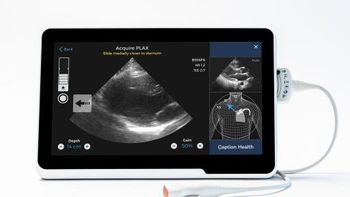
Caption Guidance™ uses artificial intelligence to expand cardiac ultrasound performance.
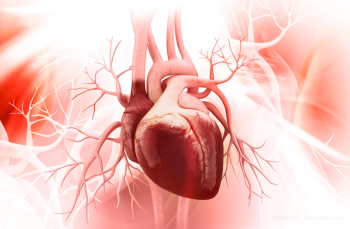
Imaging method reduced non-confident reads, decreased time.
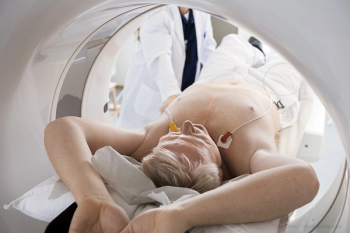
Axial chest CT identifies enlargement with high specificity and reasonable sensitivity.
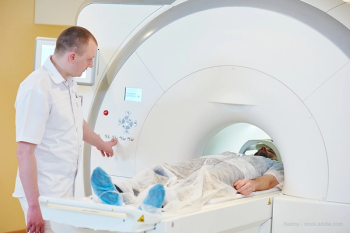
MRI measuring carotid artery wall thickness could aid in cardiovascular disease risk assessment.
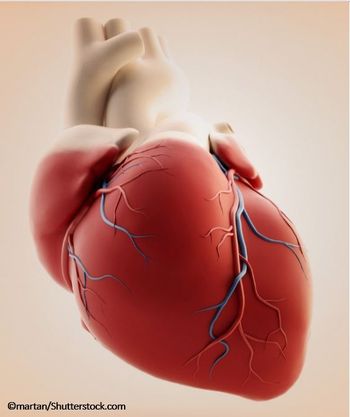
Computed tomography method compares well in detecting and localizing scarring in patients with heart failure.
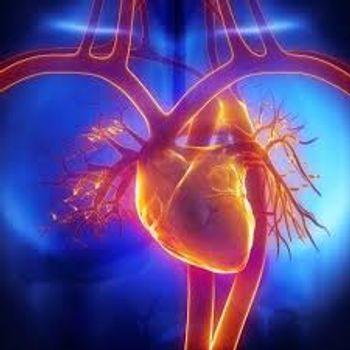
Cardiac training among radiologists should be encouraged.

CT shows former NFL players may have enlarged aortas compared with controls.
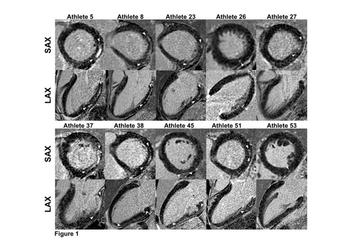
MRI shows evidence of higher risk for elite male triathletes.
Imaging modality that exhibits the highest accuracy for diagnosis of myocardial ischemia.

Combined PET-CT can help diagnose cardiac sarcoidosis.
The combination of CT angiography and CT perfusion versus the combination of invasive coronary angiography plus single photo emission CT in predicting two-year MACE.
Coronary CT angiography shows significantly greater increase in noncalcified plaque volume among older men who use testosterone gel.
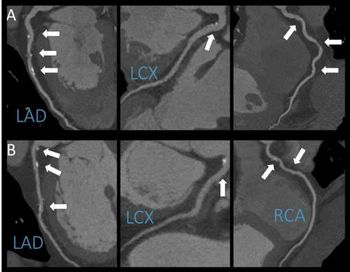
Coronary CT angiography shows whether alcohol consumption is associated with coronary artery disease.
PET may help physicians differentiate between patients with cardiac amyloidosis and hypertensive heart disease.

Latest developments in cardiac PET radiopharmaceuticals from ASNC 2016.
American Society of Nuclear Cardiology 2016 shows the cardiac PET value chain still faces more headwinds than tailwinds.

Imaging with echocardiograms show changes in the ventricular structure in older smokers.
Cardiovascular MR-guided care may reduce the number of unnecessary angiograms performed on patients with angina pectoris.