











Catch up on the top radiology content of the past week.
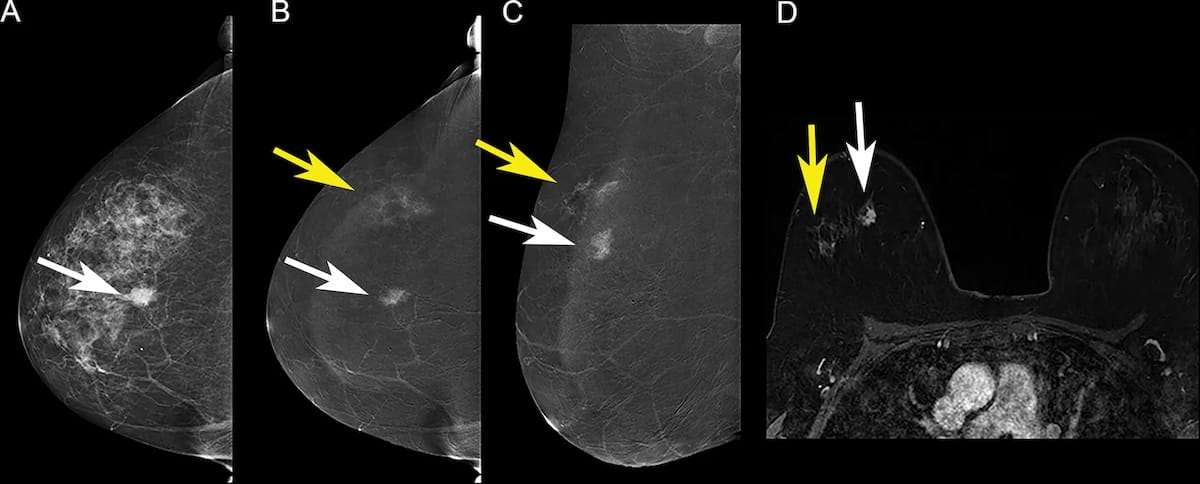
Ultravist is reportedly the first contrast agent to gain a specific indication for visualization of known or suspected lesions on contrast-enhanced mammography, which was recently recommended by the American College of Radiology as a supplemental imaging alternative to magnetic resonance imaging (MRI) in women with dense breasts at the age of 40 and other risk factors for breast cancer.
Catch up on the top radiology content of the past week.
Five artificial intelligence (AI) algorithms for mammography assessment were better at predicting breast cancer risk over five years than the Breast Cancer Surveillance Consortium (BCSC) risk model, according to new retrospective research involving over 13,000 women.
Catch up on the top radiology content of the past week.
Catch up on the top five most viewed content at Diagnostic Imaging for the month of May 2023.
In a large retrospective study involving over 523,000 digital breast tomosynthesis (DBT) exams and over one million digital mammography (DM) exams, researchers found that DBT was associated with significantly lower recall rates but showed no advantage over DM in the diagnosis of interval or advanced breast cancer.
Catch up on the top radiology content of the past week.
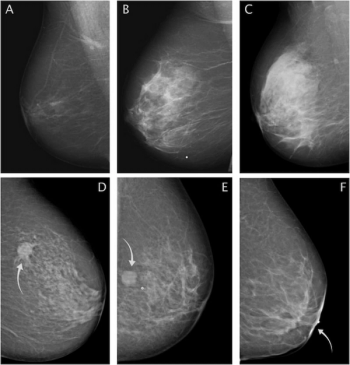
In a study involving over 1,100 women diagnosed with breast cancer, researchers found that 48.7 percent of women alive or dead from other causes at a median follow-up of 11.7 years had moderately dense breasts. They also found that 46 percent of women who died from breast cancer at a median-follow-up of 5.3 years had moderately dense breasts.
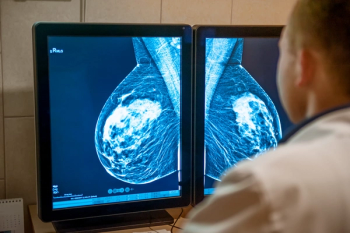
Six reader studies on digital mammography revealed a pooled sensitivity rate of 80.8 percent for stand-alone artificial intelligence (AI) in comparison to 72.4 percent for radiologist assessment while seven historic cohort studies showed a 75.8 percent pooled sensitivity rate for stand-alone AI versus 72.6 percent for radiologist interpretation of digital mammography.
Catch up on the top radiology content of the past week.
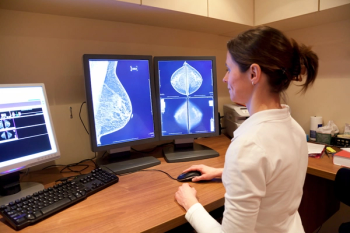
The United States Preventive Services Task Force (USPSTF) has drawn praise for lowering the age threshold for initial mammography screening from 50 to 40 years of age in updated draft recommendations for breast cancer screening, but critics warn that biennial screening is not sufficient for higher-risk populations.
Catch up on the top radiology content of the past week.
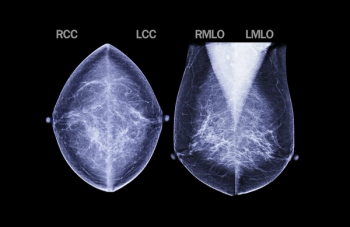
While calling for a universal breast cancer risk assessment by the age of 25, the American College of Radiology (ACR) emphasized that ascertaining screening needs prior to the age of 40 is particularly important in high-risk populations such as Black women, who are 42 percent more likely to die from breast cancer in comparison to non-Hispanic White women.
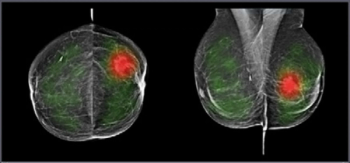
Regardless of experience level, radiologists are likely to be affected by automation bias when utilizing adjunctive artificial intelligence (AI) for mammography interpretation, according to newly published research.
Catch up on the top radiology content of the past week.
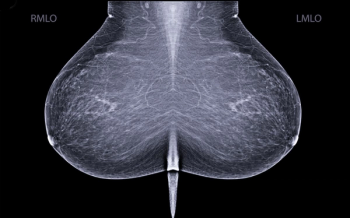
Emerging research looking at data from over 414,000 cases of breast cancer deaths suggests that Black women should begin annual mammography screening seven to nine years earlier than White women.
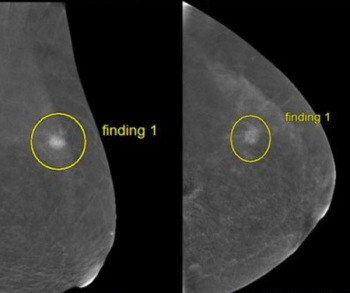
Earlier initiation of imaging after contrast administration with contrast-enhanced mammography may provide better visibility of lesions and conspicuity against background parenchymal enhancement, according to new research presented at the American Roentgen Ray Society (ARRS) 2023 Annual Meeting in Honolulu, Hawaii.
Catch up on the top radiology content of the past week.
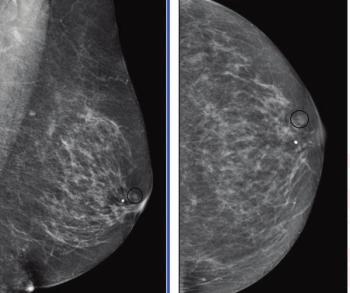
Recent research involving nearly 15,000 mammography exams in patients with a personal history of breast cancer revealed that digital breast tomosynthesis (DBT) was associated with a lower frequency of BI-RADS category 3 assessment and a lower malignancy rate for BI-RADS 3 lesions in comparison to full-field digital mammography.
Catch up on the top radiology content of the past week.
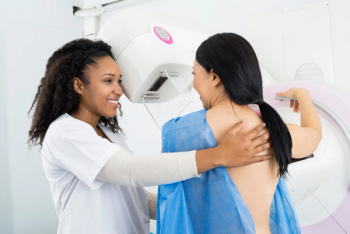
Emerging research suggests that 29 percent of patients with index breast magnetic resonance imaging (MRI) exams, 45 percent of Asian women and 30 percent of women living in the highest disadvantaged neighborhoods did not have follow-up imaging after a BI-RADS 3 diagnosis.
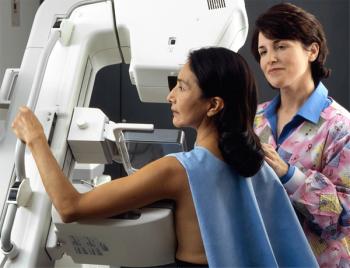
Researchers found that ChatGPT offered appropriate responses to 22 out of 25 patient-oriented questions on mammography screening, dense breasts, BI-RADS scoring and other topics related to breast cancer screening and prevention.
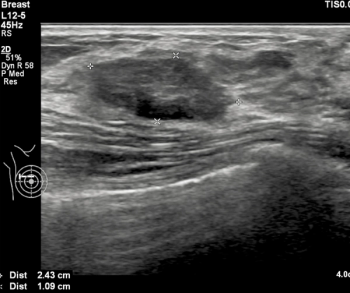
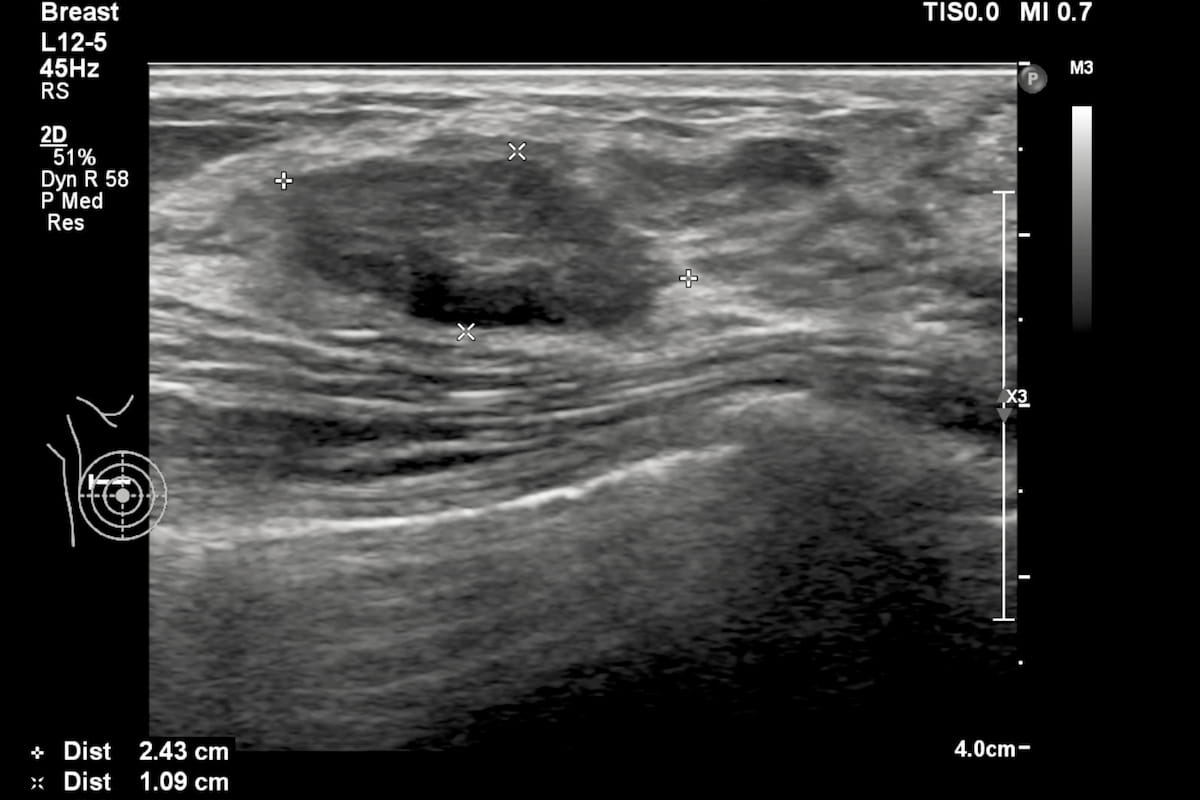
Emerging research shows the adjunctive use of automated breast ultrasound with mammography has similar sensitivity for breast cancer detection as adjunctive handheld ultrasound but may offer reduced false-positive rates in women with dense breasts.
Catch up on the top radiology content of the past week.

Catch up on the top AI-related news and research in radiology over the past month.
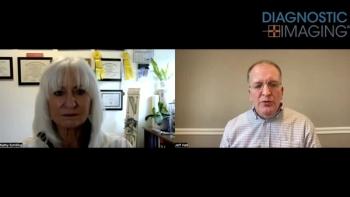
In a recent video interview, Kathy Schilling, M.D., discussed findings from a study of ProFound AI, an adjunctive artificial intelligence (AI) software for digital breast tomosynthesis (DBT), that demonstrated a 23 percent increase in breast cancer detection in comparison to DBT alone.