

Classification leads to fewer missed breast cancers.

Classification leads to fewer missed breast cancers.

Here's what to expect this week on Diagnostic Imaging.

The American College of Physicians released a new guideline, supporting the use of point-of-care ultrasound alongside standard diagnostic pathways for emergency department and admitted patients who have shortness-of-breath but an uncertain diagnosis.

Here's what to expect this week on Diagnostic Imaging.

Using systolic, diastolic, and mean arterial blood pressure values together results is a greater threshold for risk.

Although these tests are controversial, they are highly effective in identifying lumps that lead to breast cancer diagnoses.

After a decade, roughly 75 percent of women with dense breasts seen in one department now undergo screening whole-breast ultrasound as a supplemental imaging service.

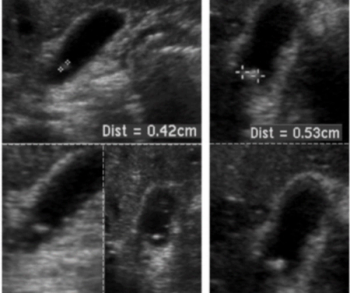
Pediatric breast ultrasound use should be minimized for patients with breast pain but not a palpable mass.

Algorithms outperformed providers in accurate, quick detection and classification.

Impact felt the most in specialties with high screening rates, least in interventional radiology.

The latest products released on the market for Quarter 1 2021.

Advanced technology solutions are key to helping providers detect colorectal cancer faster and sooner.

Knowing what to look for, what protocols to use, and what mistakes to avoid can be vital to capturing diagnostic images.

Ultrasound is known to cause the breaking up of kidney stones and opening the lipid shell of liposome for drug delivery.

Here's what to expect this week on Diagnostic Imaging.

Compared with three other methods, shear wave elastography providers greater sensitivity in pinpointing remaining malignant tissue after brain tumor removal.

Experts at ECR 2021 offer their top three tips for a variety of breast imaging techniques.

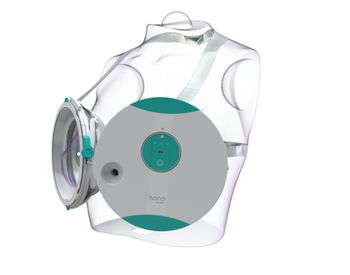
For women with dense breasts, automated breast ultrasound offers advantages over supplemental screening with hand-held ultrasound.

Radiologists can play an active role in improving the healthcare experience for transgender patients, most of whom have had a negative imaging encounter.

Here's what to expect this week on Diagnostic Imaging.

Images reveal ultrasound therapy can effectively open and close the blood-brain barrier, opening the door for potential new Alzheimer’s treatments.

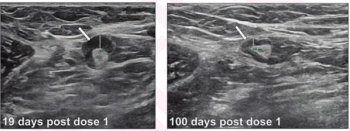
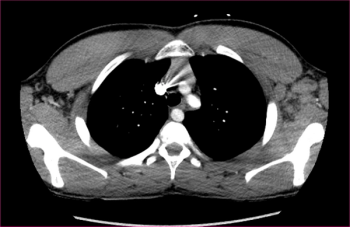
CT, MRI, and ultrasound images reveal the myriad of ways the virus prompts the body to attack itself – with this knowledge, radiologists can better contribute to treatment planning.

Functionality improves patient care by allowing secure image share with providers before technologists leave patients.

Clinical trial results show MRI as more accurate and less intrusive at diagnosis for men with a clinical suspicion of prostate cancer.

Using imaging to screen asymptomatic individuals can cause more potential harm than good, Task Force reiterates.