
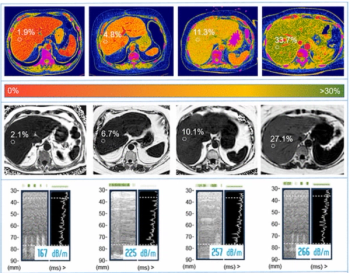
Photon-counting CT fat fraction evaluation offered a maximum sensitivity of 81 percent for detecting steatosis and had a 91 percent ICC agreement with MRI proton density fat fraction assessment, according to new prospective research.
Senior Editor, Diagnostic Imaging
Photon-counting CT fat fraction evaluation offered a maximum sensitivity of 81 percent for detecting steatosis and had a 91 percent ICC agreement with MRI proton density fat fraction assessment, according to new prospective research.
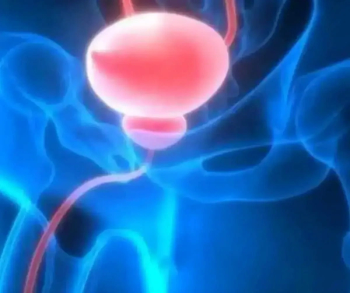
Indicated for use in cases involving suspected metastasis with PCa or suspected PCa recurrence due to elevated PSA level, Gozellix reportedly has a longer shelf life than other gallium-based PET imaging products.
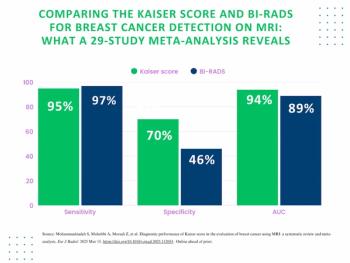
The Kaiser score offers 24 percent higher pooled specificity than the Breast Imaging Reporting and Data System (BI-RADS) for detecting malignancies on breast MRI, according to a 29-study meta-analysis.
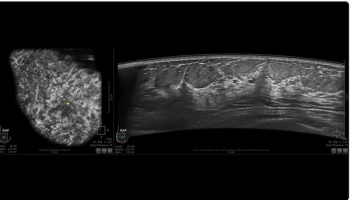
The Invenia ABUS Premium device reportedly offers consistent high-resolution imaging and up to a 40 percent increase in scan speeds for women with dense breasts.
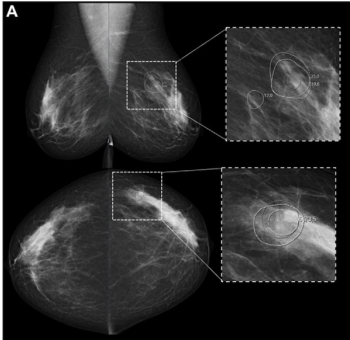
While recalls initiated by one of two reviewing radiologists after screening mammography were nearly 10 percent higher than recalls initiated by an AI software, the AI-initiated recalls had an 85 percent higher positive predictive value for breast cancer, according to a new study.
In a new podcast, Satoshi Minoshima, M.D., Ph.D., and James Williams, Ph.D., share their insights on the recently updated appropriate use criteria for amyloid PET and tau PET in patients with mild cognitive impairment.

Indicated for IV use, Gvoke VialDx reportedly inhibits movement of the gastrointestinal tract temporarily to facilitate abdominal X-rays.
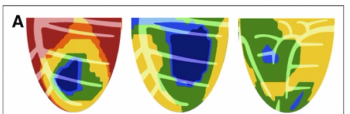
New updates for the cardiac PET-based HeartSee v4.0 software include an emphasis on the evaluation of subendocardial ischemia and border zones.
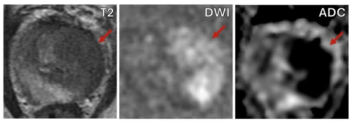
While DCE MRI was deemed helpful in over 67 percent of cases in which it was used, researchers found that monitored prostate MRI exams, which facilitated a 75 percent reduction of DCE MRI sequences, had comparable sensitivity for prostate cancer as non-monitored exams.
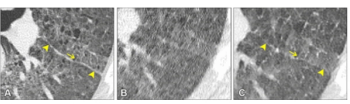
For immunocompromised individuals, denoised ultra-low-dose CT offers similar detail as normal-dose CT scans for pneumonia detection, according to a recent study.
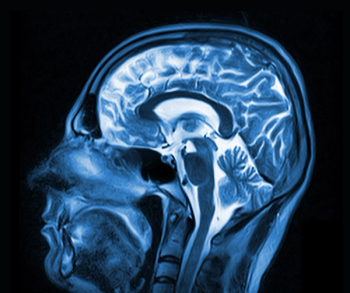
Researchers found that a higher waist-to-hip ratio in midlife was associated with higher mean diffusivity in 26 percent of total white matter tracts in the cingulum as well as the superior and inferior longitudinal fasciculus.
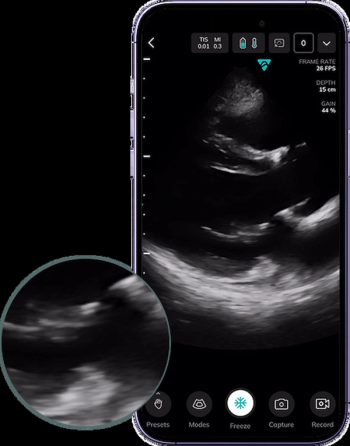
Emphasizing intuitive workflow and portability, the Universal Wireless Probe reportedly offers a cost-effective combination of phased and linear ultrasound imaging.
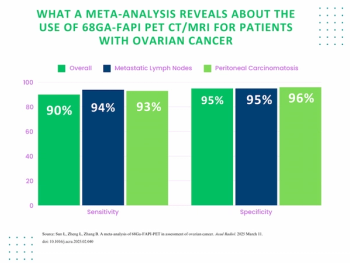
Researchers found that use of 68Ga-FAPI PET was associated with pooled sensitivity of 90 percent for ovarian cancer, according to a recent meta-analysis.
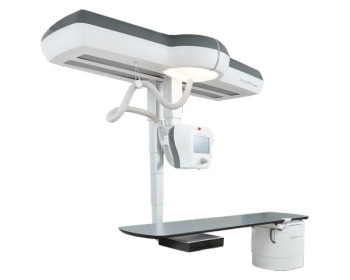
Enabling radiographic and low-dose fluoroscopy exams in the same room, the Adora DRFi system emphasizes a variety of advances for flexibility with patient positioning.
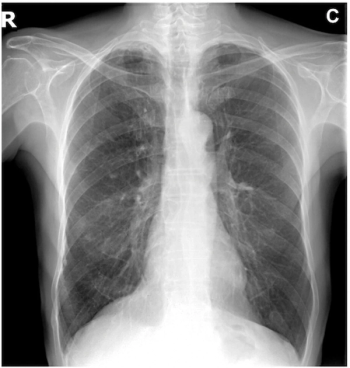
In addition to a significant reduction of X-ray reading time, researchers found the use of multimodal generative AI assessment led to enhanced detection of pleural lesions and widened mediastinal silhouettes.
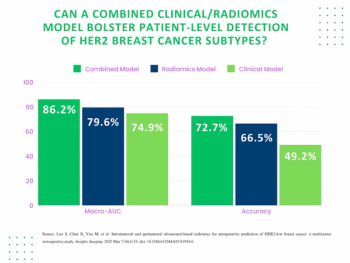
Multicenter research revealed that a combined model of clinical factors and ultrasound-based radiomics exhibited greater than a 23 percent higher per patient-level accuracy rate for identifying HER2 breast cancer than a clinical model.
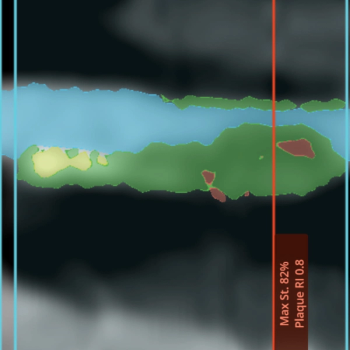
Through AI-powered assessment of coronary computed tomography angiography (CCTA) scans, the CaRi-Plaque software may provide improved clarity on the development of coronary plaques and luminal stenosis.
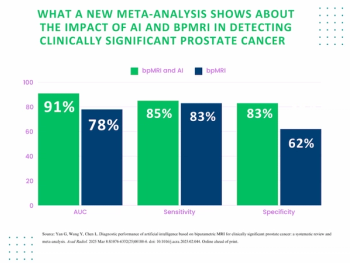
Researchers noted the combination of AI and bpMRI had an average AUC of 91 percent for csPCa detection in contrast to 78 percent for unassisted radiologist interpretation in a recent meta-analysis.
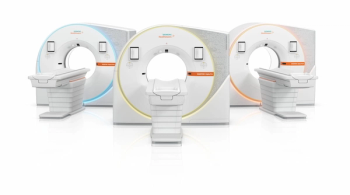
The Naeotom Alpha class of photon-counting computed tomography (PCCT) scanners emphasize significantly reduced scan times and enhanced detection of small abnormalities.
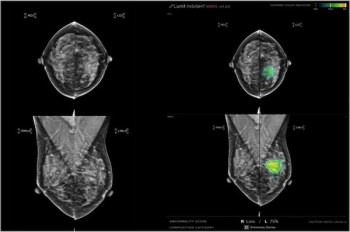
In a study involving over 24,000 women, two-thirds of whom had dense breasts, adjunctive AI led to a significantly higher rate of cancer detection for breast radiologists with no difference in recall rates.
The use of ultra-high-resolution photon-counting CT in the evaluation of stable chest pain may significantly reduce follow-up tests and invasive coronary angiography (ICA) procedures, possibly resulting in millions in health-care cost savings, according to a cost-effectiveness analysis presented recently at the European Congress of Radiology.
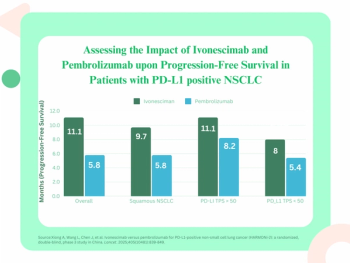
The use of ivonescimab was correlated with a median 5.3-month improvement in progression-free survival (PFS) over pembrolizumab in patients with PD-L1 positive non-small cell lung cancer, according to CT and MRI findings from a phase 3 randomized multicenter trial.
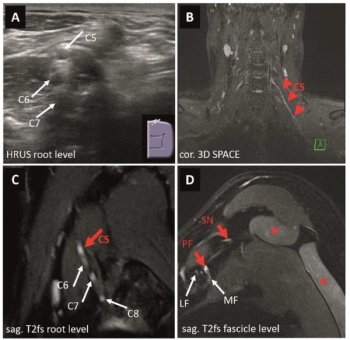
While high-resolution ultrasound offered nearly 10 percent higher specificity in the detection of upper extremity peripheral neuropathy, magnetic resonance neurography provided a nearly 23 percent higher sensitivity rate in a recent study.
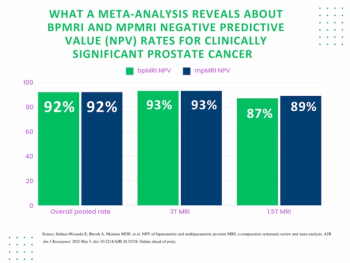
In an 18-study meta-analysis involving over 4,600 patients, researchers found that bpMRI and mpMRI had equivalent pooled negative predictive value (NPV) of 92 percent for clinically significant prostate cancer (csPCa).
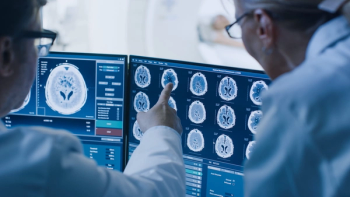
Offering four key software-as-a-service features, the cloud-based enterprise imaging suite reportedly offers enhanced security and storage and facilitates streamlined radiology workflows.
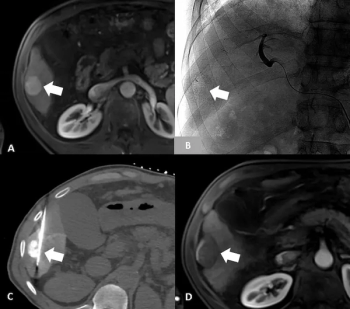
In a comparative study of staging systems for hepatocellular carcinoma, the Barcelona Clinic Liver Cancer (BCLC) system offered the highest likelihood ratio (LR) and lowest Akaike information criteria (AIC) for predicting overall survival after transarterial chemoembolization (TACE) for hepatocellular carcinoma.
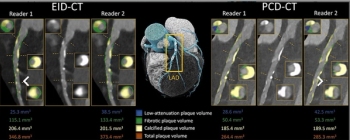
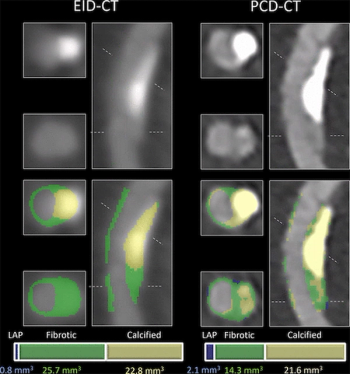
Ultra-high spatial resolution with photon-counting CT facilitated a 33 percent reduction in the assessment of median total plaque volume and a 45 percent higher inter-reader agreement for evaluation of low-attenuation plaque volume in contrast to energy-integrating detector (EID) CT.
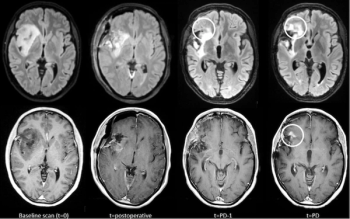
In a comparison of contrast-enhanced T1-weighted (CET1w) MRI (and T2-weighted MRI/FLAIR imaging, researchers found that only three out of 82 cases of glioma progression were solely detected with CET1w MRI.
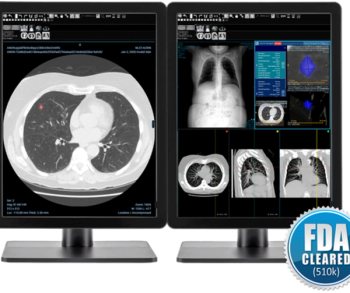
The F.A.S.T. aiCockpit CT Lung Nodule reportedly facilitates enhanced CT workflow and automated reporting for evaluation of lung nodules
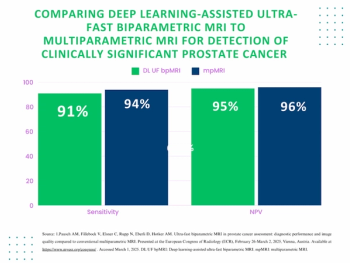
A deep learning-enhanced ultra-fast bpMRI protocol offered similar sensitivity for csPCa as mpMRI with an 80 percent reduction in scan time, according to research findings presented at the European Congress of Radiology (ECR) conference.