










Combination also leads to a reduction in the false-negative rate.
Combination also leads to a reduction in the false-negative rate.
Using a deep learning tool slices reading time by nearly 75 percent and makes disease identification easier.

American College of Radiology introduces website that offers guidance and resources for the use of artificial intelligence.
A deep learning algorithm used with brain MRI could help providers identify patients in the early stages of cognitive decline and Alzheimer’s.

How one health system is doing it.
Using a deep convolutional neural network tool, radiographers can correct image errors and reduce repeated imaging.

Research shows artificial intelligence models rely on shortcuts for detecting COVID-19.
What you need to address for successful artificial intelligence adoption and enterprise imaging integration.
3D Convolutional neural network can effectively replace manual segmentation of the pancreas with or without cancer.
Incorporating artificial intelligence with TI-RADS improves sensitivity, specificity, and reduces interpretation time by nearly one-fourth.
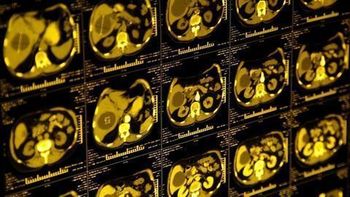
The deep learning algorithm can distinguish between malignant and benign nodules at initial screening.
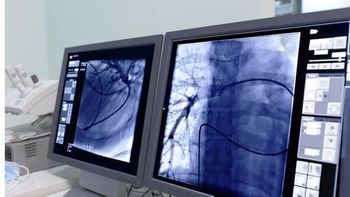
Collaboration paves the way for improved interoperability.
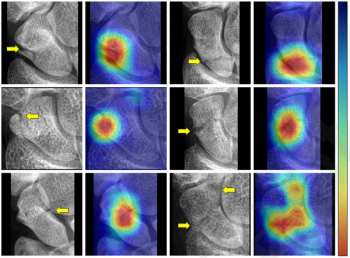
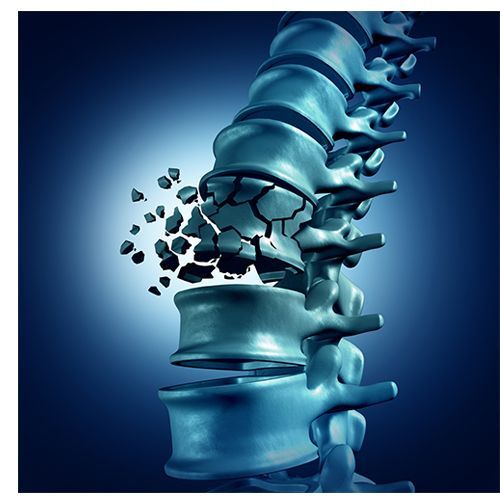
Identifying these easily missed breaks can save patients from future negative complications or loss of function.
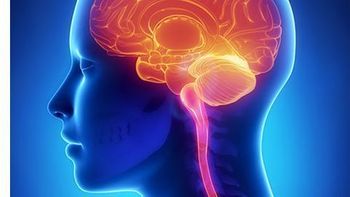
Using a model trained on three data sets could lead to automated categorization of “likely normal” and “likely abnormal” brain MRI results.

AI-fueled mammography triage software from DeepHealth wins 510(k).
Liability and responsibility concerns are not significant with AI use now, but as the tools enter clinical use, that will change.
Algorithms outperformed providers in accurate, quick detection and classification.
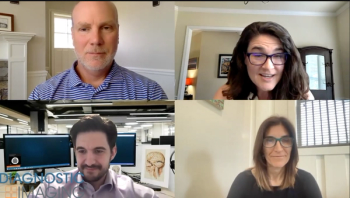
This partnership opens the door to better access to data for AI tools, as well as streamlined workflow, augments physician training, and better patient care.
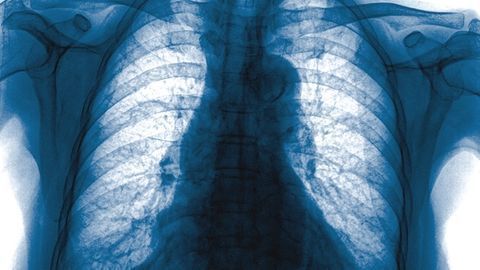
Pairing machine learning methods with chest X-rays can potentially improve viral detection in areas where access to swab testing and chest CT scans is inadequate.
RADLogics’ CEO Moshe Becker discusses the potential role of the chest CT AI tool and the impact it could make into the future.

Here's what to expect this week on Diagnostic Imaging.

Algorithm is designed to automate heart ventricle measurements.

ACR, RSNA, and SIIM call on HHS and FDA official to dismiss a “midnight” proposal from the immediate-past HHS Secretary.

Lunit’s INSIGHT CXR software will be available on Philips’ X-ray solutions.
Combining machine learning and deep learning with clinical data and chest X-rays can point to either mild or severe disease.