


Oncology MRI
Latest News
Advertisement
Latest Videos



Shorts

0:38
Can PSMA PET/MRI Have an Impact in Detecting HCC?
8 months ago
by
Onofrio Catalano, MD, PhD
1:04
Redefining Roles of On-Site and Remote MR Techs
9 months ago
by
Emanuel Kanal, MD

0:20
Why Breast MRi Offers the Best Supplemental Option for Breast Cancer Screening
a year ago
by
Habib Rahbar, MD
0:48
Key Considerations for Abbreviated Breast MRI Protocols
a year ago
by
Emily Conant, MD

Advertisement
More News
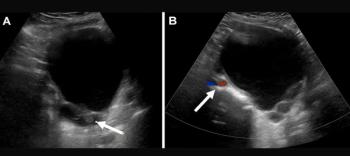
Cystadenomas and cystadenofibromas accounted for 46 percent of benign lesions initially scored as O-RADS 4 and 5 lesions on pelvic ultrasound, according to newly published research.
In a recent interview with Diagnostic Imaging, Soroush Adam Ramin, MD, discussed the enhanced 3D visualization and prognostic capability of Unfold AI, an MRI-based software platform that was recently added to Medicare Physician Fee Schedules for the West Coast and Mountain West regions.
In a recent interview with Diagnostic Imaging, Wendie Berg, MD, PhD, shared her perspective on various aspects of the controversial breast cancer screening guidance issued by the American College of Physicians (ACP), including the use of supplemental imaging in women with dense breasts.
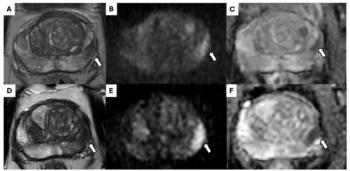
Patients with PRECISE 4 or 5 scores based on prostate MRI had over a 4.5-fold higher likelihood of biopsy progression in comparison to those with PRECISE 1-3 scores, according to a new multicenter study involving over 1,600 patients.

In a roundup of breast imaging news and research from April 2026, we take a look back at pertinent findings with AI and digital breast tomosynthesis (DBT), breast MRI studies and breast cancer screening guidelines from the National Comprehensive Cancer Network (NCCN) and the American College of Physicians (ACP).
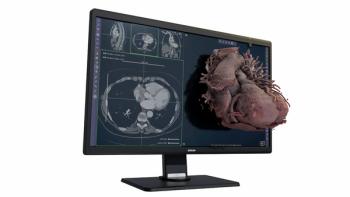
Providing enhanced multidimensional displays of MRI and CT imaging, the Avatar Medical Vision software may facilitate improved surgical planning and intraoperative communication.
Catch up on the most-well viewed radiology content in April 2026.

Catch up on the top radiology content of the past week.
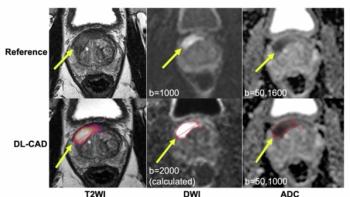
Catch up on a variety of new FDA clearances in radiology from the past week.
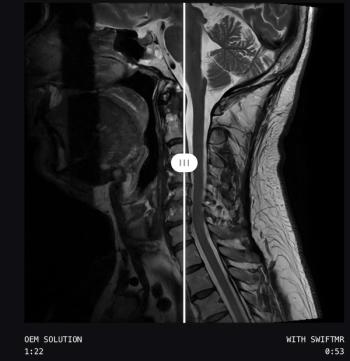
Employing the SwiftMR software with deep learning reconstruction solutions from original equipment manufacturers (OEMs) may provide additional sequence coverage as well as scan time reduction.
Catch up on the top radiology content of the past week.
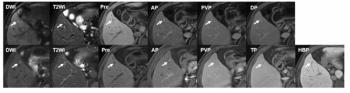
In a time-independent test set from a new retrospective study, gadoxetic-acid enhanced MRI provided nearly 38 percent higher sensitivity for detecting sub-centimeter hepatocellular carcinoma recurrence (HCC) in contrast to extracellular contrast agent-enhanced MRI.
For patients with cardiac dysfunction related to neoadjuvant chemotherapy for invasive breast cancer, new MRI research shows increased risks for concurrent decreases in total brain volume and white matter volume.
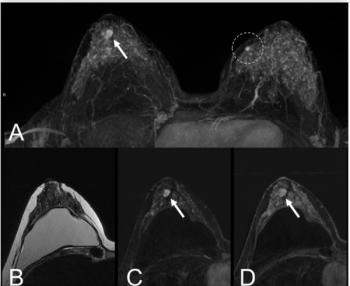
There was no statistically significant difference in sensitivity rates for lesion detection between breast MRI scans with minimum or mild background parenchymal enhancement (BPE) and those with moderate or marked BPE, according to a newly published study involving over 300 women.
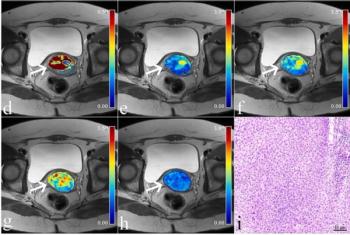
A combination of time-dependent diffusion MRI-derived parameters and quantitative macromolecular proton fraction (MPF) demonstrated a 96 percent AUC for differentiating high-grade and low-grade cervical cancer, according to newly published research.
Catch up on the top radiology content of the past week.
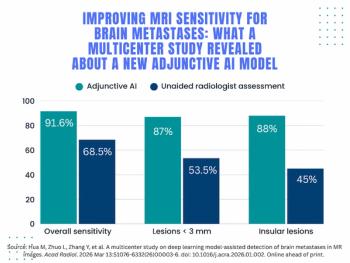
Use of an MRI-based deep learning model also led to a greater than 33 percent increase in detecting brain metastases less than or equal to 3 mm, according to newly published research.
Catch up on the top radiology content of the past week.
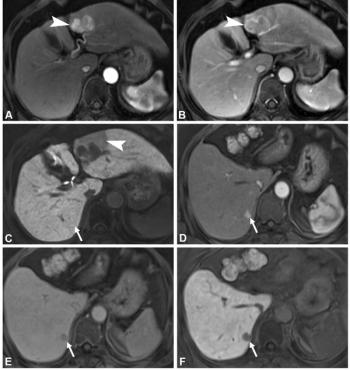
The MRI-based Early Recurrence Individualized Score (MERIS) demonstrated an 18 percent higher C-index than the Barcelona Clinic Liver Cancer (BCLC) staging system for predicting early recurrence of hepatocellular carcinoma (HCC) for patients who had resection of solitary HCC tumors.
Catch up on a variety of new FDA clearances and approvals in radiology from the past week.
Catch up on the top radiology content of the past week.
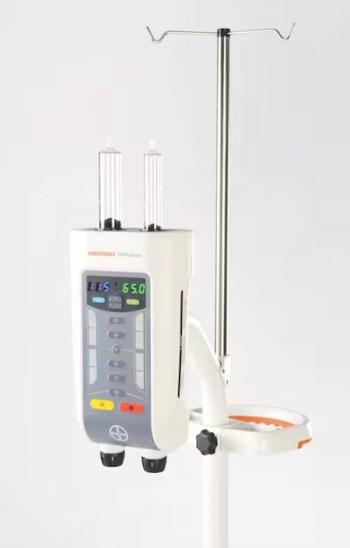
The MEDRAD MRXperion MR Injection System is cleared for use with low-field and high-field MRI platforms, including 7T MRI.
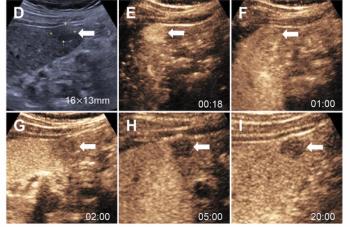
In comparison to LI-RADS version 2018 for MRI assessment, the use of perfluorobutane-enhanced ultrasound incorporating Kupffer-phase findings yielded comparable sensitivity and specificity for detecting hepatocellular carcinoma (HCC) nodules < 20 mm in high-risk patients, according to new research.

Catch up on the most well-viewed video interviews from Diagnostic Imaging in February 2026.
Advertisement
Advertisement
Trending on Diagnostic Imaging
1
Prostate MRI Study Links Lower ACD Values on DWI to Higher Long-Term Risk of Distant Metastases
2
The Reading Room Podcast: Assessing the Current Landscape of AI and Reimbursement in Radiology, Part 2
3
Brain MRI Study Reveals Higher Brain Age Gap and White Matter Hyperintensity for Those in Disadvantaged Neighborhoods
4
Breast Imaging in Focus: Key Pearls from New Guidelines on Proliferative Breast Lesions with Atypia and LCIS
5