












Catch up on the top radiology content of the past week.

Catch up on the top radiology content of the past week.
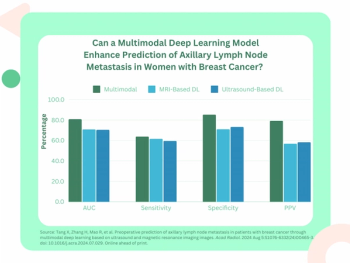
External validation testing revealed a deep learning combination of breast MRI, ultrasound and clinical factors had a 10 percent higher AUC for predicting axillary lymph node metastasis than sole use of MRI- or ultrasound-based deep learning models in patients with breast cancer.
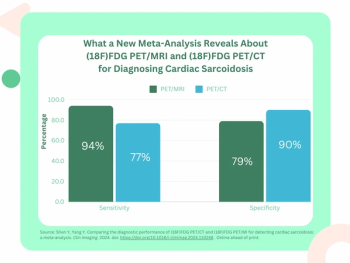
The researchers found that (18F)FDG PET/MRI had a 17 percent higher pooled sensitivity rate for cardiac sarcoidosis in contrast to (18F)FDG PET/CT.

Catch up on the top AI-related news and research in radiology over the past month.
Catch up on the top radiology content of the past week.
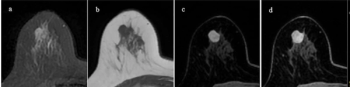
The absence of ipsilateral breast hypervascularity is three times more likely to be associated with false-negative findings on breast MRI and non-mass enhancement lesions have a 4.5-fold likelihood of being linked to false-positive results, according to new research.
Catch up on the top radiology content of the past week.
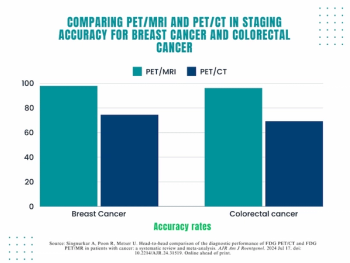
While PET/MRI and PET/CT had comparable sensitivity for patient-level regional nodal metastases and lesion-level recurrence, the authors of a systematic review noted that PET/MRI had significantly higher accuracy in breast cancer and colorectal cancer staging.
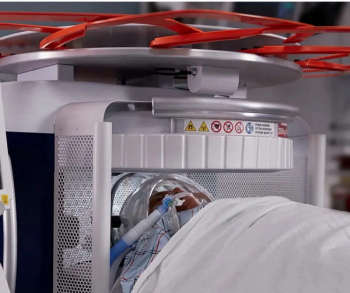
The ninth FDA clearance for the Swoop Portable MR Imaging system is for new software that enables significant scan time reduction for brain MRI scans.
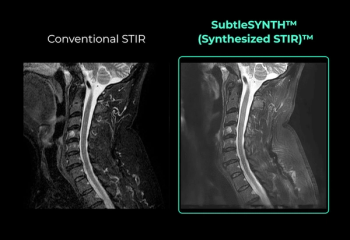
The deep learning SubtleSynth software creates synthetic STIR images that are reportedly interchangeable with conventional sequences obtained from T1 and T2-weighted MRI.
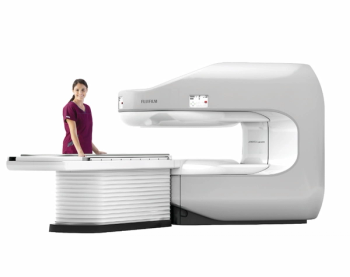
The Aperto Lucent open 0.4T MRI platform reportedly offers enhanced fat suppression and spatial resolution capabilities in addition to its open architecture design.
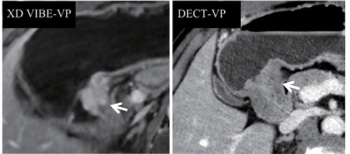
Researchers found that mpMRI was 18 percent more accurate than dual-energy CT (DECT) for T1 staging and 19 percent more accurate for N3 staging of gastric cancer.
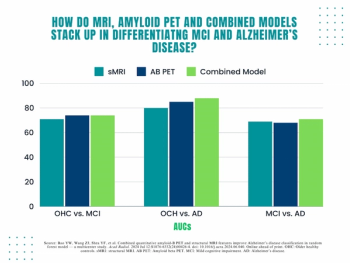
Emerging research revealed that a machine learning combination of amyloid beta PET and structural MRI demonstrated an 89 percent AUC in differentiating between older healthy patients and those with Alzheimer’s disease.
Catch up on the top radiology content of the past week.
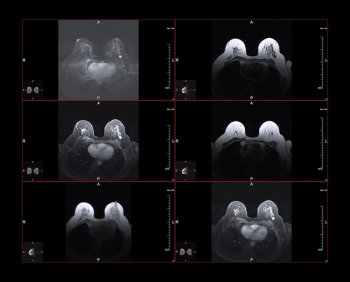
In the study of over 1,400 women with breast cancer, researchers noted that Black women with dense breasts or lobular histology were significantly less likely to have preoperative MRI exams than White women with the same clinical characteristics.
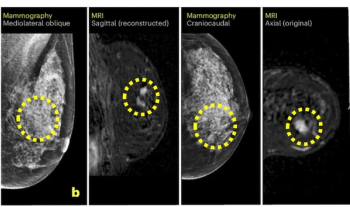
The AISmartDensity software facilitated a cancer detection rate (CDR) with breast MRI that was nearly four times higher than the CDR previously reported in trials involving traditional breast density assessment.
Catch up on the top radiology content of the past week.
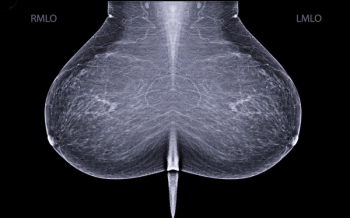
The combination of mammography with breast MRI within 90 days had a 96.2 percent sensitivity in comparison to 48.1 percent for mammography and 79.7 percent for breast MRI performed within 91 to 270 days after index mammography, according to newly published research.
Catch up on the top radiology content of the past week.

Catch up on the most-well viewed radiology content in June 2024.
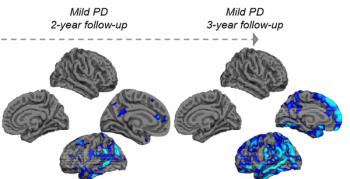
For patients with mild Parkinson’s disease, new research suggests that indexes of disease pathology with structural and functional connectivity of brain regions can help predict progression of gray matter atrophy at two- and three-year follow-up brain MRI exams.
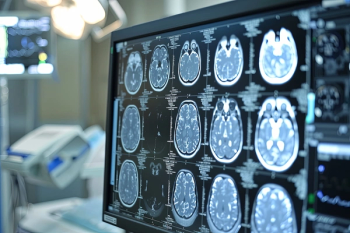
Noting an average processing time of 24 seconds for deep learning detection of acute ischemic stroke on brain MRI, the authors of a new study said deep learning assessment of DWI and FLAIR sequences had equivalent sensitivity and AUROC to T2WI MRI.
Catch up on the top radiology content of the past week.
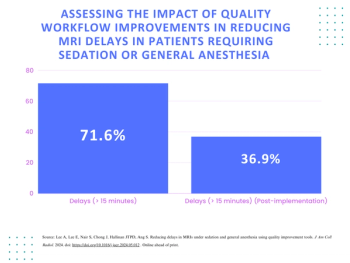
Targeting improvements in workflow, patient consent protocols and adherence to scheduled exam times, researchers noted significant reductions in 15-minute and 30-minute delays with MRI exams for patients who required sedation or general anesthesia.
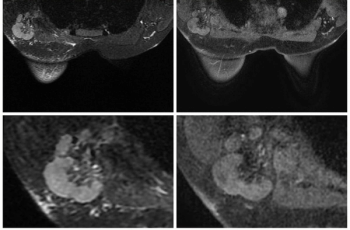
Employing a cut-off of Node-RADS > 2 for differentiating malignant lymph nodes with breast MRI in women with breast cancer, researchers noted average sensitivity and specificity rates of 91.5 percent and 87.4 percent respectively.