










Dana Bonaminio, M.D., Women’s Imaging National Subspecialty Lead from Radiology Partners, offers tips and guidance on what providers should make sure women know about their breast health.
Dana Bonaminio, M.D., Women’s Imaging National Subspecialty Lead from Radiology Partners, offers tips and guidance on what providers should make sure women know about their breast health.

Tattoo ink can migrate in female patients, potentially mimicking lymph node findings on breast imaging.
MD Anderson Cancer Center medical director shares her thoughts the priorities and challenges facing breast cancer detection and screening.
Patients want to know their risk. But, before you provide it, consider these factors to successfully integrate it into your practice.

Here's what to expect this week on Diagnostic Imaging.
Patients indicated breast imaging radiologists expressed more empathy over the diagnosis and had more understanding of their scans than other providers.
CEM performance showed no significant difference between women with or without breast implants, and it produced very few complications.
Despite recommendations from the American College of Radiology, most providers opt to delay screening in these women.

Images can pinpoint which women are at risk for ischemia and nipple necrosis.
Chest X-ray and Chest CT for TB Detection; Contrast-Enhanced Mammography for Women with Breast Implants; Risk-Based Approach to Optimizing Mammography During Crisis; Plus, Natural Language Processing for COVID-19 Case Volume Prediction
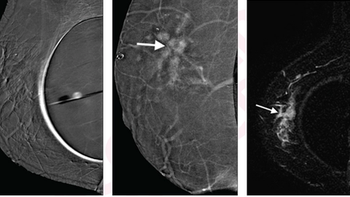
Findings show contrast-enhanced mammography is an acceptable option for women who may not have access to MRI or who cannot undergo the exam.

Experts at ECR 2021 offer their top three tips for a variety of breast imaging techniques.

Including a measurement in diffusion-weighted imaging on contrast-enhanced MRI can help women side-step unneeded procedures.
New method can help providers distinguish between benign and malignant breast lesions.

The approach, based on ACR guidance, is intended to promote vaccine use while reducing patient anxiety and unnecessary imaging.
COVID-19 Vaccine-Related Adenopathies on Breast MRI; Baseline Mammography at 40; Cherenkov Imaging to Improve Radiation Therapy Improvement; and Sexual Harassment and Gender Discrimination in Radiology

Here's what to expect this week on Diagnostic Imaging.
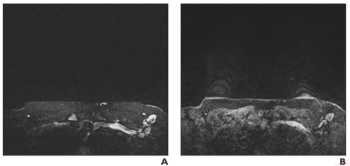
The Hospital of the University of Pennsylvania offers guidance – BI-RADS scoring and follow-up recommendations – for unilateral axillary lymphadenopathies seen on breast MRI in women who have received the vaccine.
Female breast cancer diagnosis is now the most common cancer diagnosis globally, largely affecting women in transitioning countries.
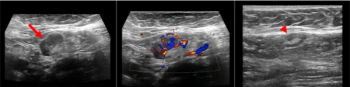
With more axillary adenopathies likely to present on breast imaging, Society of Breast Imaging experts offer guidance for best management during the pandemic.
Here's what to expect this week on Diagnostic Imaging.
Using MRI-guided biopsy could help women avoid surgical resection to determine how well chemotherapy is working.
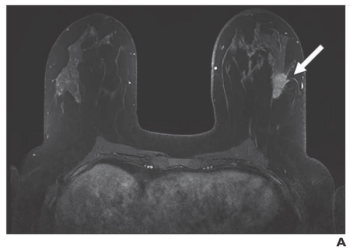
Suspicious lesions that develop during neoadjuvant therapy are uncommon, and they are highly unlikely to be malignant.
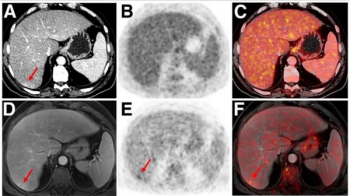
MRI reveals its wide utility this year, demonstrating improved performance in disease detection, as well as outperforming other modalities in providing clearer, more detailed images.
While the pandemic raged, work continued to advance the development of AI tools with breast imaging services.