
All News
All series
All All News
Advertisement
CHICAGO - Roughly 18 months after joining the Dose Index Registry, Emory HealthCare identifies significant progress in controlling dose.
Using ultrasound as first-line imaging for suspected pediatric appendicitis limits radiation exposure to patients without compromising diagnosis and patient outcome.
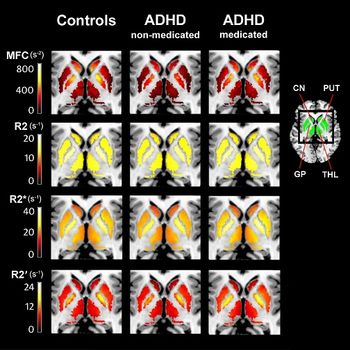
CHICAGO - Magnetic field correlation, a newer type of MRI, can detect low levels of iron in the brains of children and adolescents with ADHD who are ADHD medication-naive.
The RNSA and the Regenstreif Institute are working together to unify CT procedure names, many of which differ Radlex and LOINC terminology.
Children who underwent CT scans to evaluate for appendicitis at a dedicated children’s hospital were exposed to far less radiation.
Advertisement
CMS and the FDA should create a policy that all patient CDs containing medical images must be in a DICOM format.

Want to implement a patient portal? Here’s what to consider – from educating patients and staff to determining when and how to release reports. (Part 2 of 2)
Diffusion tensor imaging has detected that alterations in brain connections among patients with temporal lobe epilepsy are more widespread than thought.
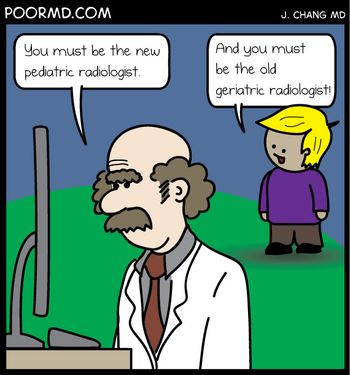
You must be the new pediatric radiologist.
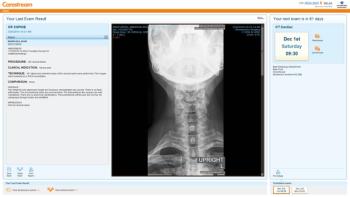
Many radiology practices fear patient portals are too much of a hassle. But those using them say providing access is good for patients and for business. (Part 1 of 2)
More healthcare isn't better -- a conversation about smarter healthcare is needed.
Saying "I just work here" isn't such a bad thing.
New pediatric fluoroscopy educational modules highlight dose reduction and training for technologists and providers.
Working with your PACS can be more comfortable with a few simple steps.
Successfully upgrading and integrating your PACS requires proper preparation and maintenance.
Advertisement
Advertisement
Trending on Diagnostic Imaging
1
Leading Breast Radiologists Discuss the Recent Lancet Study on AI and Interval Breast Cancer
2
FDA Clears AI-Powered Triage Platform for Digital Breast Tomosynthesis
3
Is AI Better Than Neuroradiologists at Evaluating Aneurysm Growth on CTA and MRA Scans?
4
Radiology Roundup of New FDA Clearances — February 1 — February 7
5