
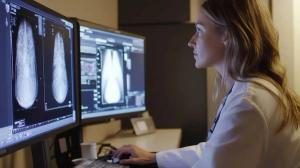
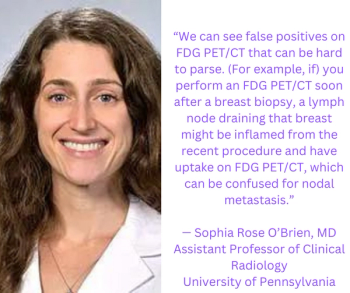
In a recent interview, Sophia Rose O’Brien, M.D., shared her insights on the roles and limitations of FDG PET/CT and FES PET/CT in the imaging of patients with metastatic breast cancer.
In a recent interview, Sophia Rose O’Brien, M.D., shared her insights on the roles and limitations of FDG PET/CT and FES PET/CT in the imaging of patients with metastatic breast cancer.
In a recent video interview, Vivek Bansal, M.D., discussed a recent Radiology Partners publication that offers practical tips and best practice guidance on CT and MRI neuroimaging for stroke patients.
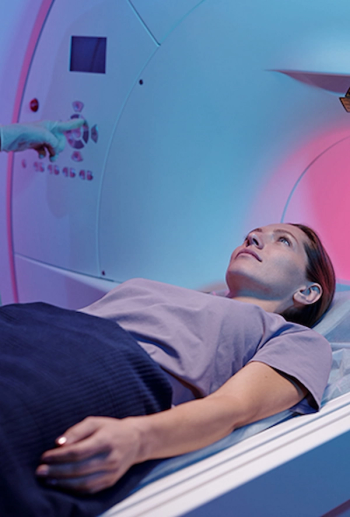
A robotic guidance and placement system, the IGAR system can be utilized inside of a magnetic resonance imaging (MRI) bore.
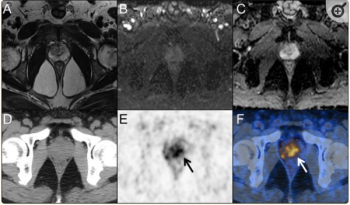
For men with PSA scores between 4 to 10 ng/mL, a multivariate prediction model that incorporates 68Ga-PSMA PET/CT had a 92.7 AUC for predicting clinically significant prostate cancer, according to newly published research.
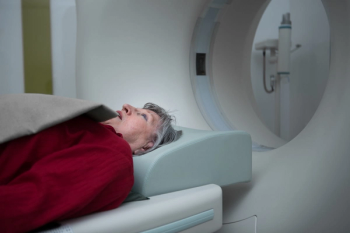
Indicated for the triage and notification of obstructive hydrocephalus on non-contrast brain computed tomography (CT), the artificial intelligence (AI)-enabled software is reportedly the first radiology triage modality to obtain the Food and Drug Administration’s (FDA) Breakthrough Device Designation.
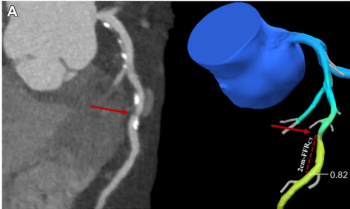
Abnormal findings on coronary computed tomography angiography-derived fractional flow reserve (CCTA-FFR) are associated with 3.2-fold higher risks of all-cause death or spontaneous myocardial infarction (MI) in patients with new-onset stable angina pectoris and coronary stenosis, according to newly published research.
Review the case study and test your knowledge to make the correct diagnosis.
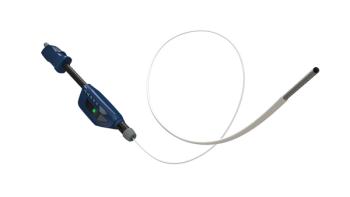
The Precision GI™ Endoscopic Ultrasound Biopsy Device reportedly provides a more efficient and less traumatic method of obtaining biopsy tissue for suspected gastrointestinal cancers.
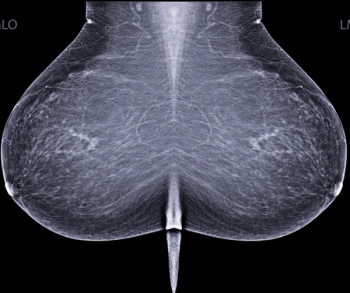
In a prospective study of over 55,000 women who had screening mammography, researchers found that double-reading by a radiologist and artificial intelligence (AI) was non-inferior to double-reading by two radiologists in detecting breast cancer.

While there may be awkwardness and a degree of embarrassment in noting obvious findings to referring clinicians in radiology, consistent communication of those findings is essential.
Catch up on the top radiology content of the past week.
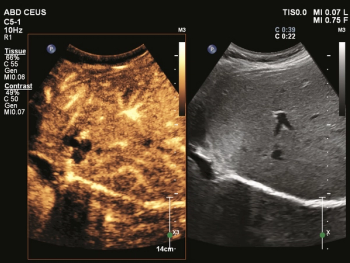
The Microvascular Imaging Super Resolution Contrast-Enhanced Ultrasound application reportedly leverages micro-bubble contrast media to provide enhanced spatial resolution for imaging of malignant lesions.
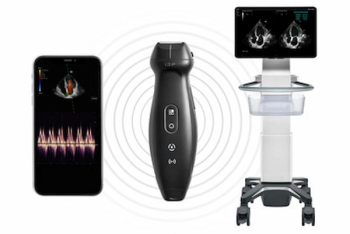
The TE Air is reportedly the first handheld ultrasound device to offer dual connectivity to mobile devices or touch-based ultrasound systems.
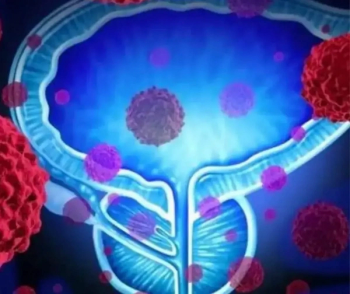
In a study of over 23,000 men who had PSA testing, researchers found that the adoption of pre-biopsy MRI resulted in a 21 percent decrease in negative biopsies and a 37 percent increase in the proportion of diagnosed Gleason score 7 to 10 prostate cancers.
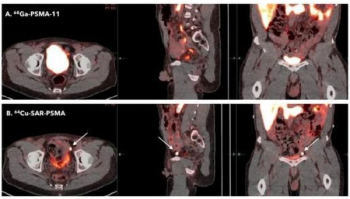
The PSMA PET agent 64Cu SAR-bisPSMA detected a higher number of prostate cancer lesions and had a significantly higher SUVmax and SUVmean than 68Ga PSMA-11 PET/CT, according to initial data from a prospective multisite study presented at the recent Society of Nuclear Medicine and Molecular Imaging (SNMMI) conference.
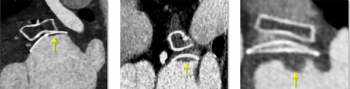
The presence of high-grade hypoattenuation thickening on follow-up computed tomography (CT) after left atrial appendage occlusion (LAAO) procedures for patients with atrial fibrillation was associated with a 4.6-fold risk for stroke, according to newly published research.
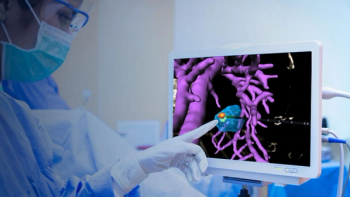
Through the use of artificial intelligence (AI) and imaging modalities such as ultrasound, CT, and MRI, the newly FDA-cleared VisAble.IO software reportedly enhances planning and real-time assessment for liver tumor ablation procedures.
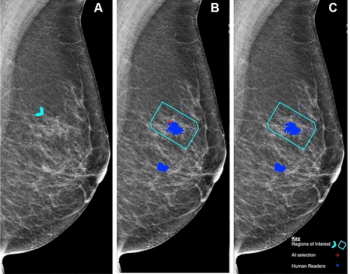
In separate test sets that included challenging mammography cases, researchers found that artificial intelligence (AI) demonstrated similar sensitivity and specificity for detecting breast cancer in comparison to assessments from over 500 clinicians.
Review the case study and test your knowledge to make the correct diagnosis.
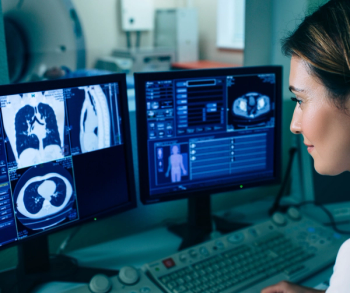
How strong is your own quality assurance (QA) barometer for interpreting CT, MRI, and ultrasound images?
Catch up on the top radiology content of the past week.
In the third episode of a three-part podcast, Anand Narayan, M.D., Ph.D., and Amy Patel, M.D., discuss the challenges of expanded breast cancer screening amid a backdrop of radiologist shortages and ever-increasing volume on radiology worklists.
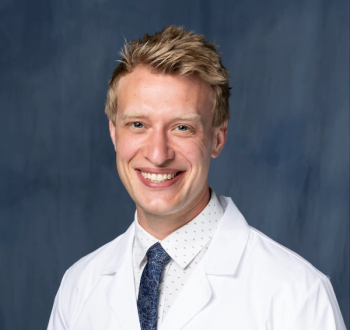
Wayne G. Brisbane, MD, of the University of California, Los Angeles, discussed the challenges of focal therapy for prostate cancer and how Unfold AI can help improve the accuracy of this treatment, as well as help counsel patients during the treatment decision process.
Catch up on the top five most viewed content at Diagnostic Imaging in August 2023.
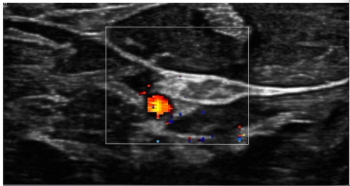
Offering a variety of enhanced features for image optimization and improved workflow efficiencies, the Sierra NMUS1 device reportedly includes the first software specifically designed for neuromuscular ultrasound applications.
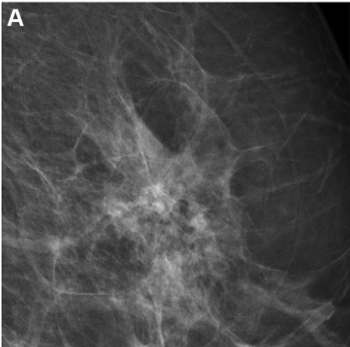
The study demonstrated that the combined model yielded improved risk assessment for both interval and long-term breast cancers.
Review the case study and test your knowledge to make the correct diagnosis.

I’ve long since learned that good faith is far more reliable than, say, contracts.
Catch up on the top AI-related news and research from the past month.
Catch up on the top radiology content of the past week.