
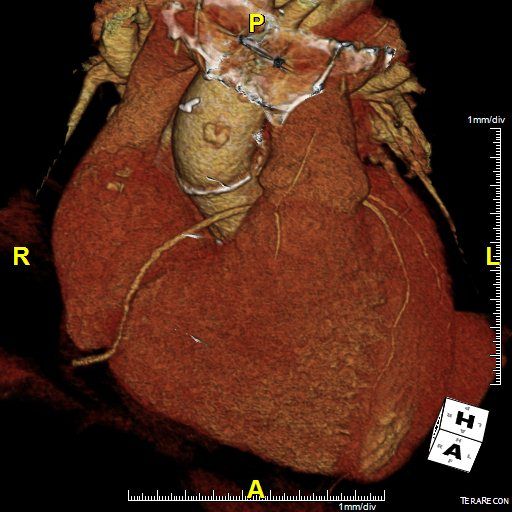


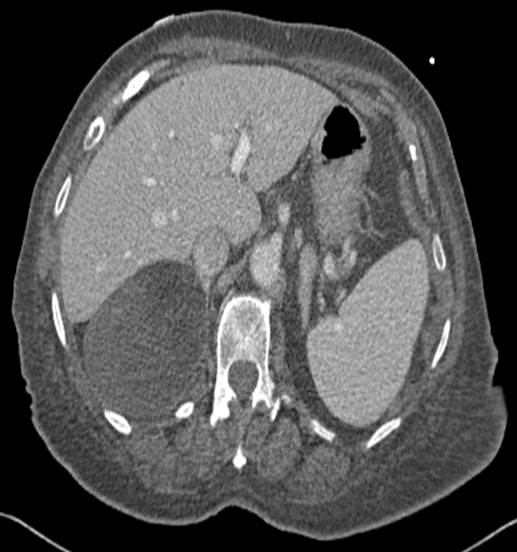












Coronary CT imaging may help clinicians identify patients with suspected angina who may go on to have myocardial infarction.

Coronary CT imaging may help clinicians identify patients with suspected angina who may go on to have myocardial infarction.

Early imaging of older adults with new back pain does not improve disability outcomes.

Use peer review in radiology as an opportunity for improvement, said David A. Koff, MD at ECR 2015.

Fewer CT scans are needed for trauma patients when whole-body CT is included in early trauma care, but initial WBCT results in higher dose.

The FDA has approved EchoPixel’s True3D Viewer which converts anatomical data to 3D virtual reality images.

Case History: 2-year-old female with complains of difficulty breathing, paroxysmal coughing, and wheezing for one day.

Imaging with 18F-fluoride PET/MR provide clearer images for patients with unclear foot pain.

Case History: Two-year-old female with cough with expectoration and high-grade fever.
Magnetic resonance imaging following CT or US detection of indeterminate pelvic mass helps women avoid unnecessary surgeries.
Health systems must prepare to increase their low-dose CT lung cancer screening capabilities to accommodate a new, larger pool of Medicare patients.

Dosing levels for pediatric head CTs as recommended by the ACR are met by most hospitals in the U.S.
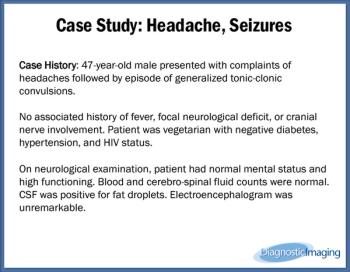
Case History: 47-year-old male with headaches followed by generalized tonic-clonic convulsions.
Computed tomography imaging is being performed more often among adults in the ED who have fallen, but may be unnecessary in many cases.

Radiology, as we know it, is over.
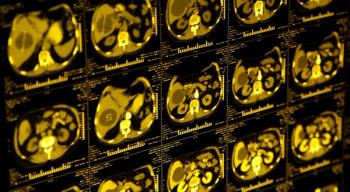
Changing smoking habits may require more sensitive lung cancer screening criteria to include as many high-risk individuals as possible.
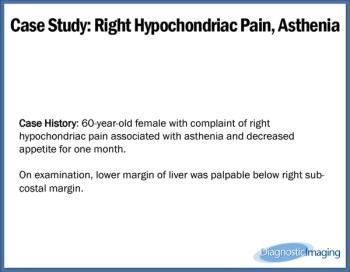
Case History: 60-year-old female with right hypochondriac pain, asthenia and decreased appetite.

Radiologists need to prepare for screening asymptomatic patients.
Case History: 40-year-old male with fracture undergoes pre-anesthetic fitness evaluation for intra-medullary nailing at the fracture site.
Low-dose CT screening for lung cancer following Lung-RADS criteria may reduce false positives, but it also decreases sensitivity.
Case History: 31-year-old female presents with complaints of headache and tinnitus.
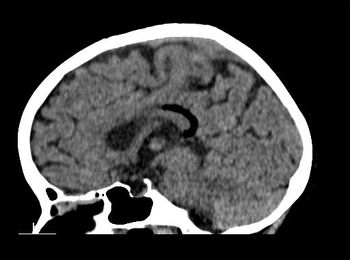
48-year-old female presented with complaint of seizures.

CMS released their final decision for lung cancer screening with low-dose CT.
The FDA has approved the first cone beam CT for diagnostic imaging of the breast, according to Koning Corporation.

The time it takes for CT scans, from order to reading, is influenced by the location of the scanner in relation to the ED.

Choosing Wisely guidelines can miss important findings, neurosurgeons argue.