













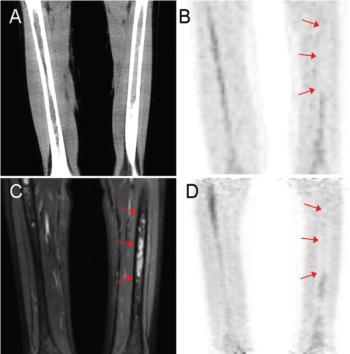
PET/MRI offers equal detection rates of solid tumors among children as does PET/CT, with lower radiation doses.
PET/MRI offers equal detection rates of solid tumors among children as does PET/CT, with lower radiation doses.

Study examines ASIR effect on normal and overweight children who underwent chest CT.
Study evaluates whether LDCT lung cancer screening is equally beneficial for younger and older patients.

Using PET/CT in women under 40 who have breast cancer may result in restaging of the cancer and adjustment of treatment.

There isn’t much radiologists can do about others invading their turf.
Contrast-enhanced PET/CT appears to be better than non-CE PET/CT in assessing distant metastasis in patients with pancreatic cancer.
Cone-beam CT is preferential to multislice spiral CT for hard-contrast objects, study says.

NCCN Group 2 high-risk patients to benefit from CT lung screening, study says.
False-positive results from CT colonography screening are considered an acceptable part of cancer detection for both patients and health care providers.

Using FDG-PET imaging to diagnose cancer may not be effective in certain areas of the country, where certain lung infections may be endemic.
The 16-slice CT scanner is expected to appeal to facilities due to a more affordable price point, Siemens said.

Ultrasounds accurate for initial screening for kidney stones.

Access to imaging, particularly MRI and some forms of CT, vary considerably across the United States.
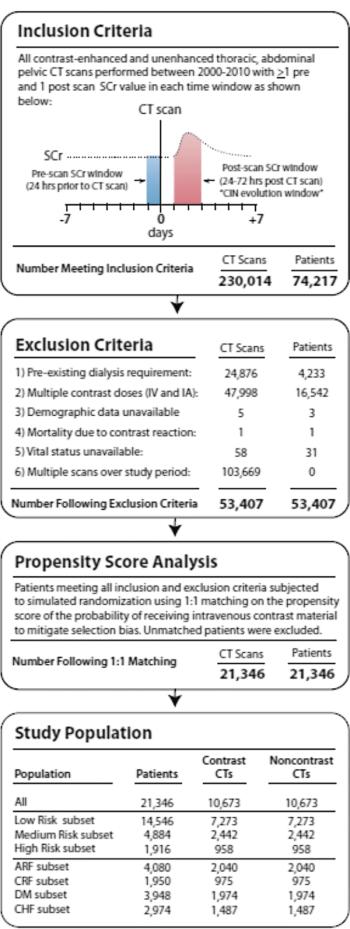
Intravenous contrast material for CT appears to be safe for most patients, including those with a predisposition to nephrotoxicity.
Low-dose CT screening can help clinicians detect early cancers among survivors of Hodgkin lymphoma, particularly if they were or are smokers.
CT images reconstructed with low dose model-based iterative reconstruction did not compromise image quality.
States found to have a high percentage of people at risk for lung cancer do not have an adequate number of LDCT screening centers.
New CT scanners’ variability affects cardiovascular risk classification.
Coronary CT angiography is a useful tool in detecting prevalence and type of coronary artery fistulas.
Mainstream media may report CT overuse, but double thoracic CT is used appropriately, study says.
Using SPECT-CT allows clinicians to identify some causes of low back pain.

Emerging technology gives radiologists an unprecedented view of the brain.

New algorithm is offered on Siemens’ SOMATOM Force CT system.
Using PET/CT imaging can help clinicians detect recurrent thyroid disease among patients who have negative radioiodine scans.
Chest tomosynthesis may reduce the number of chest CTs and the resultant radiation doses.