


Catch up on the top radiology content of the past week.
Catch up on the top radiology content of the past week.
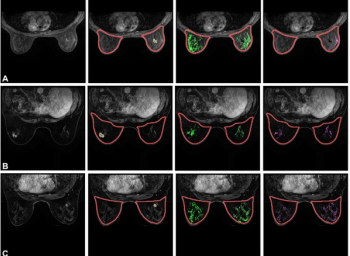
Researchers found that several measurements of background parenchymal enhancement (BPE) on dynamic contrast-enhanced MRI were linked to a 27 to 66 percent higher risk of breast cancer recurrence.
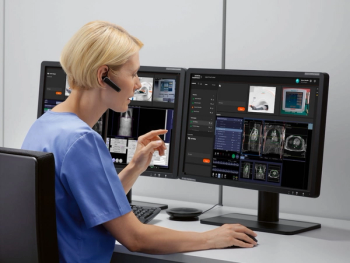
The syngo Virtual Cockpit platform reportedly enables remote access and image acquisition for CT, MRI and positron emission tomography (PET), and facilitates clinician collaboration across multiple sites.
Catch up on the top radiology content of the past week.
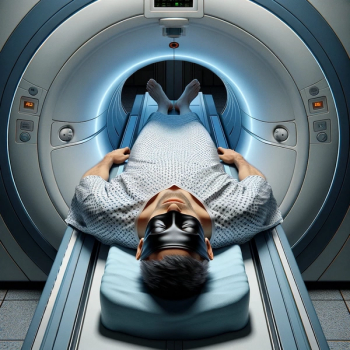
Given the frequent challenges in magnetic resonance imaging that are associated with claustrophobia, this author discusses innovations in noise reduction, radiofrequency coils and wide bore scanners, and emphasizes keys to relieving patient anxiety.
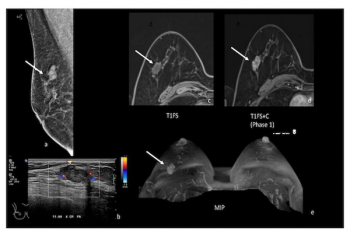
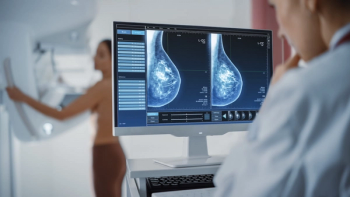
For women with dense breasts, abbreviated breast MRI and digital breast tomosynthesis (DBT) both offered greater than 98 percent sensitivity rates and greater than 94 percent negative predictive values (NPVs) for breast cancer detection, according to newly published research.

Featuring a lightweight body contouring design, the Small Body Array reportedly facilitates optimal signal-to-noise ratio (SNR) and between 10 and 40 percent faster throughput.
Catch up on the top radiology content of the past week.
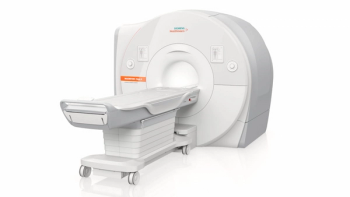
At an amplitude of 200 mT/m and a slew rate of 200 T/m/s, the gradients for the FDA-cleared MAGNETOM Cima.X are reportedly the strongest for currently available whole-body MRI scanners.
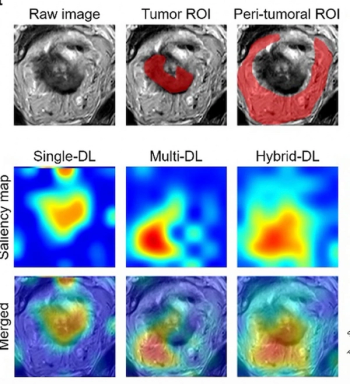
An emerging deep learning model, which incorporates T2-weighted MRI and clinical data, demonstrated an 83.9 percent AUC and an 85 percent specificity rate for preoperative prediction of tumor deposits in patients with rectal cancer.
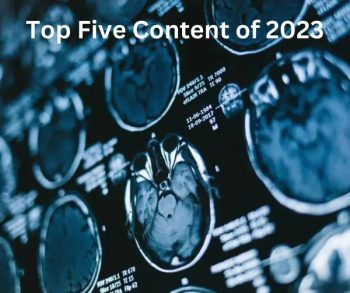
Touching on a variety of topics in radiology, here are the top five most well-viewed content from Diagnostic Imaging in 2023.

Catch up on the top AI-related news and research in radiology over the past month.
In a study examining the potential of the large language models ChatGPT-4 and Bard to follow ACR Appropriateness Criteria for breast cancer, lung cancer, ovarian cancer and colorectal cancer screening, researchers noted “impressive accuracy in making radiologic clinical decisions.”
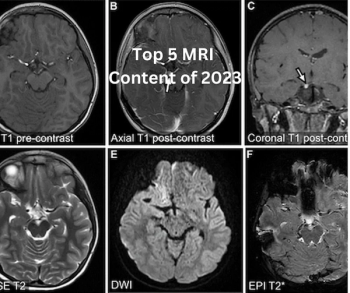
Catch up on the most well-read magnetic resonance imaging (MRI) articles from 2023.
Catch up on the top radiology content of the past week.
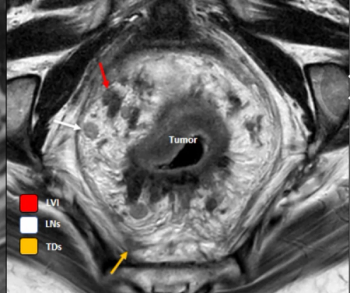
In one of the study periods from recently published research on rectal MRI acquisition, researchers found that 39.7 percent of rectal MRI exams adhered to guidelines from the Society of Abdominal Radiology (SAR) and only 6.8 percent followed guidelines from the European Society of Gastrointestinal and Abdominal Radiology (ESGAR).
Catch up on the top radiology content of the past week.
Catch up on the top radiology content of the past week.
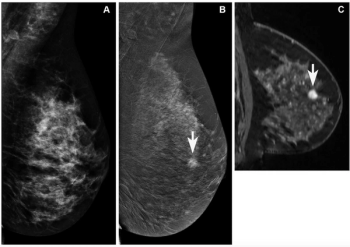
In findings from an enriched cohort of asymptomatic patients with screening-detected abnormalities, researchers found that contrast-enhanced mammography (CEM) was superior to conventional mammography and offered equivalent detection of breast cancer in comparison to breast MRI and abbreviated breast MRI.
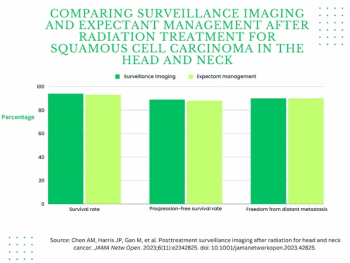
For patients who had a complete metabolic response to radiation treatment for head and neck cancer, the authors of a recent study found that surveillance imaging with PET/CT, MRI or CT did not improve outcomes in comparison to expectant management.
Catch up on the top radiology content of the past week.
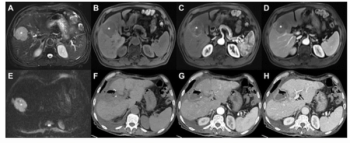
Emphasizing factors such as tumor size, serum neutrophil count and arterial phase hyperenhancement proportion on MRI, a new diagnostic model outperformed eight staging systems for predicting advanced recurrence of hepatocellular carcinoma after liver resection.
Catch up on the top radiology content of the past week.
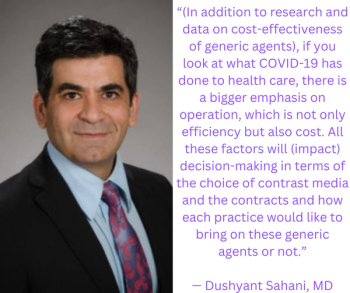
In a recent video interview series, Dushyant Sahani, M.D., discussed the critical role of contrast media in diagnostic imaging, lessons learned from the contrast media shortage, key considerations with generic agents and currently unmet needs with contrast agents.
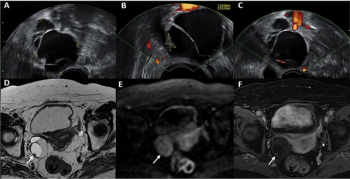
New research shows that pelvic MRI offers equivalent sensitivity but nearly 20 percent greater specificity than transvaginal ultrasound for the classification of adnexal lesions.