
Using ultrasound as part of the FAST assessment for children with blunt abdominal trauma does not appear to improve quality of care.
Using ultrasound as part of the FAST assessment for children with blunt abdominal trauma does not appear to improve quality of care.
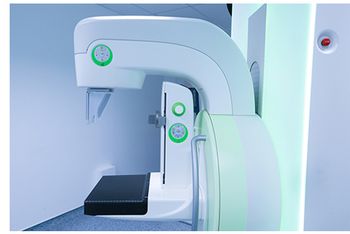
The value of screening mammography when added to screening MRI in women who are at high risk for breast cancer.
Mammography screening women regularly at age 50 results in many women in their 40s not being diagnosed with breast cancer.

Combining tomosynthesis plus digital mammography screening’s effect on cancer detection and recall rates.
MRI shows changes in the hip following arthroscopic hip surgery, in both symptomatic and asymptomatic patients.
Digital mammography breast density estimates compared with standard-dose mammography.

Subsequent ultrasounds are more likely to occur when non-radiologists read initial ultrasounds in the emergency department than when radiologists read.
Breast density legislation is still causing confusion and controversy among radiologists.
An abbreviated MRI protocol is effective in detecting breast cancer and saving resources.
Radiologists who use simplified language in their reports help their patients understand their results.
Radiographs can provide anatomic evaluation and appropriate starting point when investigating possible musculoskeletal infection.
Compared to standard biopsy strategy, MR imaging-guided strategies are cost effective in helping detect prostate cancer.
Magnetic resonance imaging department efficiency increases when MRI technologists undergo advanced communication training.
Ventilation and perfusion scans to diagnose pulmonary embolism remain largely accurate.
Imaging for breast pain is not usually recommended, however, ultrasound may be appropriate for women with focal, noncyclic pain.
Imaging children with nontraumatic back pain need not be routine practice.
Advanced imaging is being used more often in emergency rooms.
Pulmonary micrometastases of colorectal cancer are detectable far earlier with combination imaging, opening door to improved cancer treatment.
Readers with fewer than 10 years' experience benefit the most of adding DBT to 2D conventional screening mammography.
CT-Guided VAB outperforms prone stereotactic biopsy for fastest breast tissues biopsy.
Routine thyroid cancer screening among asymptomatic patients does not offer any benefit for patients.
Magnetic resonance imaging shows effect of prolonged space travel on vision.
MR elastography is highly repeatable and weakly correlates with age.
Sub-harmonic aided pressure estimation and sub-harmonic imaging can correctly predict responses after 10% chemotherapy completion.
Breast cancers detected by screening mammography do not spontaneously disappear.
Imaging can show a slowing down of cartilage degeneration in obese patients after they’ve lost weight.
Find out how much other radiologists are making with results from our 2017 Compensation Survey.
Decision to perform radiographs of children presenting with wrist traumas can be based on the Amsterdam Pediatric Wrist rule or one of three other clinical decision rules.
Diagnostic reference levels help reduce radiation doses for CT examinations.
Researchers determine quantitative ultrasound could be superior to conventional ultrasound for predicting fat acculturation in the liver.