

15 tips for being an ideal mentor or mentee.
Whitney J. Palmer has been with Diagnostic Imaging since 2011, serving as the Senior Editor since November 2019. She has 20 years experience in healthcare and academic medicine reporting.
15 tips for being an ideal mentor or mentee.
3D Convolutional neural network can effectively replace manual segmentation of the pancreas with or without cancer.
Using a deep convolutional neural network can improve providers’ ability to predict how patients with hepatocellular carcinoma will respond to Y90-RE treatment, enabling them to offer additional therapies, if necessary.
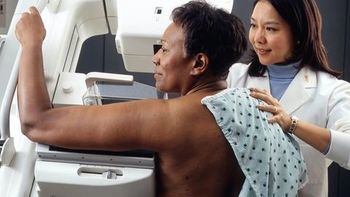
Cancer screening rates drop more significantly among women in racial and ethnic minority groups, as well as those living in rural locations.

Here's what to expect this week on Diagnostic Imaging.
Incorporating artificial intelligence with TI-RADS improves sensitivity, specificity, and reduces interpretation time by nearly one-fourth.
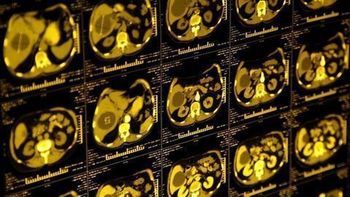
Using a deep learning algorithm enables providers to screen high-risk patients for both lung cancer and cardiovascular disease.

Radiologist can a fundamental role to play in detecting illicit drug smuggling, and knowing what to look for matters.

Ultrasound tool, fueled by artificial intelligence software, works like a navigation system to help providers capture the best cardiac images.
The number of radiologists becoming affiliated with ACOs increased more than three-fold from 2013 to 2018.

Take a quick look at Diagnostic Imaging's Top 5 stories of the week.
As radiology, hopefully, enters a post-pandemic stage, many workflow and protocol changes will remain in place.
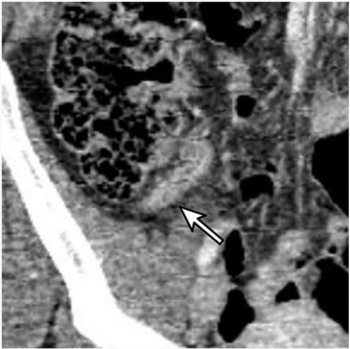
Implementing a clinical scoring system reduces CT use, but it comes with a cost – lower diagnostic accuracy.
COVID-19 has shone a bright light on the impact of social determinants of health.
Meg Eckenroad, Hologic’s vice president of women’s health, discusses the motivation and goals of the new $20-million Project Health Equality.
KA Imaging President and Chief Executive Officer Amol Karnick and Chief Technology Officer Karim S. Karim, Ph.D., offer insights into current X-ray imaging trends, as well as opportunities for innovation.
New ACR leaders will assume roles at the end of the 2021 Annual Meeting.
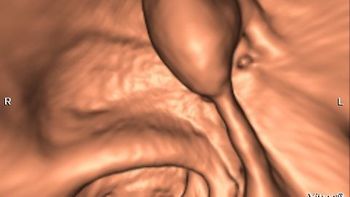
Move could help address worse colorectal cancer outcomes for Black patients.
The deep learning algorithm can distinguish between malignant and benign nodules at initial screening.

This year’s meeting with be in-person, but it will also include a virtual component for those unable to attend.
Here's what to expect this week on Diagnostic Imaging.
Multi-institutional group is designed to engage providers in efforts designed to alleviate disparities in the healthcare system.

Patient hand-offs are prime times for errors to occur, but departments and hospitals can take steps to make these moments safer.

Take a quick look at Diagnostic Imaging's Top 5 stories of the week.

Dana Bonaminio, M.D., Women’s Imaging National Subspecialty Lead from Radiology Partners, offers tips and guidance on what providers should make sure women know about their breast health.

There is no standard staffing model for pediatric hospitals nationwide despite the push for around-the-clock in-house attending coverage.
CT scans show patients infected with the virus who are intubated or who experience fever have lower gray matter volume in the frontal-temporal lobe.
When it comes to improving radiology understanding and performance, there’s a shift underway from peer review to peer learning.

In collaboration with Black Women’s Health Imperative, National Alliance for Hispanic Health, and RAD-AID, Hologic has launched Project Health Equality.
Computer program can accurately predict 80 percent of cases where COVID-19 patients will develop life-threatening conditions within four days.