

Radiologists are the real dictators.
Radiologists are the real dictators.

Younger radiologists expect to be able to access information immediately and share it seamlessly - a growing trend facing the field, Woojin Kim, MD says.

Financial incentives designed to control medical imaging use aren’t working as expected, even in settings without a fee-for-service payment model, researchers found. But industry leaders say the data indicates that utilization has actually decreased.
The FDA cleared Siemens’ 128-slice CT scanner designed as a budget-conscious option for community and critical access hospitals and outpatient centers.
Radiology departments should create policies for meaningful use criteria exclusions, and document the rationale, experts at SIIM said.
Is your radiology department or practice considering adding business intelligence and analytics tools? Here are some tips for a successful implementation.
From image order entry to reporting results, several spots on the medical imaging chain provide opportunities for using clinical decision support.
The Medical Imaging and Technology Alliance introduced a dose-reduction initiative aimed to ensure only authorized operators can alter the controls of a CT scanner.
Radiology mobile apps vendors take diverse approaches to developing solutions, depending on the intensions for the app, device and platform, and end user.
The PACS of the future will be far smarter and incorporate clinical and business analytics to allow radiologists to be more efficient, says Eliot Siegel, MD.
Business intelligence tools are helping radiology practices and departments better monitor their processes and increase efficiency. Here’s how to get started.

Paul Chang, MD, offers some advice and warns of a few pitfalls radiology professionals face when getting their home-grown IT tools into the market.

C. Matthew Hawkins, MD, discusses challenges of natural language processing and how more standardization can reduce error rates of speech recognition software.
Use of tablet devices, such as iPads, by radiology residents would enhance their education, allowing them to keep up with evolving technology.
Inundated with CDs of outside radiology studies, some tertiary care facilities are developing policies to manage the import and work flow of these studies.
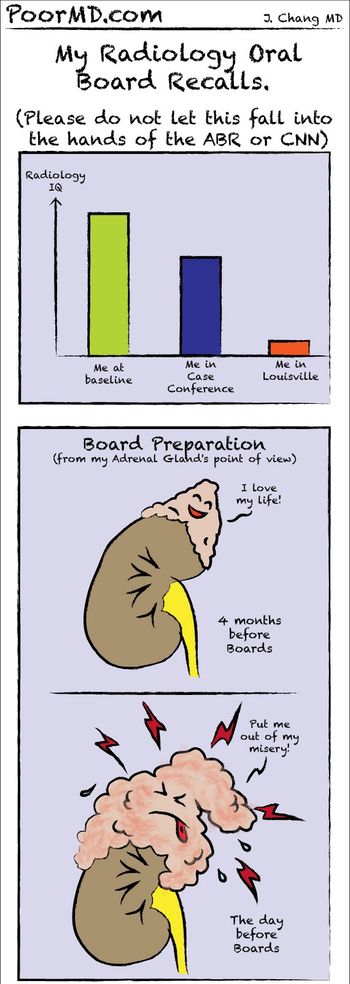
I just found out I passed my boards! Here are my recalls.

The growing field of advanced analytics is helping radiology groups put their treasure troves of data to use to boost efficiency and improve quality.

Ralph Highnam, CEO of technology company Matakina International, weighs in on the challenges and promises of evaluating objective breast density.
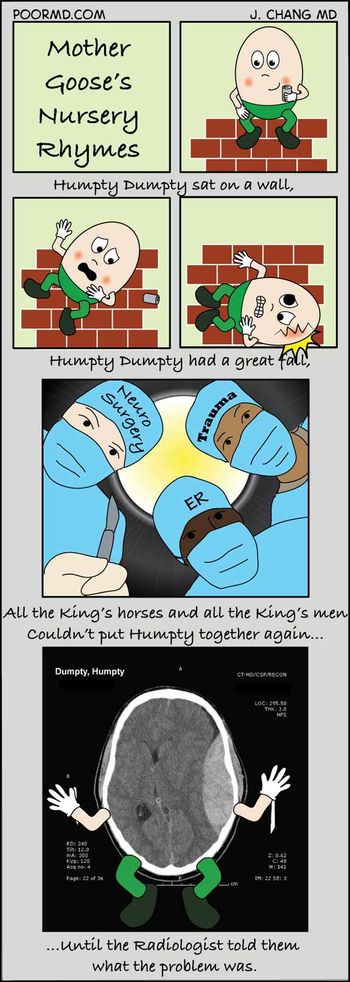
Humpty Dumpty sat on a wall...
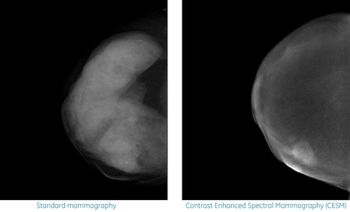
Kristi Funk, MD, of the Pink Lotus Breast Center explains the benefits of CESM, the implementation of GE’s SenoBright technology, and the reaction from her patients.
The drive for improved system integration and decreased turnaround time has led to a continuous analysis of procedures and a never-ending cycle of trying to get the work flow to work.
Children’s hospitals use dedicated pediatric technologists and more closely follow protocols, resulting in dramatically lower radiation doses. Adult hospitals must take greater care in monitoring dose. Here’s how.
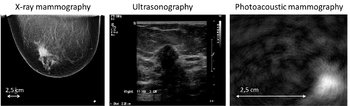
Researchers are in the first stages of testing a new technology that may allow radiologists to detect breast tumors with improved accuracy without exposing patients to radiation.
The agency released a draft proposal recommending that new imaging devices, such as CT, fluroscopy, and X-ray, include protocols and instructions for pediatric patients. This would be required on premarket approval notifications.
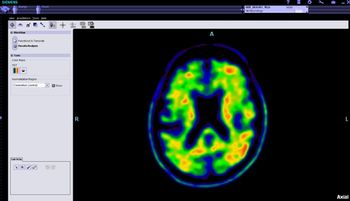
Questions still exist about how best to use the growing list of radioactive tracers, but industry experts view these developments as significant positives for providers imaging patients with suspected Alzheimer’s.
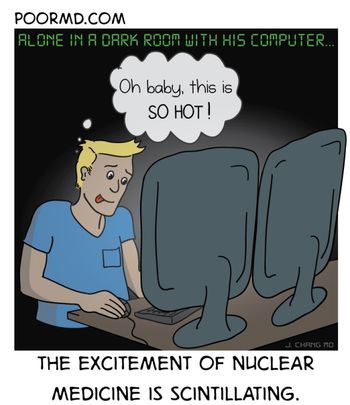
A radiologist alone in a dark room with his computer.
The modality bests the U.S. standard of care, radiographic skeletal survey, in assessing the extent of the disease.
New study challenges common belief and finds patients with a history of renal disease, hypertension or heart disease were more likely to suffer renal insufficiency.
Dedicated pediatric departments and technologists may adhere closer to protocols for pediatric CT scans.

The ACR this week said "proceed with caution” when considering legislative requirements to include density information in the patient summary. What do you think?