

Speech recognition software can be leveraged to tell if a radiologist is stressed, prompting individualized interventions to improve quality and satisfaction.
VIDEO: Cindy Moran, of the American College of Radiology, discusses how the health care reform law will affect radiologists and how to get involved.
GE Healthcare axquires U-Systems Inc., developer of the Automated Breast Ultrasound, a system used as a supplement to mammography for asymptomatic women with dense breasts and no prior interventions.

Mobile X-ray technology is increasing in popularity as demand grows to get technologists out of fixed X-ray rooms. Here’s a look at its benefits and challenges.
Unnecessary radiation exposure and burns during diagnostic radiology procedures ranked third on the ECRI Institute’s list of medical/technology hazards.
The way radiology reports are generated has certainly changed since I began my radiology residency in the Navy in the late ‘70s.
From taxes to health insurance to ACOs, the election next week is likely to have a major impact on radiology. Here’s what you need to know.
Video: Roberto Soto, MD, discusses using PET imaging with Amyvid for Alzheimer’s evaluation, including reimbursement, training, and benefits of the new test.
Video: Roberto Soto, MD, of Precision Imaging, shows a recent PET imaging case using Amyvid, recently approved for evaluation of Alzheimer's.
Breast ultrasound is superior to mammography for initial evaluation in symptomatic women aged 30 to 39 and should be the primary imaging modality.
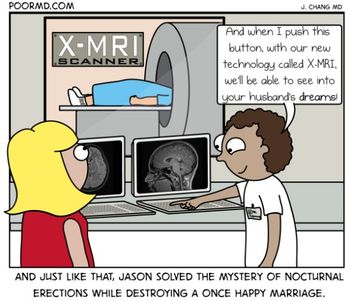
Just because we can image, does not mean we should.

Lisa Lowe, MD, an Academy of Radiology Leadership and Management grad, discusses the training radiology leaders need in today’s health care environment.
In this video interview, the ACR’s Michael Peters explains what’s new in Stage 2 of meaningful use, the challenges radiologists face and how to stay informed.
Most radiologists are eligible for the meaningful use program, says Keith J. Dreyer, DO, PhD. So don’t be tempted by the hardship exemption.
October 3 was the deadline for eligible professionals to begin the 90-day reporting period for 2012 to receive Meaningful Use payments. Did you make it?
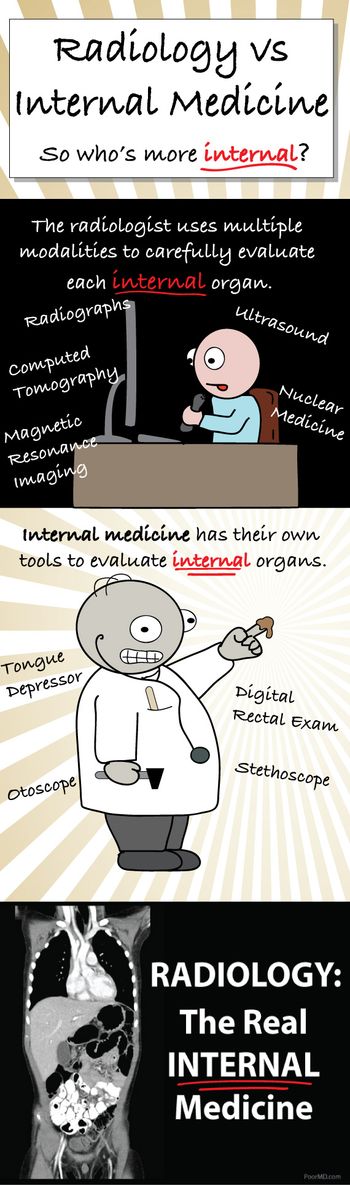
So who's more internal?

James Rawson, MD, discusses health care reform, appropriate imaging utilization, changes in practice structure, and the upcoming presidential election.
Canadian C-spine rule is more accurate in screening for cervical spine injury compared with NEXUS, but more education is needed to curb imaging.
Imaging study interpretations by subspecialty radiologists provide important clinical information about pediatric patients.
A new Image Gently initiative emphasizes proper pediatric imaging procedures as technology shifts from standard screen-film X-ray to digital X-ray.
Using computer-aided detection software to help find target areas in images may result in readers missing areas not marked for viewing.
GE Healthcare and RadNet have partnered to identify the most efficient, cost-effective approaches for breast cancer detection.
Video: Radiology groups might be surprised at how much operational data is available. Regents Health Resources’ Brian Baker talks less-obvious ways to compare data.
Interventional radiology has achieved primary specialty status, a decision the SIR hailed as confirmation of the skill set’s benefits to patients.

The Meaningful Use Stage 2 final rule clarifies a few sticking points for radiology, including imaging accessibility, CPOE, and hardship exemptions.

VIDEO: Benjamin Strong, MD, of vRad, details the essential components of a quality assurance program and how to ensure radiologist accountability and participation.