

New PET/MR technology from researchers at the University of Oslo promises same-time scanning with less radiation.
The rapid shift to VNAs for image storage and sharing will affect purchasing decisions and image management. Here’s what you need to know about the impact.
The future of image storage will depend upon some type of neutrality. Whether that storage is PACS neutral or archive neutral depends on facility preference.

Raymond Tu, MD, discusses the considerations for implementing a new lower dose mammography system, including patient safety, market share, and cost.
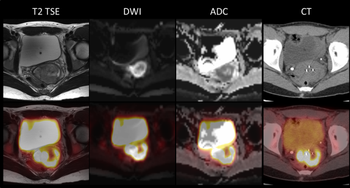
Washington University’s Mallinckrodt Institute of Radiology is imaging cervical cancer patients with hybrid PET/MR. Here’s what they’ve learned about this new modality.
CT radiation doses for urolithiasis reduced with adaptive statistical iterative reconstruction allows for effective evaluation without affecting image quality.
At the AHRA annual meeting AHRA, consultant Jef Williams offered tips on establishing a radiation dose reduction program. Does your facility have one?
AHRA: Baystate Health System turned to a Software as a Service (Saas) model for 3D reconstruction, cutting costs in their CT department.
AHRA: The benefits of a radiation dose reduction program may be obvious, but securing buy-in can be a challenge. Here’s how to ensure its success.
A patient-controlled registry allows imaging data to be shared without placing undue burdens on the patients, providers or infrastructures.
Chris Tomlinson, of Radiology Associates of The Children’s Hospital of Philadelphia, discusses the benefits of vendor neutral archives for storing and sharing images.
Radiology practices are turning to customer relations management (CRM) software to gather data and improve their referrals and marketing efforts.
Digital watermarks can determine if volumetric medical images have been altered by hackers or other parties, and what areas have been affected.
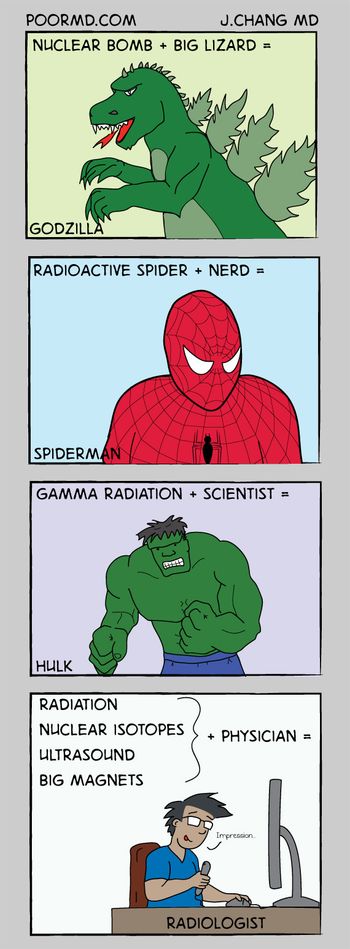
An impressive group created from radiation
Most Medicare patients with stage IV breast, colorectal, lung, or prostate cancer undergo more high-cost imaging scans than do those with early stage disease.
Advanced imaging use has declined significantly among Medicare and privately insured patients over the past seven years, according to a Health Affairs study.
Poor documentation in your radiology reports may be to blame for your leaving rightfully-earned money unclaimed. Here’s where to look and how to boost revenue.
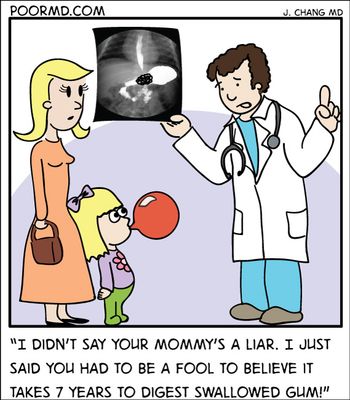
It takes seven years to digest chewing gum?

Researchers are developing a solution that could improve reading accuracy by allowing physicians to interact with tissue as if it were a 3D object.
I am in the breast imaging business to help to find small breast cancers, but the little ones are tough to identify sometimes.
The ACR selected National Decision Support Company to make the guidelines available for EHR integration, which could signal a shift in image ordering decisions.
Most healthcare providers developing an enterprise imaging strategy are considering a vendor-neutral archive or a PACS enterprise archive solution, KLAS found.
Amyvid with PET imaging of the brain detects early evidence of Alzheimer’s in patients with mild decline or who are not yet showing cognitive impairment.

The Image Gently campaign that never had a chance.
From new technologies to awareness campaigns, the radiology industry has taken great strides to address concerns about radiation dose. Is it enough?
Researchers found that an antioxidant pill taken before an X-ray may prevent radiation-induced cancer by reducing the precursor DNA double strand breaks.

"Your son's handwriting is illegible!"
Acquiring refurbished imaging machines is a growing trend as practices grapple with decreasing reimbursement or consider the possibility of future consolidations.
The American College of Radiology lauded the AMA’s policy update that recognizes the importance of screening mammography starting at age 40.