
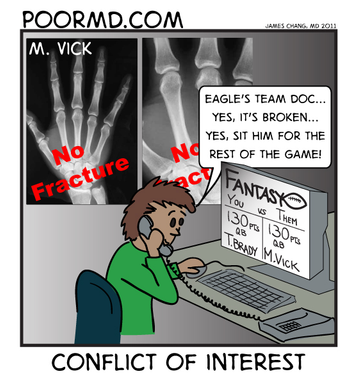
Check out the latest addition to our blog: radiology comics by James Chang, MD
Check out the latest addition to our blog: radiology comics by James Chang, MD

RIS/PACS vendor Intelerad Medical Systems will highlight new RIS soluion and other product enhancements at RSNA 2011.
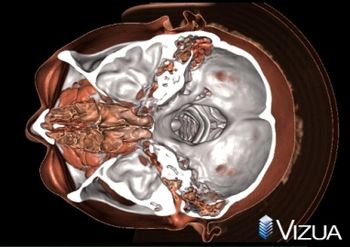
Vizua will debut their cloud-based 3-D scan visualization platform at RSNA 2011.
In this podcast, Tom Gentile, president and CEO at GE Healthcare Systems, explains that “the whole focus of imaging is moving beyond the quality of the image.” Patient care, physician productivity and reimbursement take on a renewed focus in light of healthcare reform efforts internationally, he says.
CoActiv will introduce its Exam-RIS version 2.0 at RSNA 2011. The web-based RIS integrates with their Exam-PACS, and provides specialized work lists, automated referring physician communications, and an HL7 interface for billing, among other features.
Radiologists at University of Chicago Medical Center set out to decrease their own error rates, and found that with peers scoring and reviewing each others’ reports, and then discussing them at section meetings, error rates dropped.
Ultrasound units have gradually become more portable over the years. This gives clinicians the ability to perform these examinations at the bedside, in the office and in the emergency room. The idea is that relatively untrained individuals (compared with ultrasound technologists or radiologists), whether clinicians, residents or medical students, are capable of providing an ultrasound imaging examination at the POC that is diagnostic and - equally as important - cost effective.
Radiologists and imaging groups should discuss with their IT vendors the plans and strategies for certifying their technology under the federal meaningful use program, said Keith Dreyer, DO, PhD, vice chair of radiology informatics at Massachusetts General Hospital, speaking Thursday at the American College of Radiology’s inaugural Imaging Informatics Summit in Washington, D.C.
Bringing your low-dose CT protocols down even further doesn’t have to mean tossing out your old scanners and buying pricey new ones. According to one San Diego-based imaging center, you can trim radiation doses to almost nothing and still get high-quality scans appropriate for diagnosis.
Despite some of the proven benefits of voice recognition software, some radiologists still struggle to fit the software into their workflow. Here are some tips from some top VR developers.
Voice recognition software has been shown to reduce report turnaround time and holds promise for populating and mining structured reports - but not all radiologists are convinced.
Past mammograms are a valuable tool for benchmarking for change, but radiologists should keep in mind the diagnostic risks with respect to screenings where change is and isn’t observed.
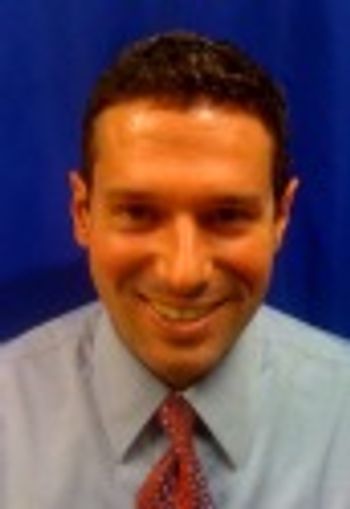
Diagnostic Imaging spoke with Dr. Johnsey Leef III, a radiologist with Charleston Area Medical Center in Charleston, WV, about how the industry is responding to the call for lower dose imaging and what his department is doing to address the issue.
Better image post-processing enables simplified bowel preparation with no effect on virtual colonoscopy image quality, an Italian team of radiologists found in a preliminary study published in La Radiologia Medica.

Based on all of the requirements for the EHR meaningful use program, the only viable solution would be a cloud-based technology that provides a complete certified ambulatory EHR that can be used standalone or as plug-in to any HIS, RIS, CVIS, or PACS.
Diagnostic Imaging spoke with Shawn Putman and Jessica Roberts at Muskogee Regional Medical Center in Oklahoma, where they are using voice recognition software and seeing the benefits.
Speech recognition software produces eight times as many errors as conventional dictation transcription in breast imaging reports, according to new research published in the October American Journal of Roentgenology.
Researchers found that residents who attend conferences that focus on missed or misinterpreted cases are 67 percent less likely to miss important findings when reading on-call musculoskeletal X-ray images, according to a study in the American Journal of Roentgenology .
Natural language processing, considered the next generation of voice recognition software, makes it easier for you to summarize, find, and retrieve data from radiology reports. But a recent study shows many of you still aren’t using it.
Voice recognition software continues to gain popularity in healthcare as the technology improves. But among radiologists, it's often met with mixed reviews. What do you think?

Broward General Hospital, part of Broward Health in South Florida, recently completed the implementation of a new system, the iSite PACS from Philips. For this podcast, Diagnostic Imaging spoke with Dr. David Ring, medical director of radiology services for Broward Health and president of North Broward Radiologists, PA, about that transition.
With an estimated $1.5 billion in potential bonus payments at stake, radiologists should study and respond to recent federal regulations related to meaningful use of complete certified ambulatory electronic health records and their equivalents, say authors of a study in the September issue of the Journal of the American College of Radiology.
The American College of Radiology on August 27 voiced support for The Joint Commission’s Sentinel Event Alert addressing the radiation risks of diagnostic imaging, but took issue with a few elements of the report.

Smaller hospitals might worry they don’t have enough staff or time to effectively reduce CT dose exposure for patients, but one hospital’s success proves it can be done.
Radiation doses as low as one-thirtieth of the typical exposure are enough for follow-up screening of lung modules, according to a new study in the September edition of the American Journal of Roentgenology.
GRAPEVINE, TX -The radiology industry finds itself dealing with exposure - not just in determining appropriate levels of radiation, but also with an overabundance of media coverage on the topic of dose.
The health care system as you’ve known it will look drastically different within the next few years, and the radiology industry is set to change with it. If you want to stay afloat and have a competitive practice, you must know which parts of the health reform legislation will affect you and how to handle them.
Using lower fixed-tube current or automatic exposure control techniques when performing adult and pediatric head CT scans can reduce radiation dose and ease concern about cancer risk, according to a recent study published in the Journal of the American College of Radiology.
What do Caterpillar, Richard Pryor, and Penecillium chrysogenum have in common? Other than the obvious answer that they all came from Peoria, they all have been instrumental in changing the landscape of the 20th century: physically, culturally, and medically.

In this podcast, Paul Merrild, Senior Vice President of Solutions Management for Merge Healthcare, explains the program and where radiologists fit in.