

Mammography
Latest News
Advertisement
Latest Videos








Advertisement
More News
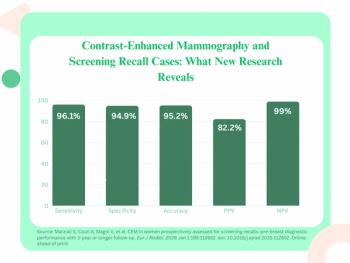
The use of contrast-enhanced mammography in nearly 200 cases of screening recalls yielded a 96.1 percent per-breast sensitivity rate and a 99 percent negative predictive value.
Catch up on the most well-viewed video interviews in December 2025.
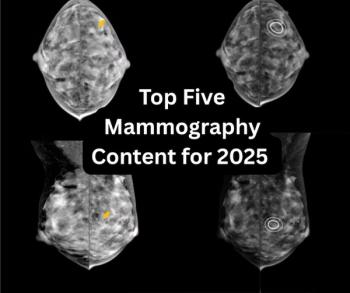
Catch up on the most well-viewed mammography content from 2025.
Catch up on the top AI-related news and research in radiology over the past month.
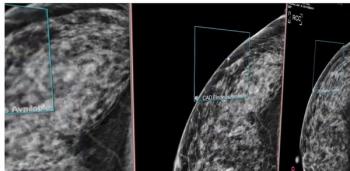
In addition to advanced mammography image processing and integrated MQSA tracking, the MammoIQ system enables viewing of adjunctive modalities including MRI, ultrasound and PET imaging.
Catch up on the most well-viewed video interviews from 2025.
Catch up on the top radiology content of the past week.
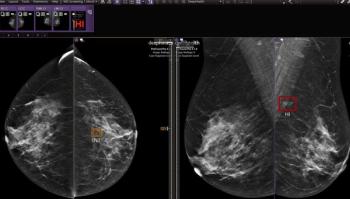
The Breast Suite software reportedly provides automated localization of regions of interest on mammograms as well as AI-enabled assessments of breast density and stratification of breast cancer risk for up to two years.
Catch up on the most well-viewed video interviews from Diagnostic Imaging in November 2025.
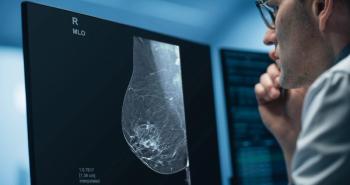
The combination of deep learning and iterative reconstruction with Pristina Recon DL may enhance image quality with digital breast tomosynthesis.
Catch up on the top AI-related news and research in radiology over the past month.
Catch up on the top radiology content of the past week.
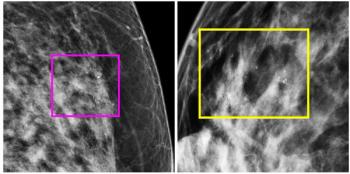
The use of radiomics for mammography may help predict the development of occult invasive cancer in women with ductal carcinoma in situ (DCIS), according to a new study.
In a recent interview, Christoph Lee, M.D., discussed key findings from the ASSURE study, which evaluated the use of AI in detection and triage in a multicenter trial involving over 579,000 women who had digital breast tomosynthesis (DBT) exams.
Catch up on the top radiology content of the past week.
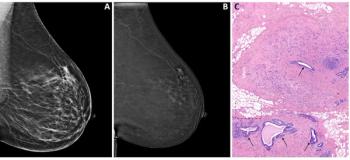
Contrast-enhanced mammography demonstrated a 95 percent specificity rate and 83.5 percent positive predictive value for ascertaining pathologic nipple involvement, according to a new multicenter study.
Catch up on the top radiology content of the past week.
Catch up on the most well-viewed breast imaging content in October 2025.
Catch up on the most-well viewed radiology content in October 2025.
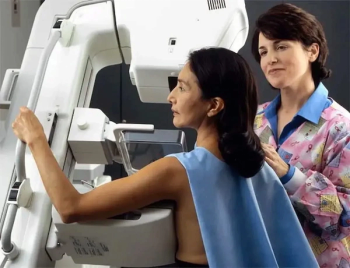
In a retrospective analysis of triennial screening mammograms for 134,217 women, a deep learning model offered comparable assessment of interval breast cancer risk across differences in age and breast density.
Catch up on the top radiology content of the past week.
Catch up on the top AI-related news and research in radiology over the past month.
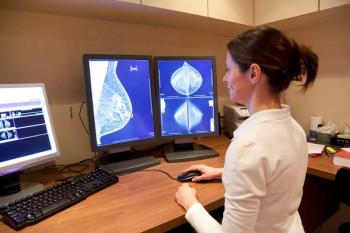
Noting an increased incidence of false negatives in screening and diagnostic mammography, researchers found that a personal history of breast cancer was associated with over a 3.6-fold higher likelihood of false negatives.
In a recent interview, Deepa Sheth, M.D., discussed the rising incidence of breast cancer, key considerations in supplemental imaging for women with dense breasts and use of the CIVIE RadPod platform to facilitate consistent quality and imaging reads by fellowship-trained breast radiologists.
Catch up on the top radiology content of the past week.
Advertisement
Advertisement
Trending on Diagnostic Imaging
1
Diagnostic Imaging's Weekly Scan: September 27 — October 3
2
Emerging Research Insights and New Advances in Neuroradiology
3
The Reading Room Podcast: Current Perspectives, Challenges and Possibilities with AI in Breast Imaging, Part 1
4
Security: A Way to Be Safe and Unproductive in Radiology
5