



Neurology CT
Latest News

Advertisement
Latest Videos


Shorts

0:42
Emphasizing the Need for More Research on Indication-Based DRLs for CT Imaging
19 days ago
by
Kalpana Kanal, PhD

0:34
Is Maturing Technology with CT Scanners a Key Factor with Reduced Radiation Dosing?
25 days ago
by
Mahadevappa Mahesh, MS, PhD, FAAPM, FACR
0:31
'Moving in the Right Direction' with CT Radiation Dosing
a month ago
by
Kalpana Kanal, PhD

0:44
Timely Access to Neuroimaging: One of the Biggest Challenges in Stroke Care
a month ago
by
Arun Talkad, MD

0:53
How AI-Enabled Triage Helps Navigate Weekend Call Duties in Radiology
a month ago
by
Raza Mushtaq, MD

0:38
How AI Triage Efficiency Gains in Neuroradiology May Facilitate Improved Work-Life Balance
2 months ago
by
Vivek Singh, MD

0:34
The Long Road to Equitable Pediatric AI
3 months ago
by
Joseph Cavallo, MD, MBA

0:35
False Positives and AI Triage Tools in Radiology
3 months ago
by
Joseph Cavallo, MD, MBA

0:28
Are Pediatric Patients Getting Shortchanged with CT-Based AI Triage for Intracranial Hemorrhages?
6 months ago
by
Joseph Cavallo, MD, MBA

0:28
An Extended Window for Image-Guided Thrombolysis in Acute Ischemic Stroke Cases
7 months ago
by
Jeremy Heit, MD, PhD
Podcasts





Advertisement
More News
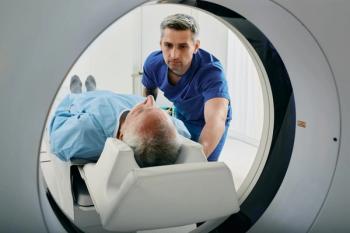
In comparison to findings from a similar study in 2014, the national volume computed tomography (CT) dose index (CTDLvol) declined by 9.3 percent, according to newly published research involving 5 million CT exams for over 2.8 million adults in 2025.
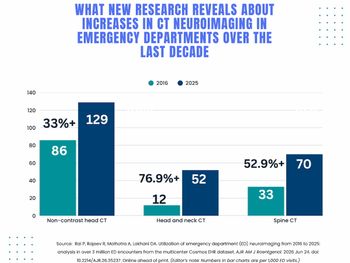
Researchers found that non-contrast head CT exams, head and neck CT exams and spine CT imaging increased by 33 percent, 76.9 percent and 52.9 percent, respectively, per 1,000 emergency department encounters over the last decade.
Catch up on the top AI-related news and research in radiology over the past month.
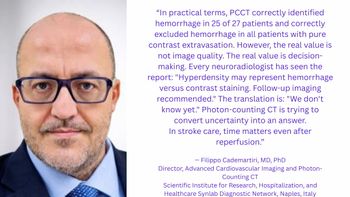
New research suggests that photon-counting CT may provide critical insight into a diagnostic dilemma that has challenged radiologists for decades.
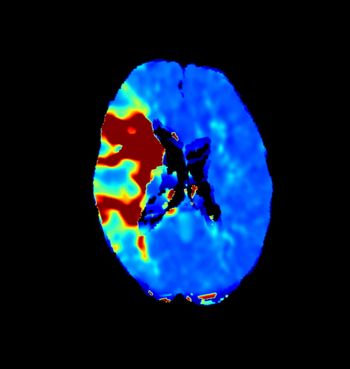
The Cone-Beam CT (CBCT) Perfusion software reportedly provides CT-quality perfusion maps during neurointerventional procedures.
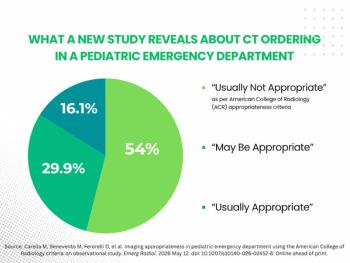
Study: More than Half of CT Requests in Pediatric Emergency Department are ‘Usually Not Appropriate’
In a study involving nearly 350 completed requests for CT scans at a pediatric hospital emergency department, researchers found that 54 percent were not appropriate according to American College of Radiology appropriateness criteria.
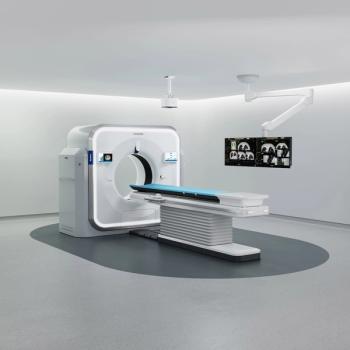
The Rembra CT reportedly facilitates high-throughput imaging for high-volume settings such as emergency departments and the Rembra RT and Areta RT platforms offer an extended 85 cm field of view and 4D CT to enable enhanced accuracy in tumor targeting.
Catch up on a variety of new FDA clearances in radiology from the past week.
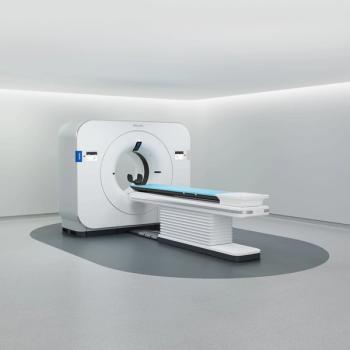
The Philips Spectral CT Verida system reportedly provides reconstruction of 145 images per second, allowing entire CT exams to appear in less than 30 seconds.

Catch up on the top radiology content of the past week.
In a recent interview, Joseph Cavallo, MD, and Marla Sammer, MD, discussed the dearth of AI applications for pediatric imaging, new research evaluating adjunctive AI triage for CT detection of intracranial hemorrhages in children six and older, and going beyond the data points to ascertain the impact of AI on patient care.
Catch up on a variety of new FDA clearances and approvals in radiology from the past week.
Catch up on the top AI-related news and research in radiology over the past month.
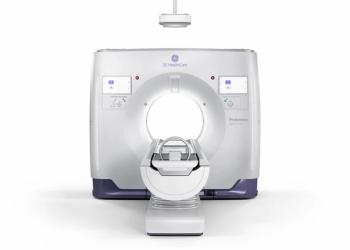
The Photonova Spectra photon-counting CT system reportedly offers a variety of features, including 8-bin energy resolution, rapid rotation speed and motion-free imaging.
Catch up on the top radiology content of the past week.
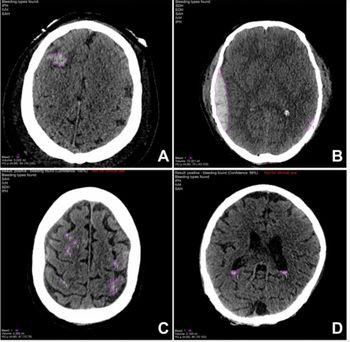
New study findings demonstrate that the deep learning software syngo.CT Brain Hemorrhage VB60 reportedly offers a 93.6 percent sensitivity as well as 99.2 percent negative predictive value for intracranial hemorrhage.
Catch up on a variety of new FDA clearances and approvals in radiology from the past week.
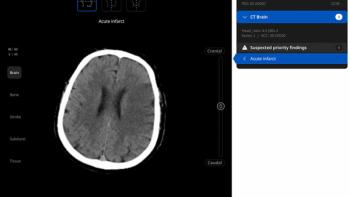
The Harrison.ai software is reportedly the first AI software to gain clearance for acute infarct triage on non-contrast CT scans.
Combining an 85 cm bore, high resolution and accelerated image reconstruction, the Rembra CT platform can reportedly handle up to 270 CT exams a day.
Catch up on the top radiology content of the past week.
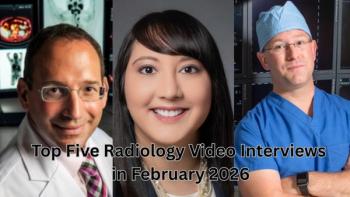
Catch up on the most well-viewed video interviews from Diagnostic Imaging in February 2026.
Catch up on the top AI-related news and research in radiology over the past month.

In a recent interview, Jeremy Heit, M.D., Ph.D., discussed key neuroimaging takeaways from changes to the updated guideline from the American Heart Association and the American Stroke Association for early evaluation and management of patients with acute ischemic stroke.
Catch up on the top radiology content of the past week.

In a recent interview from the International Stroke Conference, Jeremy Heit, M.D., Ph.D., discussed new research suggesting that AI may offer better assessment than neuroradiologists of aneurysm growth on computed tomography or magnetic resonance angiography scans.
Advertisement
Advertisement
Trending on Diagnostic Imaging
1
Diagnostic Imaging's Weekly Scan: September 27 — October 3
2
The Reading Room Podcast: Current Perspectives, Challenges and Possibilities with AI in Breast Imaging, Part 2
3
Security: A Way to Be Safe and Unproductive in Radiology
4
Emerging Research Insights and New Advances in Neuroradiology
5