



The mechanisms, magnitude, manifestations, and management of stroke during the pandemic.

The mechanisms, magnitude, manifestations, and management of stroke during the pandemic.

Basic photographs paired with AI technique can pick up on retinal changes that are early signs of the progressive central nervous system disorder.

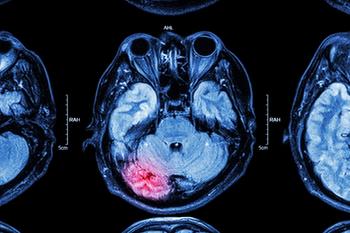
Approximately half of all patients who experience stroke, brain bleeds, or blocked blood vessels, identified on MRI or head CT in this study, had high blood pressure or type 2 diabetes.

Cerebral Aneurysms and CT Angiography; MammoScreen and Breast Cancer Detection; Low-Dose Lung Cancer Screening Program Performance; and Breast Cancer Screening Advocacy Efforts

Deep learning tool improves cerebral aneurysm detection, specifically among radiologists with fewer years’ experience.

Modifying an existing imaging probe and labeling it with fluorine-18 improves providers’ ability to pinpoint protein accumulation – and differentiate between neurodegenerative conditions.

The scan, which is already part of the stroke management process, offers an opportunity for faster identification of patients with viral infection.

Here's what to expect this week on Diagnostic Imaging.

Opposition to AI in Mammography; Alzheimer's Disease and Vascular Dysfunction; Clear & Present Danger for The Match; Trends & Innovations in Breast Imaging

As Alzheimer’s disease progresses, more brain regions exhibit evidence of this link.

MRI and PET Reveal Parkinson's disease Duality; MRI Shows More Aggressive MS in Hispanic Patients; Radiation Dose Misconceptions; and Challenges for Racial and Ethnic Minorities in Cancer Screening

Convolutional neural network can rapidly detect large vessel occlusions present in most ischemic strokes.

Advanced imaging shows Parkinson’s can begin as brain-first or body-first.

Findings captured during emergency scans intended to pinpoint stroke can reveal viral infection.

Point-of-care, 64mT MRI performs as well as conventional CT and MRI while improving patient safety.

PET/CT brain scans of the enzyme aromatase could help providers pinpoint which patients will struggle with obesity and self-regulation.

Cerebral infarction and hemorrhage are more common in severe cases while cranial nerve abnormalities affect patients with milder disease.

The company has captured 510(k) clearance for artificial intelligence-based software that facilitates brain and prostate image interpretations.

Abbreviated MRI; Low-Field Cardiac MRI; Contrast-Enhanced Breast Imaging; Obesity and Alzheimer's; and Neuroimaging and COVID-19

Brain imaging shows blood flow to the brain progressively reduces as a person’s weight increases, promoting the development of Alzheimer's.

Emergency providers are utilizing more ultrasound and MRI scans, fewer CTs.

Clinicians should adopt a lower threshold for evaluating patients for stroke and providing care.

Avicenna.AI’s CINA Head earns 510(k) clearance for emergency room triage of intracranial hemorrhages and large vessel occlusions.

Rapid ASPECTS receives clearance as first neuroimaging analysis device in computer-aided diagnostic category.

510(k) clearance applies to four critical abnormalities; two are exclusive to Qure.ai’s product.