










Sometimes image quality is just plain bad.
Sometimes image quality is just plain bad.
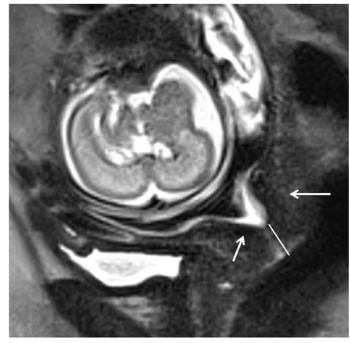
MRI helped predict which women with short cervix would go into preterm labor.

Embracing the portability of point of care ultrasound.
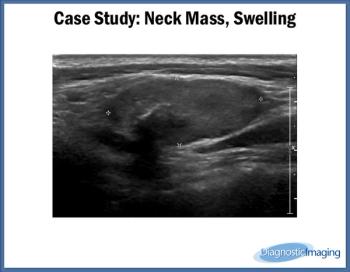
Case History: 20-year-old, no medical or surgical history, with neck mass and swelling for several days.
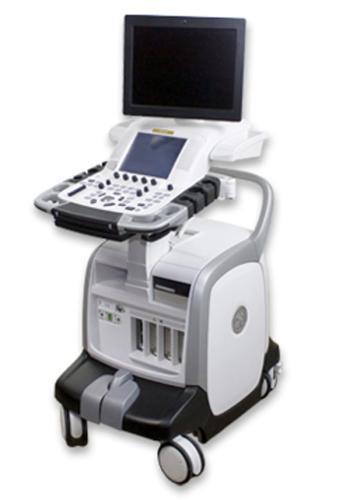
Researchers identify whether scanner-based protocols for ultrasound improve department efficiency.
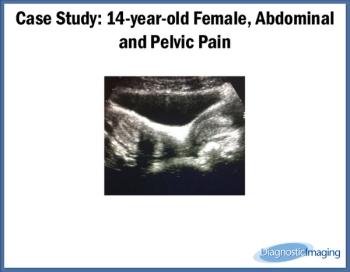
Case History:14-year-old nulliparous menstruating female with lower abdominal and pelvic pain.

Image-guided liver biopsies are generally safe procedures, but certain risk factors have been identified.
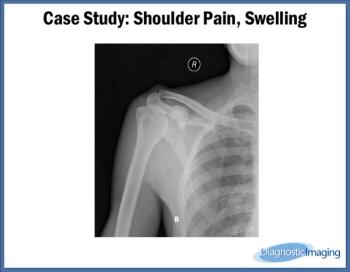
Case History: 24-year-old male with complaints of shoulder pain, slowly increasing swelling for five years.
Ultrasound detects more invasive cancers, but number of total cancers detected is comparable between US and mammography.
Radiologists viewing supplemental breast ultrasounds should assess lesions separately to reduce the risk of missing a cancer.

CHICAGO-Ultrasound discovers whether knuckle cracking is a bubble popping or a bubble being created in the joint.
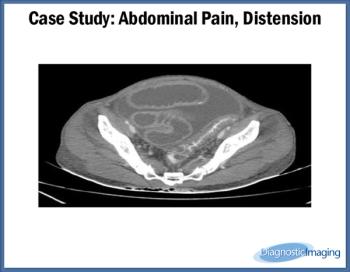
Case History: 55-year-old male with abdominal distension with pain for two weeks.
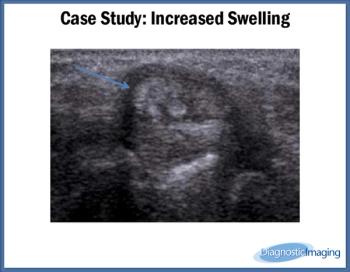
Case History: 30-year-old female, increased wrist swelling since birth.
Parents, guardians of children undergoing ultrasound more comfortable with procedure if they speak with the radiologist first.
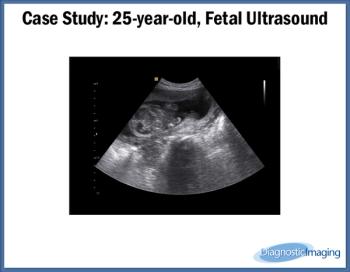
Case History: 25-year-old patient presents for fetal ultrasound.

Barco’s Coronis Uniti display system received expanded clearance for multi-modality viewing.
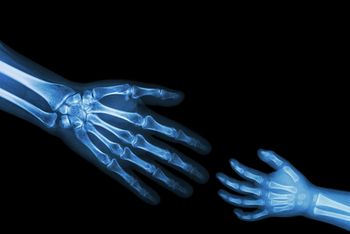
Use of ultrasound and MRI among children is rising, while CT imaging drops.
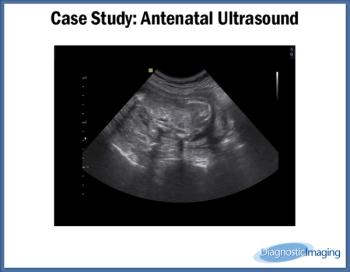
Case History: 25-year-old patient presents for antenatal ultrasound.
Ultrasound screening for abdominal aortic aneurysm would save more lives of people aged 75 or older, rather than nonsmoking 65-year-olds.

Ultrasound and digital breast tomosynthesis find more cancers than just 2D mammography.
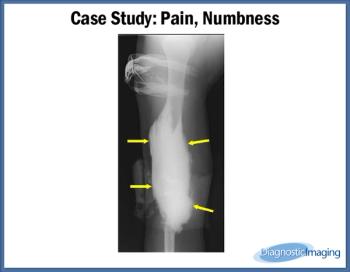
Case History: 57-year-old male with increasing pain and numbness following CT.
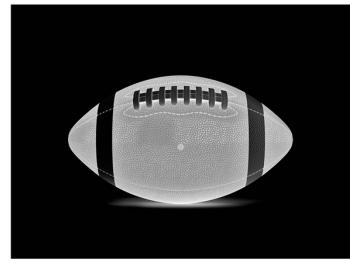
They might not be on the field, but radiologists are an important part of the NFL’s medical team.

Diagnostic imaging procedures are sometimes necessary for pregnant women, and can be done safely in some cases.
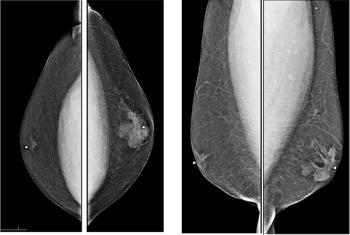
50-year-old male presents with palpable lump on the left breast.
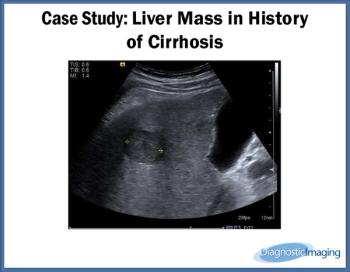
Case History: Patient in his 50s with history of cirrhosis and known mass on liver.