

Oncology CT
Latest News
Advertisement
Latest Videos

Shorts

0:49
How Imaging Insights on Vascular Anatomy May Improve Success with Y90 Embolization Procedures
2 months ago
by
Mina S. Makary, MD

0:33
The Value of AI in Extracting Hidden Data from Chest CT Images
4 months ago
by
Shadpour Demehri, MD

0:34
Why LLMs Are a 'Natural Fit' for Automated CT Protocoling
7 months ago
by
Rajesh Bhayana, MD
Podcasts









Advertisement
More News
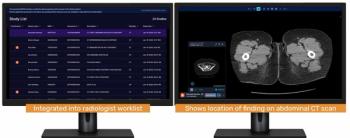
Use of the CARE Multi-Triage CT Body software will be eligible for a New Technology Add-on Payment (NTAP) from CMS starting on October 1, 2026 for inpatients in Medicare fee for service plans.
New computed tomography (CT) research in July 2026 ranged from the ongoing impact of AI to significant declines in CT radiation dosing over the past decade to a growing recognition that coronary artery calcium (CAC) scoring alone may not be sufficient to convey a true picture of cardiovascular risk stratification.

Catch up on the most-well viewed radiology content in July 2026.
In comparison to findings from a similar study in 2014, the national volume computed tomography (CT) dose index (CTDLvol) declined by 9.3 percent, according to newly published research involving 5 million CT exams for over 2.8 million adults in 2025.
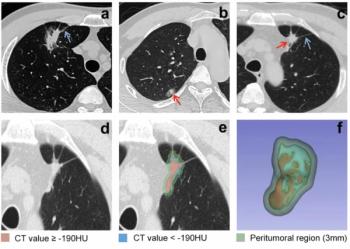
In an external test set from a recent study, a combined radiomic/deep learning model for intratumoral computed tomography (CT) threshold segmentation offered an 82.3 percent AUC and 95.4 percent sensitivity for predicting visceral pleural invasion in patients with lung adenocarcinoma < 30 mm.

Catch up on the top AI-related news and research in radiology over the past month.
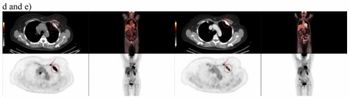
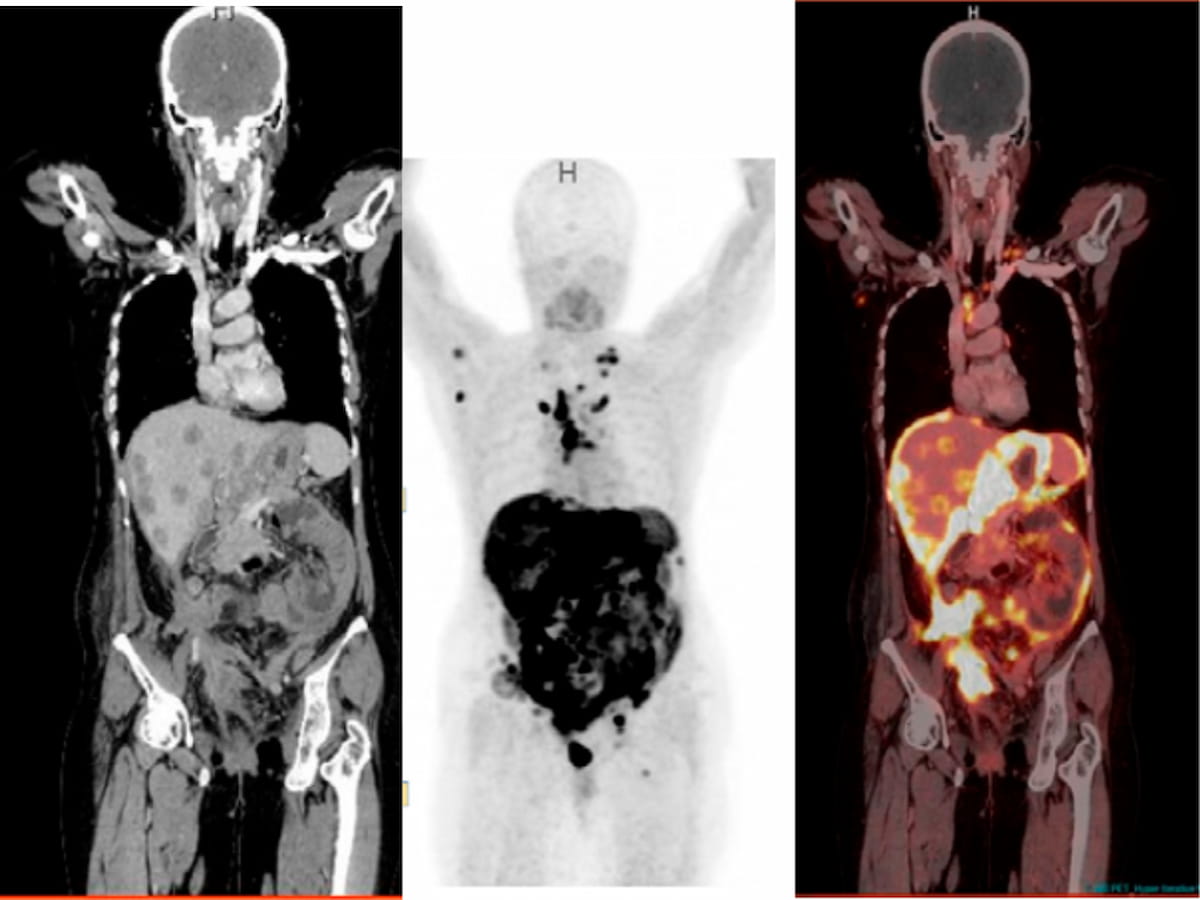
In a comparative study involving 51 women who had systemic treatment for metastatic breast cancer, researchers found that all FDG-PET scans identified measurable target lesions according to PERCIST criteria in comparison to 35 percent of CT scans as per RECIST 1.1 criteria.
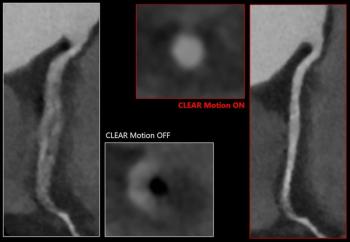
Deep learning-based motion correction with the CLEAR Motion software reportedly bolsters cardiac imaging quality while the PIQE 1024 Deep Learning Reconstruction software offers equivalent SNR to photon-counting CT for high-resolution views of objects less than 0.5 mm.
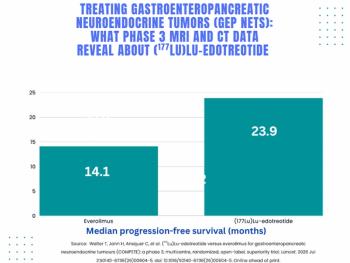
In comparison to everolimus, the peptide receptor radionuclide therapy (177Lu)Lu-edotreotide provided over a nine month longer median progression-free survival for patients with gastroenteropancreatic neuroendocrine tumours (GEP NETs), according to new phase 3 research.
Catch up on the top AI-related news and research in radiology over the past month.
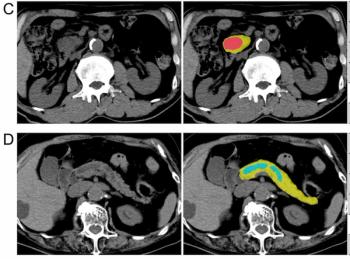
For pancreatic cancers less than or equal to 20 mm, a deep learning model offered a nearly 45 percent higher sensitivity rate with non-contrast CT in comparison to unassisted radiologist interpretation.
Catch up on a variety of new FDA clearances in radiology from the past week.
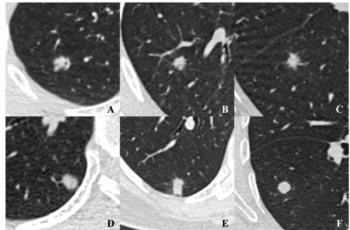
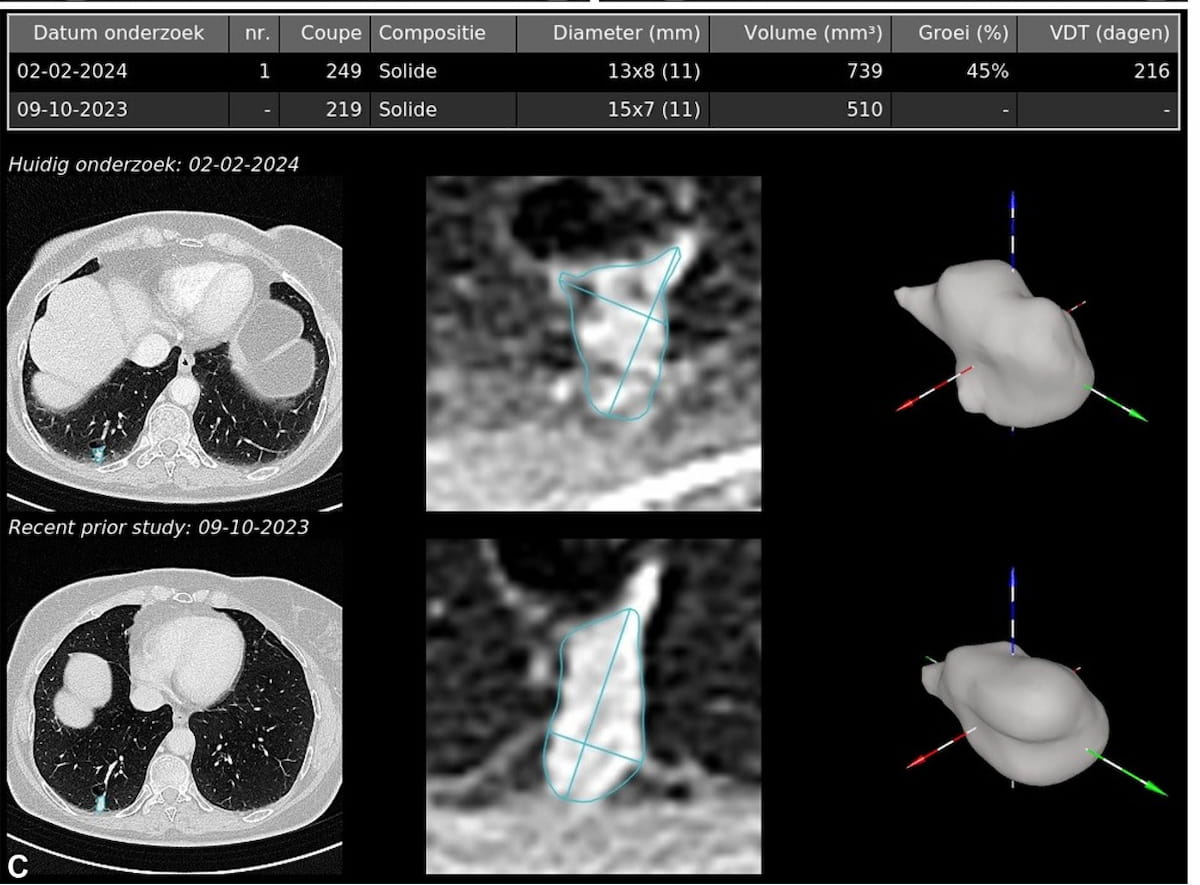
The addition of density heterogeneity on CT to a predictive model for differentiating malignant and benign pulmonary nodules led to a greater than 15 percent improvement in the model’s AUC, according to a new multicenter study.

Catch up on the top radiology content of the past week.

Researchers estimated that 17.9 million middle-aged women in the United States are overdue for breast, cervical or colorectal cancer screening, according to a new cross-sectional study.
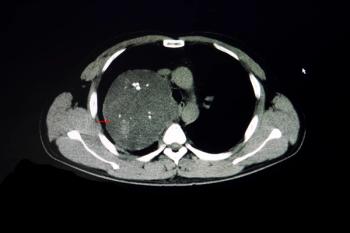
In a new capabilities analysis of 16 CE-marked AI software platforms for CT lung cancer screening, researchers found that only 6.7 percent of supporting peer-reviewed studies were prospective and that none of the studies assessed impact on patient outcomes.
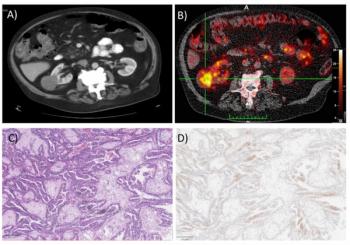
While previous research has demonstrated the capability of the PET/CT agent (89Zr)girentuximab for detecting clear cell renal cell carcinoma (ccRCC), a new analysis reveals a 98 percent positive predictive value (PPV) for detecting non-ccRCC renal cancers.
Catch up on the top radiology content of the past week.
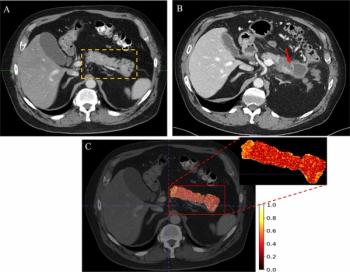
In an independent test set, a radiomic AI model demonstrated an 82 percent AUC for detecting pancreatic ductal adenocarcinoma on computed tomography (CT) scans at a median of nearly 16 months prior to clinical diagnosis.
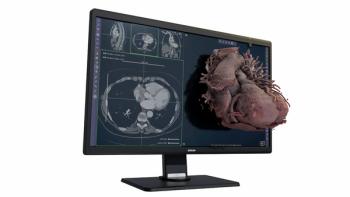
Providing enhanced multidimensional displays of MRI and CT imaging, the Avatar Medical Vision software may facilitate improved surgical planning and intraoperative communication.
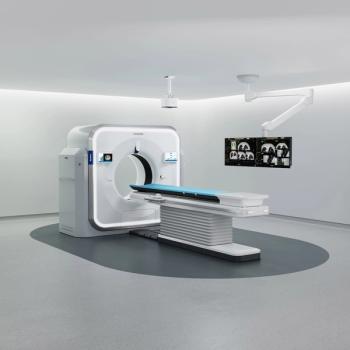
The Rembra CT reportedly facilitates high-throughput imaging for high-volume settings such as emergency departments and the Rembra RT and Areta RT platforms offer an extended 85 cm field of view and 4D CT to enable enhanced accuracy in tumor targeting.
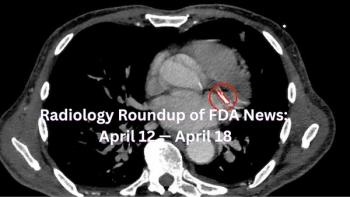
Catch up on a variety of new FDA clearances in radiology from the past week.
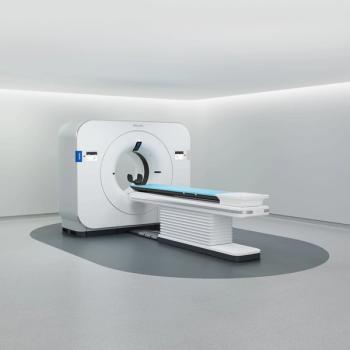
The Philips Spectral CT Verida system reportedly provides reconstruction of 145 images per second, allowing entire CT exams to appear in less than 30 seconds.
Catch up on the top radiology content of the past week.
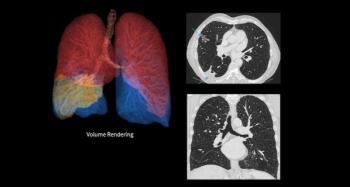
The CT-based True Definition DL software reportedly facilitates enhanced efficiency and high-resolution visualization for musculoskeletal, pulmonary and inner ear imaging.
Advertisement
Advertisement
Trending on Diagnostic Imaging
1
Study: Chest CT AI Software Facilitates Nearly 15 Percent Reduction in Reporting Time
2
PET Radiotracer Gets FDA Breakthrough Therapy Designation for Tumor Hypoxia Detection in HPV-Positive Oropharyngeal Carcinoma
3
FDA Clears AI Software for Automated Measurements on Cardiac MRI
4
CT Radiation Dosing: Where Things Stand, Part 1
5