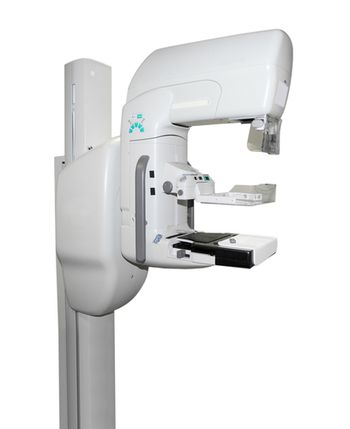
Women should not worry that regular screening mammograms would increase their risk of radiation-induced breast cancer.
Women should not worry that regular screening mammograms would increase their risk of radiation-induced breast cancer.
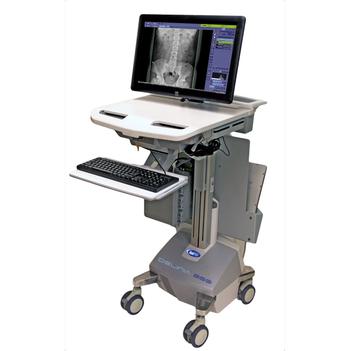
Canon will be demonstrating at RSNA 2014 a ‘cost-effective’ transition option from CR to DR.
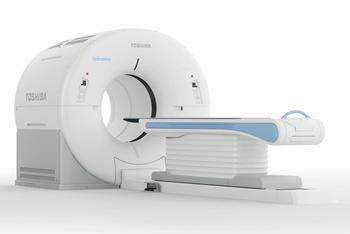
Toshiba will demonstrate safer CT solutions and patient-friendly updates to PET/CT at RSNA 2014.

Routine CT angiography for patients with diabetes not more effective in preventing cardiovascular complications than good standard of care.

Radiologists can improve their screening of mammograms if they perform the diagnostic screening on cases that they have recalled.
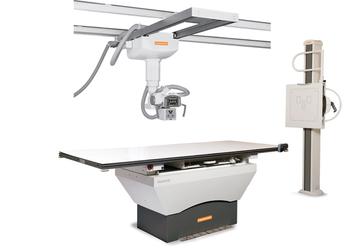
Carestream to showcase enhancements to its DR/CR imaging systems at RSNA 2014.

Attempts at determining imaging efficiency identifies hospitals with inefficient practices but not hospitals that are doing well.
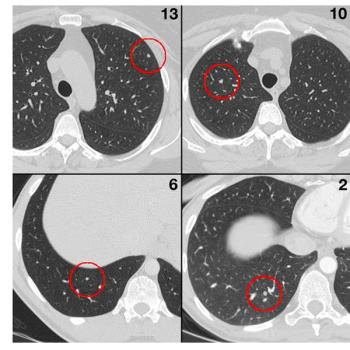
Radiologists tend to focus on certain areas of lung CT images, which could result in missed nodules.
Mammography plus automated breast ultrasonography detects more cancer in women with dense breast tissue.
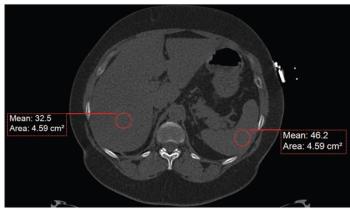
Coronary CT angiography may become an important part NAFLD assessment.

For this “10 Questions” series, we spoke with Garry Choy, MD, MBA about his work and the future of radiology.

Magnetic resonance images showed changes in the brain, including bilateral white matter atrophy, among patients with CFS.

Biennial screening of women with dense breast tissue using both mammography and tomosynthesis is cost-effective.

Survivors who received radiation to the chest were more likely to develop breast cancer.

Check out the profiles for the nominees for “Top People to Watch in Radiology” and vote for who deserves to win.

Changes in malpractice standard legislation in three states had little effect on advanced imaging use in the emergency room.

Radiology residents who take phone calls in the reading room may become distracted, reducing their diagnostic accuracy.
Increasing use of cardiac stress testing with imaging may be unnecessary and adds to cost and patient exposure to radiation.
Image quality of neck CTs is improved with the use of model-based iterative reconstruction, compared with 30% adaptive statistical iterative reconstruction.
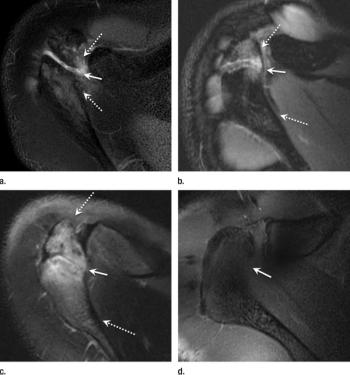
MRI identifies unique shoulder damage, termed acromial apophysiolysis, among young pitchers that could cause long-term problems.
Low-dose CT lung cancer screening, done at intervals, can help detect lung cancer.
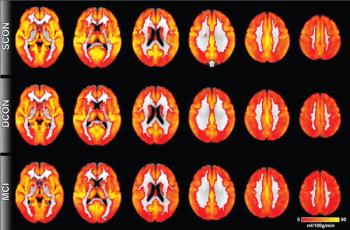
Arterial spin labeling has shown changes in the posterior cingulate cortex among patients who went on to experience cognitive decline.
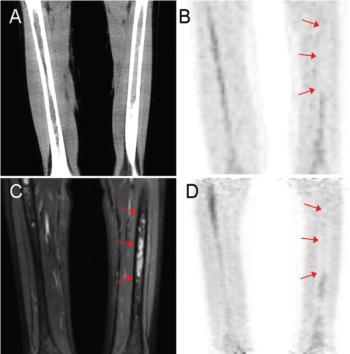
PET/MRI offers equal detection rates of solid tumors among children as does PET/CT, with lower radiation doses.
Using PET/CT in women under 40 who have breast cancer may result in restaging of the cancer and adjustment of treatment.
Breast density can be measured using fully automated volumetric methods, which are less labor intensive than the commonly used methods.
Contrast-enhanced PET/CT appears to be better than non-CE PET/CT in assessing distant metastasis in patients with pancreatic cancer.
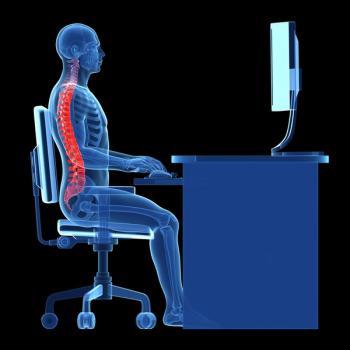
Breast-imaging radiologists are at a higher risk for developing repetitive stress injuries, particularly after implementation of PACS.
False-positive results from CT colonography screening are considered an acceptable part of cancer detection for both patients and health care providers.

Using FDG-PET imaging to diagnose cancer may not be effective in certain areas of the country, where certain lung infections may be endemic.

For this “10 Questions” series, we spoke with Paul H. Ellenbogen, MD, FACR about his work and the future of radiology.