Catch up on the most well-viewed video interviews from Diagnostic Imaging in July 2026.

Catch up on the most well-viewed video interviews from Diagnostic Imaging in July 2026.

Recently presented research with the AI-powered CaRi-Heart software at the Society of Cardiovascular Computed Tomography (SCCT) conference found that assessments of advanced coronary inflammation with the software were linked to significantly higher cardiovascular mortality risks.

In comparison to findings from a similar study in 2014, the national volume computed tomography (CT) dose index (CTDLvol) declined by 9.3 percent, according to newly published research involving 5 million CT exams for over 2.8 million adults in 2025.

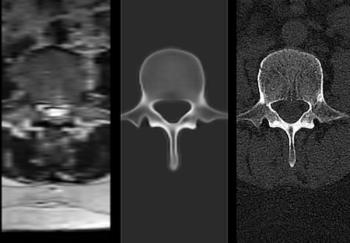
In an external test set from a recent study, a combined radiomic/deep learning model for intratumoral computed tomography (CT) threshold segmentation offered an 82.3 percent AUC and 95.4 percent sensitivity for predicting visceral pleural invasion in patients with lung adenocarcinoma < 30 mm.

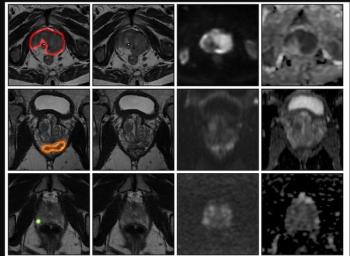
For biopsy-naïve patients who had radical prostatectomy for prostate cancer, new research suggests that biparametric MRI is comparable to multiparametric MRI for detecting extraprostatic extension.

Catch up on the top AI-related news and research in radiology over the past month.

In the face of consistent shortcomings from referring clinicians, the consistency of our resolve and perspective may be our best recourse.

Catch up on the top radiology content of the past week.

In a recent interview, Kenneth Chan, MBBS, discussed new research, presented at the recent Society of Cardiovascular Computed Tomography (SCCT) conference, that showed the impact of coronary inflammation in identifying elevated cardiovascular risk in patients with zero or low coronary artery calcium (CAC) scores.

Advanced imaging with photon-counting CT and AI detection of subtle calcification may lead to a reevaluation of the power of zero with coronary artery calcium (CAC) scoring.

The HOPPR EF Chest CT Narrative Model reportedly provides narrative language describing pertinent findings across pulmonary, upper abdominal, cardiac, mediastinal and soft tissue regions with processing of 3D chest CT volumes.

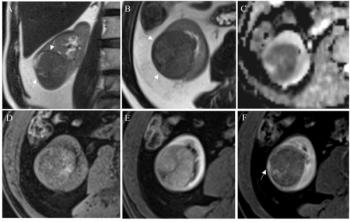
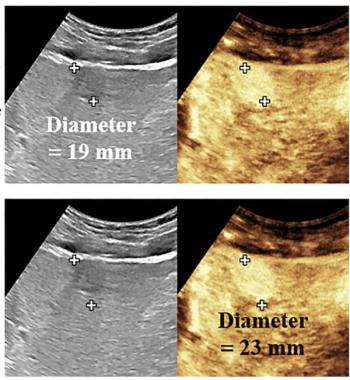
A model combining MRI and ultrasound findings yielded a 93 percent AUC for predicting microvascular invasion in hepatocellular carcinoma.

In a recent interview, Vivek Singh, MD, discussed the practical realities of integrating AI into neuroradiology workflows, addressing challenges and concerns with implementation and potential automation bias, and emphasizing the importance of appropriate governance with AI tools and measurable outcomes in stroke imaging.

The updated Sonosite iLOOK ultrasound reportedly offers a variety of features designed to streamline the use of point-of-care ultrasound for vascular access procedures.

General radiologist assessment of mammograms with adjunctive AI led to a significant increase in cancer detection rate akin to that of breast imaging specialists, according to new research.

In a comparative study involving 51 women who had systemic treatment for metastatic breast cancer, researchers found that all FDG-PET scans identified measurable target lesions according to PERCIST criteria in comparison to 35 percent of CT scans as per RECIST 1.1 criteria.

Can the newly launched MIM Anyware platform bolster imaging access and multidisciplinary collaboration?

This veteran teleradiologist examines who thrives working from home in radiology and who doesn't, based on 15 years of WFH experience.

Catch up on the latest imaging research from the recent Society of Cardiovascular Computed Tomography (SCCT) conference.

Catch up on the top radiology content of the past week.

In an address at the recent SNMMI conference, neuroradiologist Tammie Benzinger, MD, PhD, discussed key studies in the evolution of amyloid and tau PET, and their continued emergence in detection, staging and monitoring of people with dementia.

In the age of advanced CCTA imaging, a one-size-fits-all approach to image acquisition is a disservice to patients.

In a recent interview, Ron Blankstein, MD, discussed new research presented at the Society of Cardiovascular Computed Tomography (SCCT) conference, including a study examining the impact of notification of AI detection of coronary plaque on physicians prescribing lipid-lowering therapy.

In cases involving false negative suggestions from adjunctive AI for screening mammogram review, researchers found that unassisted radiologists had a 32 percent higher sensitivity rate than those who utilized AI.

In the latest episode of her “Breast Imaging in Focus” series, Manisha Bahl, MD, MPH, FSBI, discusses new research examining the utility of automated breast ultrasound in supplemental screening for women with dense breasts.

In light of the recent death of Sen. Lindsey Graham from aortic dissection, we highlight pertinent diagnostic principles and key imaging findings for the timely detection of aortic dissection, a topic that Alan Braverman, MD, FACC, discussed in an interview with Diagnostic Imaging.

Amid the variety of specialty areas in radiology, perhaps we’ve been overlooking the opportunity to interpret the scans of competitive eaters.

Out of multiple potential risk factors for the development of preeclampsia, ranging from hypertension to non-gestational diabetes and maternal age > 35, researchers found that pre-pregnancy coronary artery calcium (CAC) was the only risk factor significantly associated with preeclampsia.

Catch up on the top radiology content of the past week.

For patients having CT angiography prior to TAVR procedures, researchers found that photon-counting detector CT (PCD-CT) offered higher specificity and PPV for detecting significant coronary artery disease (CAD), according to study findings to be presented at the Society of Cardiovascular Computed Tomography (SCCT) conference.